
How to Diagnose Roof Trouble After a Detroit Downpour: A Step-by-Step Guide
Need Roof Repair?
Found missing shingles, a ceiling stain, damaged flashing, or signs of a roof leak after a Detroit storm? Getting the problem diagnosed and repaired quickly can help prevent water damage from spreading.
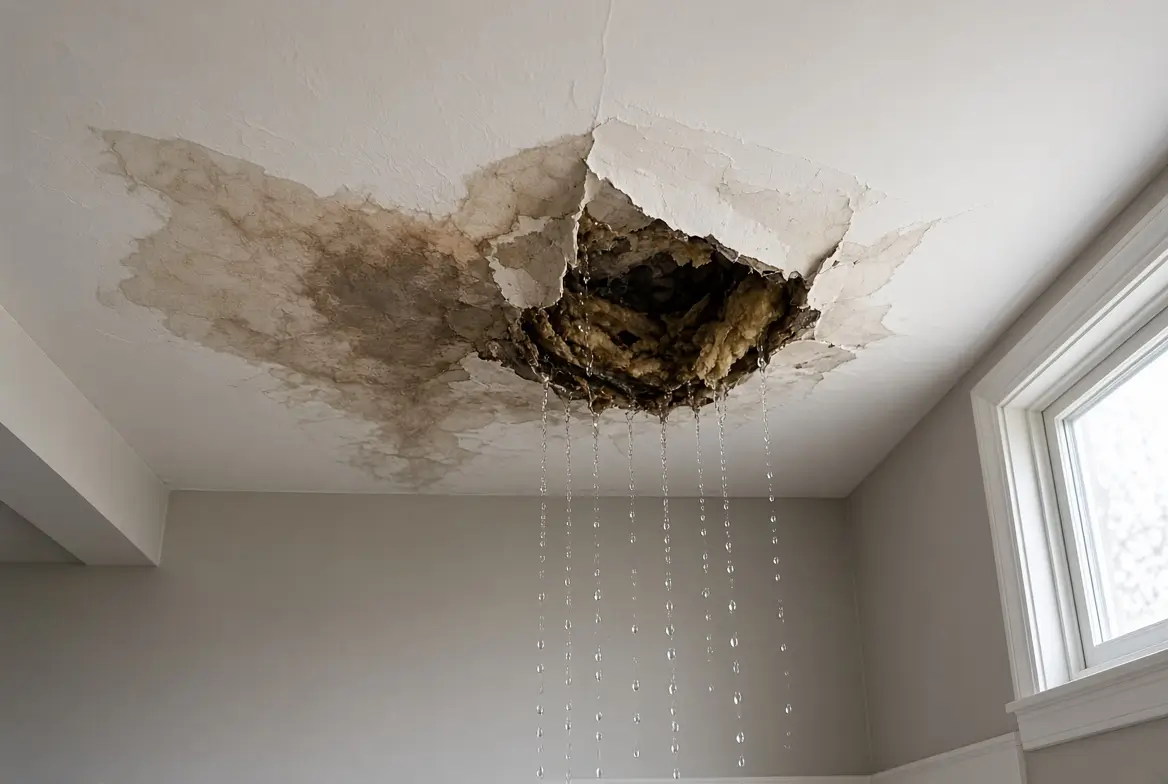
Call 313-925-3442 TodayA heavy Detroit downpour can reveal roof problems that aren’t obvious on a sunny day. Water may find its way through a small opening around a flashing, damaged shingle, vent, chimney, or roof edge and eventually show up as a ceiling stain or drip inside the home.
The tricky part is that the visible water damage isn’t always directly underneath the actual roof leak. Water can travel along rafters, roof decking, insulation, and drywall before it becomes visible.
So, how do you diagnose roof trouble after heavy rain?
Start from the ground, inspect the attic if it is safe to enter, check gutters and downspouts, and look for fresh moisture or obvious exterior damage. Avoid walking on a wet roof, and don’t climb onto a roof simply to investigate a leak. A wet roof can be extremely slippery, and a ladder can become dangerous in windy or rainy conditions.
This homeowner checklist walks through a practical roof diagnosis process after a Detroit rainstorm and explains when a problem can be monitored, when a minor repair may be appropriate, and when it’s time to call a roofing professional.
What Should I Check Immediately After a Heavy Detroit Rain?
The first step is to look for evidence that the storm exposed a problem.
Walk around your home and check for:
- New ceiling or wall stains
- Drips or active leaks
- Wet insulation in the attic
- Missing or damaged shingles
- Shingle debris in the yard
- Loose flashing
- Water overflowing from gutters
- Damaged downspouts
- Water pooling near the foundation
- Sagging areas on the roof
- Damaged vents or roof penetrations
Don’t assume that everything is fine simply because you don’t see water dripping from the ceiling.
Small roof leaks can remain hidden inside the roof assembly for hours or even longer before becoming noticeable.
Is It Safe to Get on My Roof After a Rainstorm?
Generally, no.
A wet roof can be dangerously slippery, particularly when covered with moss, algae, leaves, or other debris. Asphalt shingles can also become slick when wet.
Homeowners can perform a useful roof diagnosis without actually walking on the roof.
Instead, inspect the roof from:
- Ground level
- Windows
- A second-story vantage point
- A safely positioned ladder used only to inspect the roof edge when conditions permit
If the roof is wet, steep, damaged, or difficult to access, don’t climb onto it.
A professional roofer has the appropriate equipment and experience to inspect areas that aren’t safely accessible from the ground.
How Do I Check My Roof From the Ground?
A pair of binoculars can be surprisingly useful after a storm.
Stand far enough away from the house to see the roof surface and look for obvious changes.
Check for:
- Missing shingles
- Lifted shingle edges
- Cracked shingles
- Dark or exposed areas
- Missing ridge caps
- Damaged flashing
- Debris sitting on the roof
- Bent or damaged vents
- Tree branches
- Areas where shingles appear uneven
You don’t need to identify every roofing component to spot obvious storm damage.
If one section of the roof looks noticeably different from the surrounding area, photograph it and have it evaluated.
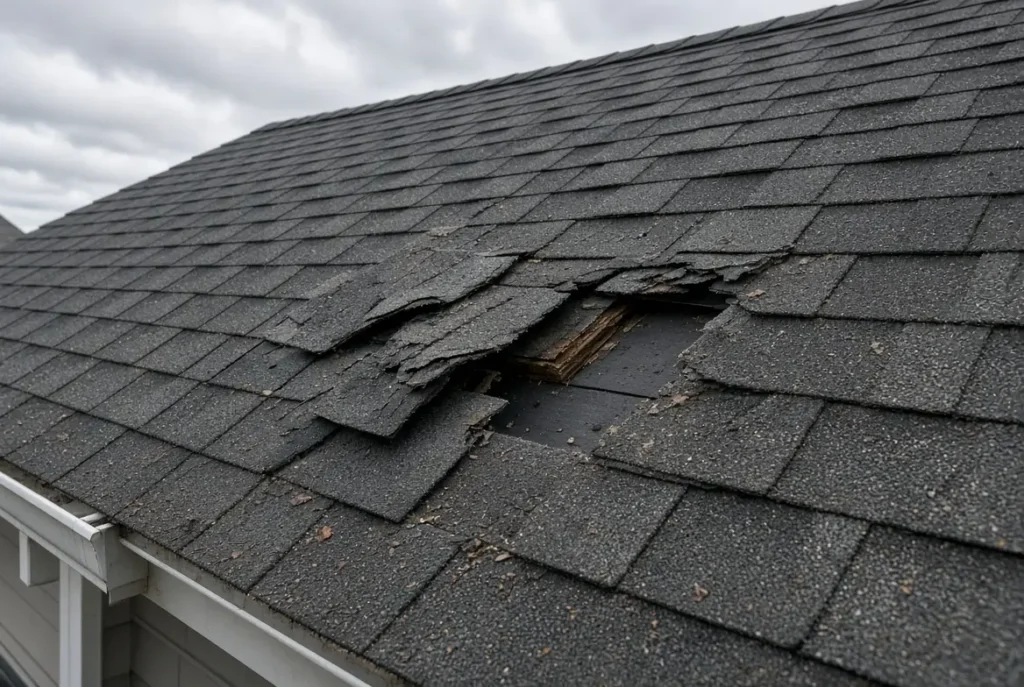
What Does Storm-Damaged Shingles Look Like?
Storm damage isn’t always dramatic.
After a Detroit rainstorm accompanied by strong wind, look for shingles that are:
- Completely missing
- Lifted
- Torn
- Cracked
- Folded
- Displaced
- Missing granules
You may also find pieces of shingles in your gutters or yard.
A few pieces of roofing material on the ground don’t necessarily prove that your roof is leaking, but they are worth investigating.
If shingles have been displaced, the underlying roof system may be exposed to additional water during the next storm.
Why Should I Check My Gutters After Heavy Rain?
Your gutters provide valuable clues about what’s happening on the roof.
During or immediately after a storm, check whether water is flowing through the gutters and exiting the downspouts properly.
Look for:
- Overflowing gutters
- Standing water
- Clogged downspouts
- Loose gutters
- Sagging gutter sections
- Excessive shingle granules
- Leaves or roofing debris
A small amount of granule accumulation can occur as asphalt shingles age, but a significant amount of fresh granules after a storm deserves attention.
What Does Shingle Granule Loss Mean?
Asphalt shingles are coated with small mineral granules that protect the underlying roofing material.
Some granule loss is normal as shingles age. However, a sudden increase in granules in your gutters after a severe storm may indicate that shingles have been damaged or are deteriorating.
Look at the overall pattern rather than assuming every granule means storm damage to the roof.
Older roofs naturally shed more material than newer roofs.
How Can I Check for a Roof Leak From Inside the Attic?
If your attic is safely accessible, it can provide some of the best evidence of a roof leak.
Use a flashlight and inspect the underside of the roof decking.
Look for:
- Dark water stains
- Wet insulation
- Damp wood
- Mold or mildew
- Water trails
- Rusted nails
- Fresh dripping water
- Discolored roof sheathing
Be careful around electrical wiring, HVAC equipment, and other hazards.
Never enter an attic that has standing water or other obvious electrical or structural hazards.
Where Does Water Go After It Gets Through the Roof?
This is one of the most important things to understand when diagnosing a roof leak.
Water doesn’t necessarily travel straight down.
It can run along:
- Roof decking
- Rafters
- Trusses
- Insulation
- Pipes
- Ductwork
- Framing
That means a ceiling stain in your bedroom might actually originate several feet away on the roof.
This is why simply patching the area directly above an interior stain doesn’t always solve the problem.
How Can I Tell If a Ceiling Stain Is From a Roof Leak?
A ceiling stain can have several causes.
Possible sources include:
- Roof leaks
- Plumbing leaks
- HVAC condensation
- Bathroom exhaust problems
- Ice damming
- Attic condensation
If the stain appears or becomes noticeably worse after rain, a roof leak becomes more likely.
However, the timing alone doesn’t prove the roof is the source.
Check the attic above the stain if it is safe to do so and look for fresh moisture.
What Should I Do If Water Is Actively Coming Through the Ceiling?
If water is actively entering your home, protect the interior first.
Place a container underneath the drip and move furniture or belongings away from the area.
If water is near electrical fixtures, outlets, or wiring, don’t touch the wet electrical components. Shut off power to the affected area only if you can do so safely, and contact a qualified professional when necessary.
Then address the roof problem as soon as possible.
A temporary interior bucket doesn’t fix the roof. It simply limits immediate damage while the source is being addressed.
Should I Put a Tarp Over a Leaking Roof?
A tarp can sometimes provide temporary protection, but installing one on a wet or damaged roof can be dangerous.
Don’t climb onto a slippery roof after a storm just to install a tarp.
If emergency weather protection is necessary, contact a roofing professional who can determine the safest temporary solution.
A tarp is not a substitute for permanent roof repair.
What Roof Areas Should I Pay Extra Attention To?
Certain parts of a roof are more vulnerable to leaks than large areas of uninterrupted shingles.
During your inspection, pay particular attention to:
Roof Valleys
Valleys direct large amounts of rainwater toward the gutters. Damaged or improperly sealed valley areas can become leak sources.
Chimneys
Check the flashing around the chimney for obvious gaps, deterioration, or loose materials.
Plumbing Vents
Roof penetrations create openings that must be properly sealed. Damaged flashing or deteriorated seals can allow water inside.
Skylights
Skylights can develop leaks around their flashing or seals.
Roof Edges
The edges of the roof can experience wind-related damage, particularly after severe storms.
Vents
Damaged or improperly sealed roof vents can allow water into the attic.
Can Gutters Cause Roof Problems?
Yes.
Gutters that are clogged or improperly draining can contribute to water problems around the roof edge.
When rainwater can’t move through the gutter system efficiently, it can overflow against fascia, siding, and other parts of the house.
A gutter problem isn’t automatically a roof problem, but both systems should be evaluated after significant rainfall.
What If I Don’t See Any Roof Damage?
That’s good news, but it doesn’t completely rule out a leak.
Some roof leaks originate from small openings that aren’t visible from ground level.
If you have unexplained water stains or moisture inside the home after rain, the attic and roof should be investigated even if the shingles look normal.
Roof diagnosis often requires tracing water backward from the interior damage to the actual entry point.
Can a Small Roof Leak Wait Until Later?
It’s usually better not to ignore it.
A small leak can eventually contribute to:
- Rotting roof decking
- Damaged insulation
- Mold growth
- Ceiling damage
- Wall damage
- Damaged framing
- Higher repair costs
The earlier the source is identified, the more options you generally have for addressing it before the damage spreads.
What Should I Photograph After a Detroit Storm?
Take photographs of anything unusual you find.
Useful photos include:
- Missing shingles
- Damaged shingles
- Roofing debris
- Gutters
- Downspouts
- Flashing
- Ceiling stains
- Attic moisture
- Wet insulation
- Water stains on framing
Take both close-up photographs and wider shots that show where the damage is located.
If you have a roofing professional inspect the property, these photos can help document what you noticed immediately after the storm.
How Do I Know If I Need Roof Repair?
You should consider professional roof repair when you find evidence of an active leak, missing shingles, damaged flashing, exposed roof decking, significant storm damage, or recurring moisture after rainfall.
You should also have the roof inspected if interior water stains continue to appear even though you can’t identify an obvious exterior problem.
A small repair may be enough when damage is isolated.
More extensive damage may require replacing a larger section of the roofing system.
When Should I Consider Replacing the Entire Roof?
A storm doesn’t automatically mean you need a new roof.
Roof replacement may become appropriate when damage is widespread or the roof is already near the end of its expected service life.
Other factors include:
- Extensive shingle damage
- Widespread deterioration
- Repeated leaks
- Significant roof deck damage
- Multiple failed repair areas
- An aging roofing system
A professional inspection can help determine whether repair or replacement makes more sense.
How Often Should Detroit Homeowners Inspect Their Roof?
A good homeowner checklist includes checking the roof at least twice a year and after major storms.
Spring and fall are particularly useful times for inspections because winter weather, summer storms, falling branches, and changing temperatures can all affect the roofing system.
You should also inspect after unusually strong wind, hail, or heavy rain.
The goal isn’t necessarily to find a problem every time. It’s to catch changes before they become expensive repairs.
Detroit Rain Roof Diagnosis Checklist
After a major downpour, work through this quick checklist:
- Look for ceiling stains or active leaks.
- Check the attic for fresh moisture if it is safe to enter.
- Inspect the roof from the ground.
- Look for missing, lifted, cracked, or damaged shingles.
- Check gutters for excessive granules and roofing debris.
- Make sure downspouts are draining properly.
- Look at roof valleys from a safe location.
- Inspect visible flashing around chimneys and vents.
- Look for damaged branches or debris.
- Photograph anything suspicious.
- Don’t walk on a wet or damaged roof.
- Arrange professional roof repair if you find active leaks or significant damage.
Frequently Asked Questions About Roof Diagnosis
How soon should I check my roof after heavy rain?
As soon as conditions are safe. You can inspect the interior, attic, gutters, and roof from ground level shortly after the storm. Don’t climb onto a wet roof.
Can heavy Detroit rain cause a roof to leak even without wind?
Yes. Heavy rainfall can expose weak flashing, deteriorated seals, clogged drainage areas, and aging roofing materials even when wind isn’t a factor.
Why is my ceiling leaking when my roof looks fine?
The actual leak may be hidden or located farther away from the interior stain. Water can travel along framing and roof decking before entering the ceiling.
How do I find a roof leak in my attic?
Look for wet insulation, dark stains, water trails, damp roof decking, rusted nails, and fresh moisture. Start near the area above the interior water stain, but remember that the actual entry point may be farther away.
Should I repair a small roof leak immediately?
Yes. Even a small leak can allow moisture to enter the roof structure. Addressing it early can help prevent more extensive damage.
Can I repair a roof leak myself?
Some experienced homeowners can handle minor repairs, but roof work can be dangerous. If the roof is steep, wet, difficult to access, or significantly damaged, professional repair is the safer option.
Does a roof inspection require walking on the roof?
No. Many problems can be identified from the ground, attic, and roof edges. A professional may use specialized equipment and safe access methods when a closer inspection is necessary.
What is the most common cause of roof leaks?
Common causes include damaged shingles, deteriorated flashing, failed seals around penetrations, clogged drainage areas, and aging roofing materials.
Do roof leaks get worse over time?
They can. Water intrusion can gradually damage insulation, decking, framing, drywall, and other building materials.
How can I prevent roof leaks?
Regular inspections, keeping gutters clear, maintaining flashing and roof penetrations, trimming branches away from the roof, and repairing small problems promptly can all reduce the risk of leaks.
When It Comes To Your Roof
A Detroit downpour can act like a real-world stress test for your roof. Once the rain stops, a few minutes of careful inspection can help you catch missing shingles, damaged flashing, clogged gutters, attic moisture, and other warning signs before they turn into major water damage.
The most important rule is safety. Don’t climb onto a wet roof just to perform a DIY inspection. Start from the ground, inspect accessible areas from a safe location, and check the attic if you can do so safely.
If you find active water intrusion, damaged roofing materials, or a leak you can’t locate, getting the problem diagnosed promptly can save you from a much larger repair later.
A good homeowner checklist isn’t about doing every repair yourself. It’s about recognizing trouble early enough to make an informed decision about roof repair.


