
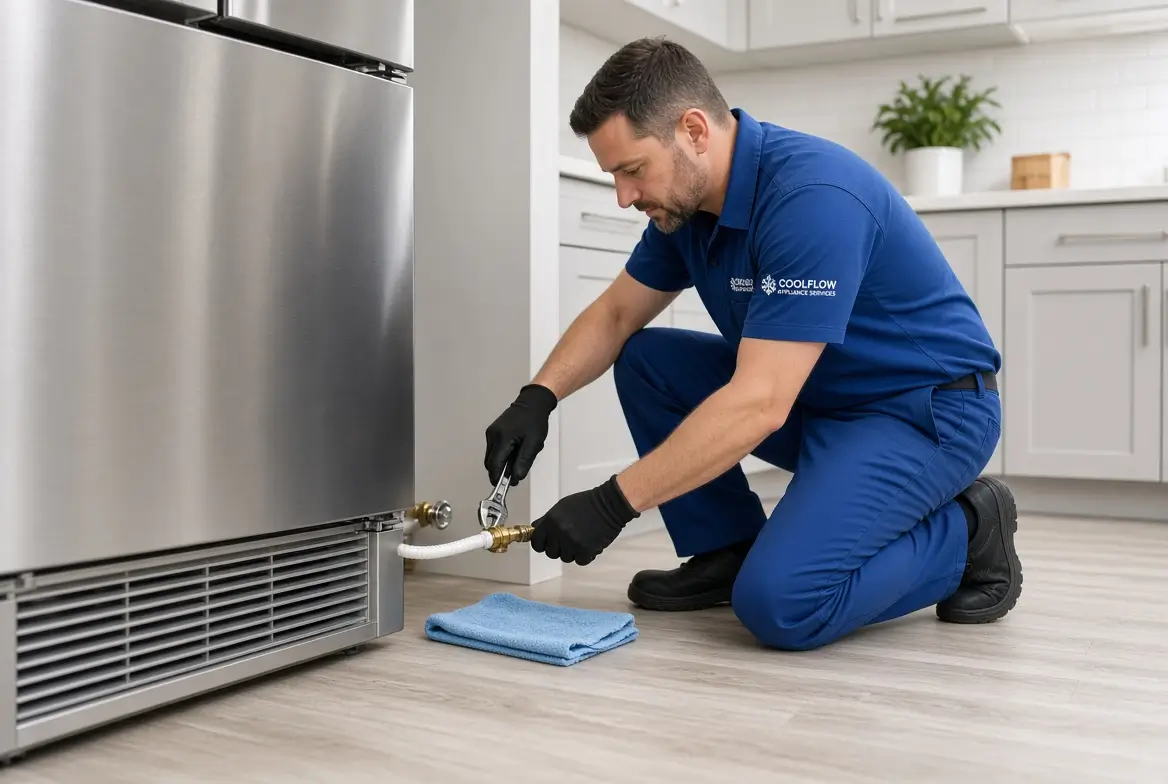
How to Spot a Leaking Fridge Water Line Before It Wreaks Havoc
Need Help With a Leaking Refrigerator Water Line?
A leaking refrigerator water line can quickly damage flooring, cabinets, and the surrounding area. If you have a leak, damaged tubing, or a plumbing connection that won’t stop dripping, professional repair can help prevent bigger water damage.
Call 313-362-6383 TodayA refrigerator water line leak can start with something as small as a damp spot under the fridge. Left unnoticed, however, that small leak can damage flooring, cabinets, drywall, and subflooring before you realize where the water is coming from.
This is especially true with refrigerators that have ice makers or water dispensers. The supply line stays connected to your home’s plumbing system even when you’re not using the dispenser, so a loose connection, cracked tubing, or worn valve can continue leaking around the clock.
So, how do you know if your refrigerator water line is leaking?
Look for unexplained water around the refrigerator, damp flooring, a musty smell, water collecting behind the appliance, or a noticeable change in how the ice maker or water dispenser works. You can also use a flashlight, paper towel, and a dry piece of cardboard to help pinpoint the source.
Catching refrigerator water line problems early can prevent a relatively simple plumbing repair from turning into expensive water damage.
What Are the Most Common Signs of a Leaking Refrigerator Water Line?
The most obvious warning sign is water on the floor around the refrigerator, but leaks don’t always announce themselves with a large puddle.
Watch for these red flags:
- A wet spot underneath or behind the refrigerator
- Damp flooring near the appliance
- Water dripping from the back of the refrigerator
- A musty or mildew-like odor
- Swollen or discolored flooring
- Water collecting inside the refrigerator’s lower area
- A refrigerator that seems to be using water unusually quickly
- An ice maker that stops producing ice normally
- A water dispenser with reduced pressure
- A recurring puddle that comes back after you wipe it up
Even a small amount of water deserves attention. Repeated moisture can eventually damage flooring and the materials underneath it.
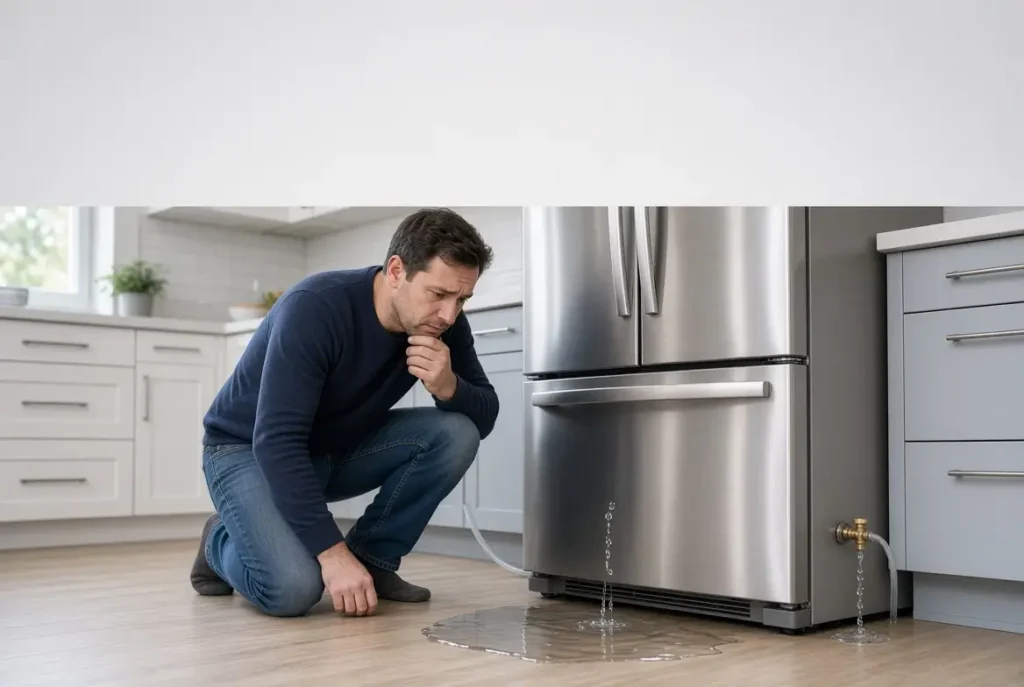
Where Does a Refrigerator Water Line Usually Leak?
A refrigerator water line can leak in several places.
The most common areas are the connection behind the refrigerator, the shutoff valve, the tubing itself, and the connection where the water line attaches to the refrigerator.
Older plastic tubing can become brittle. Flexible lines can also develop cracks or kinks after years of being moved or compressed behind the appliance.
Connections can loosen over time as well. If the refrigerator has recently been pulled away from the wall for cleaning, flooring work, or appliance maintenance, check the water connection afterward.
How Can I Tell If the Refrigerator Water Line Is Actually Leaking?
You don’t need specialized plumbing equipment to perform a basic inspection.
Start by carefully pulling the refrigerator away from the wall far enough to see the water connection. Don’t yank on the appliance or put unnecessary strain on the tubing.
Use a flashlight to inspect the line and connections.
Then take a dry paper towel and gently wrap or press it around the connection points. If the towel becomes wet, you’ve found an area that needs further investigation.
You can also place a dry piece of cardboard underneath the refrigerator.
Leave it there for several hours or overnight. If water appears on the cardboard, you’ll have a better idea of where the leak is occurring.
Can a Refrigerator Water Line Leak Without Leaving a Big Puddle?
Yes.
Small leaks can drip slowly enough that the water evaporates or gets absorbed into flooring before creating a noticeable puddle.
This is one reason refrigerator leaks can go undetected.
You may instead notice:
- A damp smell
- Flooring that feels slightly soft
- Discoloration
- Swelling along flooring seams
- A recurring damp spot
If you repeatedly find moisture around your refrigerator, don’t assume it is simply spilled water.
Why Does My Kitchen Smell Musty Near the Refrigerator?
A musty smell near the refrigerator can be a sign of moisture that isn’t drying properly.
A small refrigerator water line leak may allow water to collect underneath the appliance or seep into flooring. Once moisture gets trapped in an enclosed area, it can create a musty odor.
However, the refrigerator water line isn’t the only possible source.
Other possibilities include:
- A leaking drain pan
- Condensation
- A dishwasher leak
- A sink plumbing leak
- A damaged floor
- Moisture underneath cabinets
The important thing is to find the actual source rather than simply treating the odor.
How Do I Check the Refrigerator Water Line Step by Step?
A basic inspection can usually be performed with a few household items.
Step 1: Turn Off the Water Supply if You Find an Active Leak
If water is actively leaking from the refrigerator water line, locate the shutoff valve and turn it clockwise to stop the water supply.
Don’t keep using the refrigerator’s water dispenser or ice maker while you’re trying to determine the source of an active leak.
Step 2: Move the Refrigerator Carefully
Pull the refrigerator forward carefully so you can see behind it.
If the appliance is extremely heavy or difficult to move, don’t risk damaging the flooring or hurting yourself. Get assistance if necessary.
Step 3: Inspect the Tubing
Look closely for:
- Cracks
- Kinks
- Pinched sections
- Brittle plastic
- Loose connections
- Visible moisture
Run your flashlight along the entire accessible length of the line.
Step 4: Check the Connections
Inspect where the water line connects to the home’s plumbing and where it connects to the refrigerator.
A connection that appears loose, wet, or corroded deserves attention.
Step 5: Use a Paper Towel
Dry the suspected areas completely.
Then place a clean, dry paper towel around each connection individually.
If the towel becomes wet, you’ve likely located the leak.
Step 6: Check the Floor
Look underneath and around the refrigerator for:
- Swollen flooring
- Dark spots
- Discoloration
- Soft areas
- Water stains
Remember that water can travel farther than the actual leak. The wettest area isn’t always directly underneath the source.
Can I Fix a Leaking Refrigerator Water Line Myself?
Some minor refrigerator water line problems can be handled by a homeowner with basic plumbing experience.
For example, a visibly loose connection may sometimes be corrected by tightening the appropriate fitting.
However, don’t keep tightening a connection if it doesn’t stop leaking. Over-tightening can damage fittings or tubing and create an even bigger problem.
A cracked water line, damaged shutoff valve, inaccessible connection, or leak that continues after adjustment is better handled by a professional.
Should I Shut Off the Refrigerator Water Line?
If you have confirmed an active leak, shutting off the water supply is generally the safest first step.
This limits the amount of water that can escape while you determine what needs to be repaired.
If you cannot locate the refrigerator’s shutoff valve, you may need to shut off the appropriate household water supply until the problem can be addressed.
Don’t ignore a slow leak simply because the refrigerator is still making ice or dispensing water normally.
What Causes Refrigerator Water Line Problems?
Refrigerator water line problems can develop for several reasons.
Aging Tubing
Plastic tubing can become brittle as it ages and may eventually crack.
Loose Connections
Repeated vibration and movement can contribute to loose fittings.
Refrigerator Movement
Pulling a refrigerator forward and pushing it back can kink or stress the water line.
Pinched Tubing
If the refrigerator is pushed too close to the wall, it can pinch the water line.
Freezing
In some situations, water inside the line can freeze and create pressure or restrict flow.
Damaged Shutoff Valves
An aging shutoff valve can develop leaks around its fittings or internal components.
Why Is My Refrigerator Water Line Leaking After I Moved the Fridge?
Moving the refrigerator is a common time for water line problems to appear.
The line can become kinked, pulled, twisted, or pushed against the wall.
Before moving the refrigerator back into position, make sure the tubing has enough room to remain straight without being crushed behind the appliance.
A water line should never be sharply bent or pinched.
Can a Refrigerator Water Line Damage My Floor?
Absolutely.
A slow leak can cause significant damage over time, particularly when the refrigerator sits on wood flooring, laminate, or other moisture-sensitive materials.
Potential damage includes:
- Swollen flooring
- Discoloration
- Buckling
- Soft subflooring
- Mold or mildew growth
- Damaged cabinets
- Water stains
The longer the leak continues, the greater the chance that moisture will spread underneath the flooring.
How Do I Prevent Refrigerator Water Line Leaks?
You can’t prevent every plumbing failure, but several simple habits can reduce your risk.
Keep the Refrigerator From Crushing the Line
Make sure the water line isn’t pinched when the refrigerator is pushed back into place.
Inspect the Line Periodically
Take a quick look behind the refrigerator whenever you clean behind it.
Look for cracks, kinks, corrosion, or moisture.
Don’t Pull the Refrigerator Too Far
If the water line is connected, pulling the refrigerator too aggressively can stress the connection.
Replace Aging Components
If the tubing or fittings are visibly deteriorated, replacing them before they fail can prevent an unexpected leak.
Pay Attention to Small Warning Signs
A damp smell, recurring wet spot, or unusual water around the refrigerator shouldn’t be ignored.
Early detection is one of the best leak prevention tips available to homeowners.
How Often Should I Check My Refrigerator Water Line?
A quick visual inspection every few months is reasonable, especially if your refrigerator has an ice maker or water dispenser.
You should also inspect the line whenever:
- The refrigerator is moved
- You clean behind the appliance
- Flooring is replaced
- The refrigerator is serviced
- You notice water around the appliance
The inspection only takes a few minutes and could save you from discovering a much larger problem later.
When Should I Call a Professional?
Call a professional if the water line continues leaking after the obvious connection has been addressed, the tubing is damaged, the shutoff valve is leaking, or you see signs of water damage around the refrigerator.
Professional help is especially important if water has reached the subfloor, cabinets, drywall, or electrical components.
A small plumbing leak is much easier to deal with than extensive water damage.
Frequently Asked Questions About Refrigerator Water Line Problems
How do I know if my refrigerator water line is leaking?
Look for water around or behind the refrigerator, damp flooring, musty odors, swollen flooring, or moisture around the tubing and connections. A flashlight and dry paper towel can help pinpoint a small leak.
Can a refrigerator water line leak slowly?
Yes. A small crack or loose connection can produce only a few drops at a time. Slow leaks are particularly dangerous because they can continue unnoticed for weeks or months.
Is water under my refrigerator always from the water line?
No. The source could also be condensation, a drain pan, a defrost drain, or another nearby plumbing fixture. That’s why it’s important to trace the moisture back to its source.
Can I use my refrigerator if the water line is leaking?
If you have confirmed an active water line leak, shut off the water supply to the refrigerator and avoid using the ice maker or dispenser until the problem is repaired.
How much does it cost to repair a refrigerator water line?
The cost depends on whether the problem is a simple connection, damaged tubing, a shutoff valve, or water damage that has already occurred. An inspection is the best way to determine the actual repair required.
How long do refrigerator water lines last?
There isn’t one universal replacement interval because line material, installation, water quality, and usage all affect longevity. Inspect older tubing regularly and replace components that show cracking, brittleness, corrosion, or other deterioration.
Can a refrigerator water line freeze?
It can happen in certain circumstances, particularly if the line is exposed to very cold temperatures or airflow. A frozen line can restrict water flow and may contribute to problems when the ice thaws.
What is the easiest way to find a small refrigerator water leak?
Dry the area completely, then use a flashlight and dry paper towels around the tubing and connections. Check the towels periodically for moisture. A piece of dry cardboard underneath the refrigerator can also reveal slow drips.
Don’t Put Off Fixing Your Fridge
A leaking refrigerator water line isn’t something to put off. What starts as a few drops behind the refrigerator can eventually damage flooring, cabinets, drywall, and the subfloor.
The good news is that refrigerator water line problems are often easier to identify when you know what to look for. Check for puddles, damp flooring, musty odors, swollen materials, and moisture around the tubing and connections.
If you discover an active leak, shut off the refrigerator’s water supply and address the problem before the damage spreads.
A few minutes spent inspecting the line periodically can go a long way toward preventing an expensive kitchen repair.


