DIY Hornet Nest Removal: Safe Steps for Your Porch
Is a Hornet Nest Making Your Porch Unsafe?
Why risk getting stung trying to remove a hornet nest yourself? If hornets are making your porch, entryway, or outdoor area difficult to use, professional pest control can give you a safer solution.
Ready to take back your porch?
Call 313-422-7926 TodayGet help with hornets, wasps, and other common pest problems around your home.
Finding a hornet nest on your porch can be stressful. You may see hornets flying around your front door, porch roof, railing, or siding.
The first question most homeowners ask is simple:
Can I remove a hornet nest myself?
Yes, a small and accessible nest may sometimes be treated by a homeowner. However, hornet nest removal can be dangerous. Hornets can become aggressive when their nest is disturbed.
If the nest is high, inside a wall, near a doorway, or difficult to reach, professional pest control is usually the safer choice.
If you are allergic to insect stings, do not attempt DIY hornet nest removal. Here are the safest steps to consider if you’re dealing with a small porch nest.
DIY Hornet Nest Removal: Quick Answer
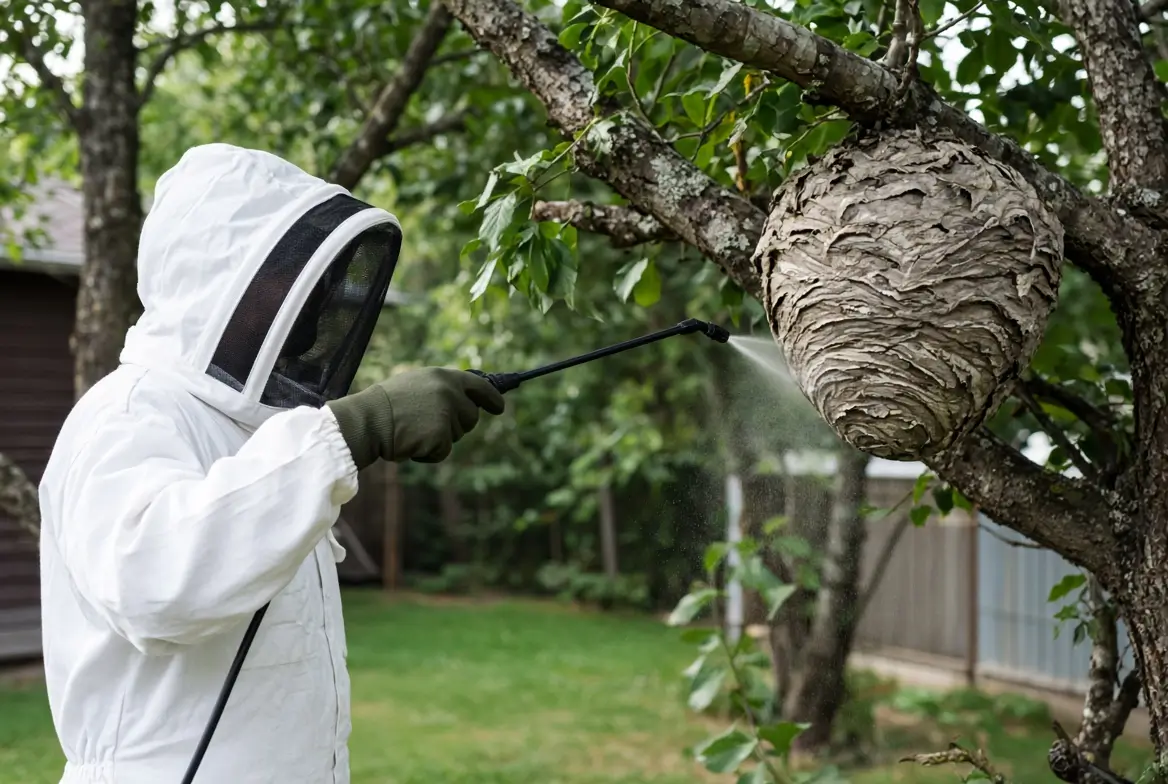
The safest DIY approach is to identify the nest, keep people and pets away, wear protective clothing, treat the nest during a lower-activity period, use an insecticide labeled for hornets or wasps, and follow the product label exactly.
- Do not knock down an active nest.
- Do not stand directly underneath it.
- Do not climb a ladder to reach it.
If you cannot safely treat the nest from the ground, call a pest control professional.
What Should You Do First?
- Don’t immediately grab a can of spray.
- Start by observing the nest.
- Stand well away from it.
- Watch where the hornets are flying.
- Look at where they enter and leave the nest.
You want to determine how large the nest is and whether you can safely stay away from it during treatment.
- Do not poke the nest.
- Do not hit it with a broom.
- Do not spray it just because you see hornets flying around.
Planning the job first is one of the most important parts of safe insect control.
Is It Really a Hornet Nest?
Not every stinging insect is a hornet. You could be dealing with a wasp, paper wasp, or yellowjacket. Some species build paper-like nests under porch roofs and eaves.
Others build nests underground or inside wall cavities. The treatment can be different depending on the insect. If you can identify the insect from a safe distance, that helps. Never get close to a nest simply to get a better look.
When Should You Remove a Hornet Nest?
Late evening or early morning is generally a better time for treatment because stinging insects are often less active during cooler periods.
However, this does not mean hornets are completely inactive. Some may still be outside the nest. Watch the nest before beginning. If there is heavy activity, wait or contact a professional.
Avoid windy or rainy conditions unless the product label specifically allows treatment. Wind can cause insecticide to drift. Rain can reduce the effectiveness of some products.
What Should You Wear for DIY Hornet Removal?
Proper clothing can reduce exposed skin.
Wear:
- Long pants
- Long sleeves
- Closed-toe shoes
- Socks
- Gloves
- Eye protection
- A hat or head covering
Avoid shorts and sandals. Do not assume that thick clothing makes you completely safe.
Hornets can still sting through some materials. Your clothing should be considered an extra layer of protection, not a guarantee against stings.
Keep Children and Pets Inside
Before treating a hornet nest, move everyone away from the area. Children should stay inside. Dogs and cats should also be kept indoors.
Ask other people to stay away from the porch. Hornets can travel farther than you might expect once they become defensive. Don’t allow anyone to stand nearby and watch.
Have an Escape Route
This is one of the most important DIY hornet removal tips. Know exactly where you will go if the hornets become aggressive. You should have a clear path to a building or enclosed area.
Do not block your escape route with tools, furniture, hoses, or other objects. If you are treating a nest near your front door, make sure you have another safe way to get inside. Never start treatment if you don’t have somewhere protected to retreat.
What Spray Should You Use on a Hornet Nest?
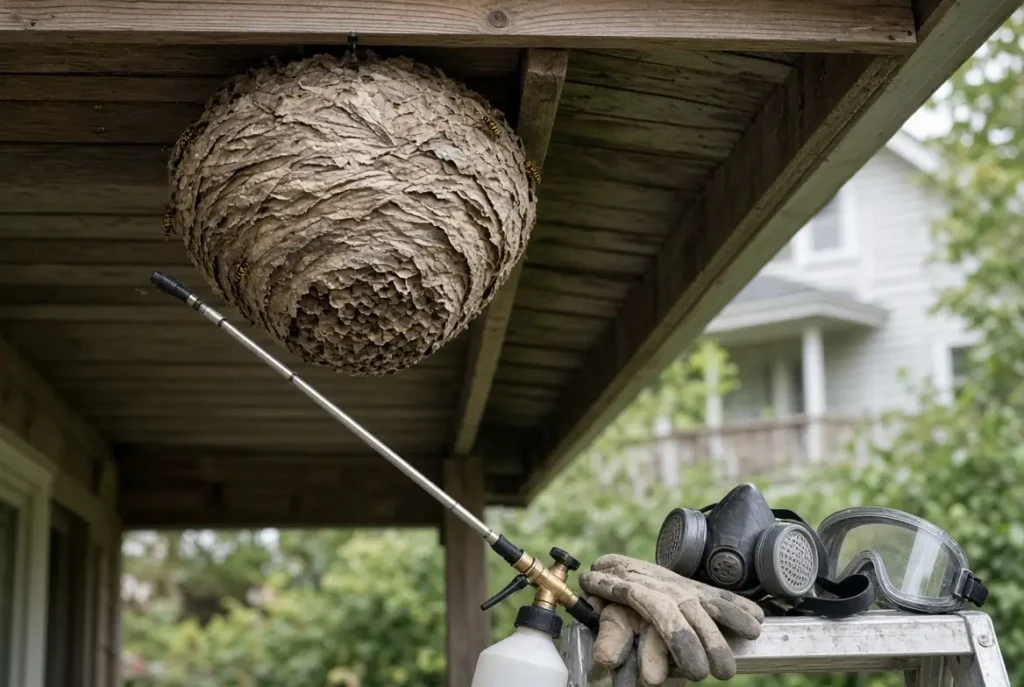
Use an insecticide specifically labeled for hornets or wasps. For an accessible porch nest, a ready-to-use aerosol with a long-range spray can be convenient.
Many products are designed to spray a stream from a distance. The exact distance varies by product. Always follow the label. Do not assume one spray can be used the same way as another.
The product label tells you how to apply it, where it can be used, and what safety precautions are required.
Can You Use Insecticidal Dust?
Some insecticidal dust products are labeled for wasp or hornet control. Dust can be useful for certain nest locations. However, it isn’t automatically safer than spray. You may have to get closer to the nest to apply it. That increases your exposure risk.
Only use an insecticidal dust if the product label specifically allows it for the insect and location you’re treating. Never mix different pest control products. Never create your own pesticide mixture.
Should You Spray the Nest During the Day?
Generally, daytime is not the first choice for treating an active nest. Hornets and other stinging insects may be more active during warmer daylight hours. More insects may also be outside the nest. That can increase the chance of encountering them.
A cooler period in the evening or early morning is generally preferable. Always consider the actual activity around the nest instead of relying only on the clock.
How Do You Spray a Hornet Nest Safely?
If you have determined that the nest is appropriate for DIY treatment, follow the insecticide label.
- Stay as far away as the label permits.
- Do not stand directly underneath the nest.
- Keep other people away.
- Aim only at the nest and areas specified on the label.
- Do not spray into the air.
- Do not spray against the wind.
Once the product has been applied, leave the area. Don’t stand there waiting for every hornet to disappear.
Should You Knock the Nest Down Right Away?
No.
This is one of the biggest mistakes homeowners make. Treating the nest does not mean every hornet will immediately stop moving. Some insects may still be alive.
If you knock the nest down too soon, you could disturb the remaining colony. Wait for the amount of time specified by the product label. Some products require at least 24 hours before nest removal. Others have different instructions. The label is what matters.
How Do You Know the Nest Is Dead?
Look at the nest from a safe distance. You should see little or no insect activity. Do not walk right up to it.
If you still see hornets entering or leaving the nest, don’t remove it. Give the treatment more time according to the product instructions. If activity continues, professional pest control may be necessary.
How Do You Remove a Dead Hornet Nest?
Once the required waiting period has passed and there is no visible activity, you can remove the nest if the situation is safe.
- Wear protective clothing.
- Stay out from underneath the nest.
- Use a long-handled tool when practical.
- Avoid touching the nest with your bare hands.
Place the nest in a sealed bag if permitted by the product label and local disposal requirements. Then dispose of it appropriately.
What If the Hornet Nest Is Inside Your Wall?
This is a different situation. Do not simply seal the entrance. If an active nest is inside a wall, the insects may find another way out. That could mean they enter your home.
You may suddenly have hornets inside your walls, attic, ceiling, or living space. Hidden nests are much harder to treat safely. If you believe hornets are nesting inside your home, contact a pest control professional.
What If the Nest Is High Up?
Don’t climb a ladder to remove a hornet nest. Combining a ladder with an aggressive insect colony creates an unnecessary risk. You could fall while trying to escape.
You could also lose your balance while being attacked. If the nest cannot be treated safely from the ground, professional removal is the better option.
How Do You Prevent Hornets From Building Another Nest?
After the nest has been removed, look for areas that may attract future nesting.
Inspect:
- Porch ceilings
- Eaves
- Soffits
- Roof overhangs
- Siding gaps
- Garage openings
- Wall cracks
- Outdoor structures
- Seal appropriate cracks and openings.
- Repair damaged screens.
- Keep garbage containers closed.
- Clean up spilled sugary drinks.
- Remove fallen fruit from around the property.
Keeping food sources and potential nesting locations under control can make your property less attractive to stinging insects.
Check Your Porch in the Spring
One of the easiest prevention methods is regular inspection. Look around your porch during the spring. Check underneath protected areas. Look for small nests before they become large.
Early detection gives you more options. It also gives you time to decide whether the problem is something you can safely handle yourself.
Can Hornets Come Back to the Same Nest?
Hornets generally do not reuse an old nest the following year.
However, the same general area may still be attractive to future queens or other stinging insects. That’s why removing potential nesting locations is useful.
A protected corner under your porch can remain attractive even after an old nest is gone.
What Should You Do If You Get Stung?
If you are stung, leave the area immediately. Get somewhere protected. Do not continue treating the nest. Watch for signs of a serious allergic reaction.
If you develop severe symptoms, seek emergency medical care immediately. Anyone who knows they have a serious insect-sting allergy should not attempt DIY hornet nest removal.
When Should You Call Pest Control?
DIY hornet removal isn’t appropriate for every situation.
Call a professional if:
- The nest is inside a wall.
- The nest is very high.
- The colony is large.
- Hornets are entering your home.
- The nest is near a busy entrance.
- You cannot safely reach the nest from the ground.
- You are allergic to stings.
- You are uncomfortable treating the nest yourself.
There is no reason to take a serious risk just to save the cost of a service call.
Is DIY Hornet Removal Safe?
It can be safe for a small, accessible nest when the homeowner can maintain a safe distance, use appropriate protective clothing, follow the insecticide label, and has a clear escape route.
But DIY hornet nest removal is not safe for every homeowner or every nest. High nests, hidden nests, large colonies, and nests near entrances are better handled by professionals. The goal isn’t simply to kill the hornets.
The goal is to remove the pest problem without putting yourself, your family, or your pets at unnecessary risk. If you’re unsure, don’t guess. Get professional help.