5 Signs You Have Termite Damage: What Homeowners Should Look For
Worried You Have Termite Damage?
Seeing mud tubes, damaged wood, discarded wings, or other signs of termites around your home? Don’t ignore the warning signs. Finding termite activity early can help prevent a small problem from becoming a much larger repair.
Call today to discuss the signs you’ve noticed and find out what may be causing the damage.
Call 313-422-7926Termite damage isn’t always obvious when you are a homeowner and you want to nip it in the butt as soon as you see the signs.
You may not see a single termite and still have an active infestation somewhere inside your home. Termites can remain hidden behind walls, beneath floors, inside crawl spaces, and around structural wood while they quietly damage the property.
So, what are the signs of termite damage?
The five most important warning signs are mud tubes, hollow or damaged wood, discarded wings, doors and windows that suddenly stick, and visible termite activity or evidence of a colony.
The sooner you recognize these clues, the better. Termite damage can become considerably more expensive when an infestation is allowed to continue unchecked.
Here’s what homeowners should know about identifying termite damage, what the signs mean, and when it’s time to have the house inspected.
1. You Find Mud Tubes on Your Foundation or Walls
One of the most recognizable signs of subterranean termites is a mud tube.
These narrow tubes are made from soil, moisture, and termite material. Termites use them to travel between their colony and a food source while protecting themselves from exposure.
You may find mud tubes:
- Along foundation walls
- Around basement walls
- Inside crawl spaces
- Around plumbing penetrations
- Near cracks in concrete
- Along floor joists
- Around wooden structures
- Behind insulation
They can look like narrow lines or raised dirt trails running along a wall or foundation.
Does a mud tube always mean I have termites?
Not necessarily.
Other insects and environmental conditions can create dirt or mud-like trails.
However, mud tubes associated with termite activity deserve immediate attention.
Don’t simply knock them down and assume the problem is gone. If termites are using the tube, destroying the visible portion doesn’t eliminate the colony.
2. Your Wood Sounds Hollow or Looks Damaged
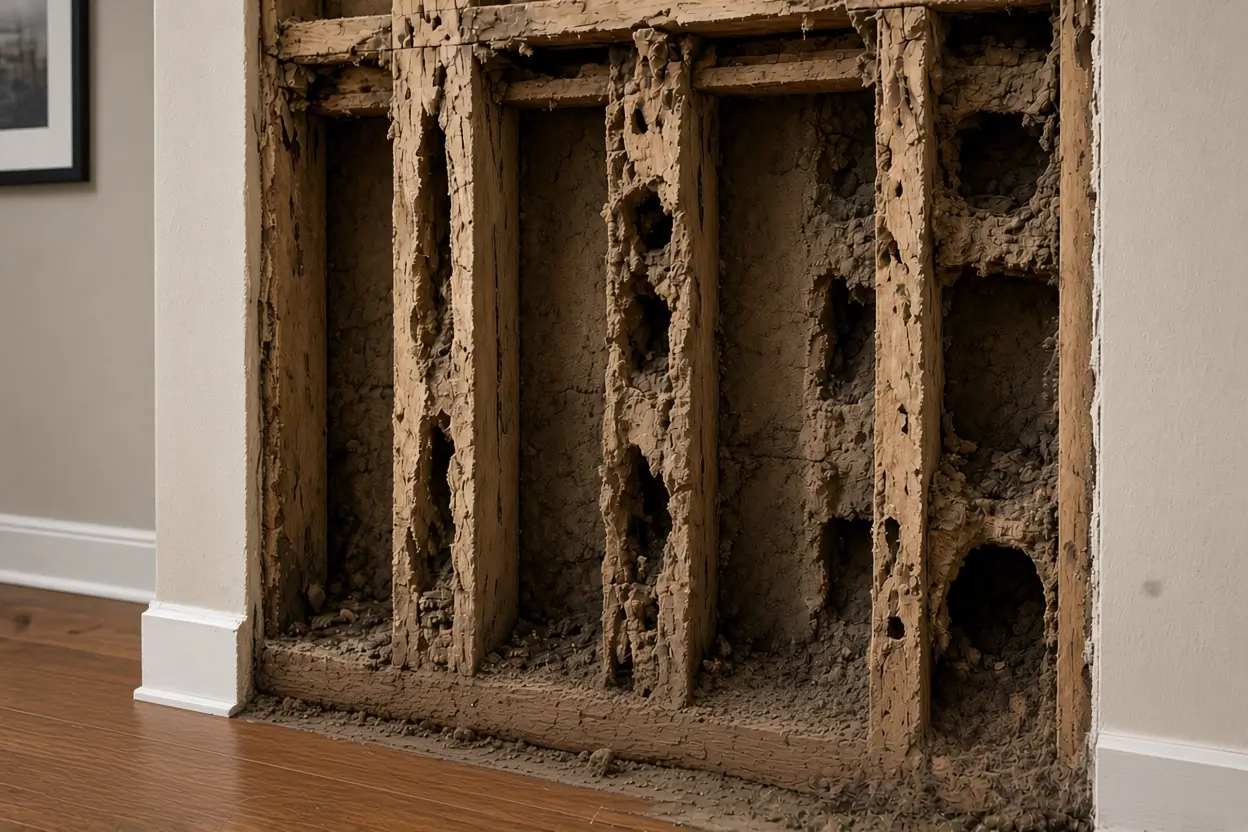
Termites eat wood from the inside.
That means a piece of wood can look relatively normal on the surface while significant damage is occurring underneath.
When tapping on exposed wood produces an unusually hollow sound, it may indicate that the interior has been damaged.
Other signs include:
- Blistered wood
- Buckling surfaces
- Peeling paint
- Tiny holes
- Crumbling wood
- Damaged baseboards
- Thin or weakened wood
- Visible galleries beneath the surface
However, hollow-sounding wood doesn’t automatically mean termites. Water damage, rot, age, and other structural problems can also weaken wood. That’s why the location and combination of symptoms matter.
3. You Find Discarded Wings Near Windows or Doors
Finding piles of tiny discarded wings inside your home can be a major termite warning sign.
When termite swarmers establish or expand colonies, winged termites can emerge and eventually shed their wings.
Homeowners may find wings:
- On windowsills
- Near doors
- Around light fixtures
- On floors
- Near vents
- Around basement windows
- Near other light sources
What do termite wings look like?
Termite wings are generally delicate and similar in length.
Finding multiple discarded wings in a concentrated area is more concerning than finding a single insect wing.
Are flying termites always a sign of an infestation?
Not necessarily inside your home, but winged termites emerging indoors are a strong reason to arrange an inspection.
A swarm can indicate that a mature colony is nearby.
4. Your Doors or Windows Suddenly Stick
A door that suddenly becomes difficult to close might seem like a normal home-maintenance issue.
Sometimes it is.
Changes in humidity, settling, swelling wood, and foundation movement can all affect doors and windows.
But termite damage can also cause structural wood to weaken or change shape.
Pay particular attention if sticking doors or windows appear alongside other termite warning signs.
For example:
“My basement door suddenly sticks, and I’ve also found mud tubes near the foundation.”
That’s much more concerning than a door that simply becomes difficult to close during a humid summer.
Can termites make doors stick?
Yes, indirectly.
Termite damage can weaken or alter wooden components around doors and windows. But sticking by itself isn’t proof of termites.
It’s a clue that needs to be considered with the rest of the house.
5. You See Termites or Other Evidence of an Active Colony
This sounds obvious, but homeowners often don’t realize what they’re looking at. Termites are small insects and can be mistaken for ants. Winged termites, often called swarmer’s, are particularly important to recognize.
How can I tell termites from ants?
There are several differences.
Termites generally have:
- Straight antennae
- A broad waist
- Wings of similar length
Ants generally have:
- Elbowed antennae
- A narrow waist
- Forewings that are typically longer than the hind wings
If you’re unsure what you’re seeing, don’t rely on a blurry photograph or internet identification alone. A professional inspection can determine whether termite activity is present.
What Does Termite Damage Look Like?
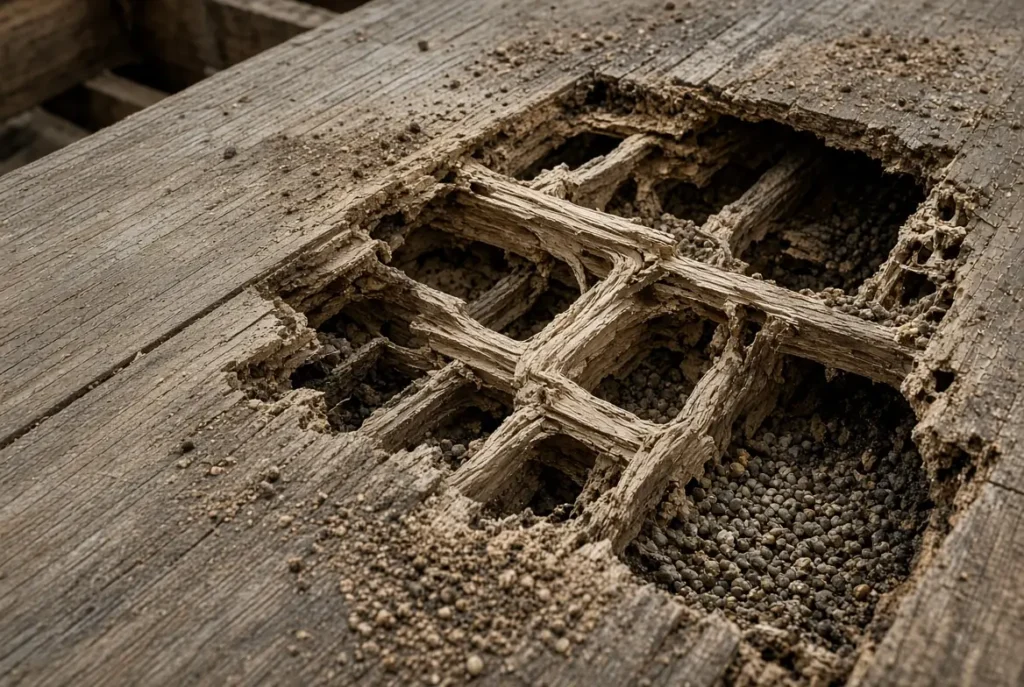
Termite damage can vary considerably depending on the species, location, and length of time the colony has been active.
Possible signs include:
- Hollow-sounding wood
- Wood that breaks unusually easily
- Mud tubes
- Blistered surfaces
- Buckling flooring
- Damaged trim
- Small holes
- Sagging or weakened wood
- Discarded wings
- Visible insects
The important thing to understand is that termite damage isn’t always visible from the outside. Termites can travel through concealed areas of a structure.
Where Do Termites Usually Cause Damage?
Termites are attracted to cellulose, which is found in wood and other plant-based materials.
Around a house, termite activity can occur in places such as:
- Foundation areas
- Crawl spaces
- Basements
- Floor joists
- Wall framing
- Subflooring
- Window frames
- Door frames
- Porches
- Decks
- Sheds
- Other wooden structures
Subterranean termites can enter through soil-to-wood contact, cracks, construction joints, and other pathways.
Can Termites Damage a House Without Being Seen?
Absolutely.
That’s one of the reasons termites can be so frustrating for homeowners. A colony can remain hidden while workers travel through concealed areas. You may not see termites walking across your living room floor.
Instead, you may discover:
- Mud tubes
- Damaged wood
- Swarmers
- Discarded wings
- Structural changes
This is why termite inspections focus on more than simply looking for live insects.
Do Termites Always Leave Visible Damage?
No. Early termite activity may not produce obvious surface damage.
Some damage can remain hidden inside structural components until the wood has been significantly affected.
That’s why homeowners shouldn’t wait until a floor starts collapsing or a wall becomes visibly damaged before investigating a suspected infestation.
How Serious Is Termite Damage?
It depends on how extensive the infestation is and which parts of the structure have been affected.
Termites don’t necessarily cause catastrophic damage overnight.
The bigger concern is continued, undetected activity. Damage to nonstructural trim may be relatively straightforward to address.
Damage involving:
- Floor joists
- Beams
- Structural framing
- Subflooring
- Load-bearing components
can be considerably more serious.
If you suspect structural termite damage, don’t assume cosmetic repairs will solve the problem. The underlying infestation needs to be addressed first.
Can Termites Damage the Foundation?
Termites don’t typically eat concrete.
However, subterranean termites can build mud tubes along concrete foundations to reach wooden portions of a home.
They may enter through cracks, joints, utility penetrations, or other pathways.
So when homeowners say they have “termite damage to the foundation,” the actual concern is often termite access around the foundation and damage to nearby structural wood.
Can Termites Damage Hardwood Floors?
Yes.
Termites can damage wood flooring and the structural materials beneath it.
You might notice:
- Buckling
- Sagging
- Soft spots
- Hollow sounds
- Uneven areas
- Visible damage
But flooring problems can have many causes, including moisture.
If you find flooring damage alongside termite evidence, have the area evaluated before replacing the floor. Otherwise, you may repair the visible symptom while leaving the underlying problem untouched.
Can Termites Cause Sagging Floors?
They can contribute to weakened flooring systems if structural wood has been damaged.
However, a sagging floor can also result from:
- Foundation movement
- Water damage
- Rot
- Structural deficiencies
- Improper construction
- Long-term settlement
Don’t automatically blame termites. Instead, investigate the cause.
What Should I Do If I Find Termites?
Don’t panic, but don’t ignore them either.
Take note of:
- Where you found them
- Whether they’re winged
- How many you saw
- Whether wings are present
- Whether mud tubes are nearby
- Whether surrounding wood appears damaged
Avoid destroying evidence before it can be identified. Then arrange an appropriate inspection if termite activity is suspected.
Should I Knock Down Termite Mud Tubes?
You can remove a visible tube, but that doesn’t eliminate the termite colony.
If you suspect an active infestation, it’s often more useful to document the location first. Take a photograph and note where the tube was found.
A professional can then determine whether it is consistent with termite activity and look for additional evidence.
Can I Treat Termites Myself?
Homeowners can take preventative measures, but treating an established termite infestation is different from preventing pests.
Professional termite treatment may involve methods such as:
- Soil treatments
- Bait systems
- Targeted treatments
- Structural inspection
- Moisture correction
- Exclusion work
The appropriate treatment depends on the termite species, property, infestation, and construction.
Killing the termites you can see isn’t necessarily the same thing as eliminating the colony.
Does Seeing One Termite Mean I Have an Infestation?
Not necessarily. One insect can enter a house accidentally.
However, if you’re finding multiple termites, swarmers, discarded wings, mud tubes, or repeated activity, the situation deserves further investigation.
The more pieces of evidence you find, the more important an inspection becomes.
Are Termites Worse in Certain Parts of a House?
Termite activity often deserves particular attention around areas where moisture and soil meet the structure.
Check:
- Basements
- Crawl spaces
- Foundation walls
- Porches
- Decks
- Areas near plumbing
- Damp areas
- Wood that contacts or sits very close to soil
Moisture doesn’t necessarily cause termites, but damp conditions can make an environment more favorable to many wood-destroying pests.
How Can I Prevent Termite Problems?
You can’t guarantee a termite-free house, but you can reduce conditions that make your property attractive to termites.
Homeowners should:
- Repair plumbing leaks promptly.
- Keep gutters and downspouts functioning properly.
- Direct water away from the foundation.
- Avoid unnecessary wood-to-soil contact.
- Keep firewood away from the house.
- Remove dead wood around the property.
- Maintain crawl spaces appropriately.
- Seal unnecessary exterior openings.
- Address moisture problems.
Regular inspections can also help identify problems before they become expensive repairs.
What Should I Do If I Find Termite Damage?
Don’t immediately cover it with paint, replace the wood, or make cosmetic repairs.
First determine:
- Is the damage active or old?
- Are termites currently present?
- What part of the structure is affected?
- How extensive is the damage?
- What caused the termites to access the property?
- Does structural wood need additional evaluation?
The infestation and the damage are two separate problems. The termites need to be addressed. Then damaged structural materials can be evaluated and repaired as necessary.
Frequently Asked Questions About Termite Damage
What are the first signs of termites?
Common warning signs include mud tubes, discarded wings, visible swarmers, hollow or damaged wood, and unexplained changes to wooden structures.
What does termite damage look like?
It can look like hollow wood, blistered surfaces, buckling flooring, weakened wood, small openings, or damaged structural components. Some damage remains hidden.
How do I know if I have termites or ants?
Termites generally have straight antennae, a broad waist, and wings of similar length. Ants generally have elbowed antennae, a narrow waist, and different-length wings.
Are discarded wings a sign of termites?
They can be. Multiple discarded wings around windows, doors, or other light sources can indicate termite swarmers and should be investigated.
Are mud tubes always caused by termites?
No. But mud tubes associated with termite activity are an important warning sign and should not simply be ignored.
Can termites damage a house without being seen?
Yes. Termites often remain hidden in soil, walls, crawl spaces, and other concealed areas.
Can termites cause doors to stick?
They can contribute to changes in wooden structures, but sticking doors can have many other causes. Look for additional termite evidence.
Can termites damage hardwood floors?
Yes. Termites can damage both wood flooring and the structural wood beneath it.
Can termites destroy a house?
Severe, untreated termite damage can compromise important wooden components. The severity depends on the extent and duration of the infestation and which structural components are affected.
Should I treat termites myself?
DIY products may have a role in certain situations, but an established infestation requires proper identification and treatment. Eliminating visible termites doesn’t necessarily eliminate the colony.
Should I remove termite mud tubes?
Removing a mud tube doesn’t eliminate the infestation. Document the location and have suspected activity evaluated.
How quickly can termites cause damage?
There isn’t one universal timeline. Colony size, termite species, environmental conditions, food availability, and the structure itself all influence how quickly damage develops.
Is termite damage expensive to repair?
It can be, particularly when structural wood has been affected. The cost depends on the extent of the damage and the repairs required.
What should I do if I find termites in my basement?
Don’t ignore them. Document where you found them and look for additional evidence such as mud tubes, damaged wood, moisture, or discarded wings. A professional inspection can determine the extent of the problem.
Be on the look out for termites
Termites don’t always announce themselves.
You may never see a large group of termites crawling through your home. Instead, the warning signs may be subtle—a mud tube along the foundation, a pile of discarded wings on a windowsill, hollow-sounding wood, or a door that suddenly doesn’t fit quite right.
One sign doesn’t necessarily prove you have termites.
But multiple signs occurring together should not be ignored.
The most important thing is to identify whether the activity is current, determine how the termites are accessing the structure, and evaluate whether any structural wood has been damaged.
Catching termite activity early can give homeowners more options and potentially prevent a relatively manageable pest problem from becoming a much larger structural repair.