No Power to the Thermostat? Why Your AC System Looks Completely Dead
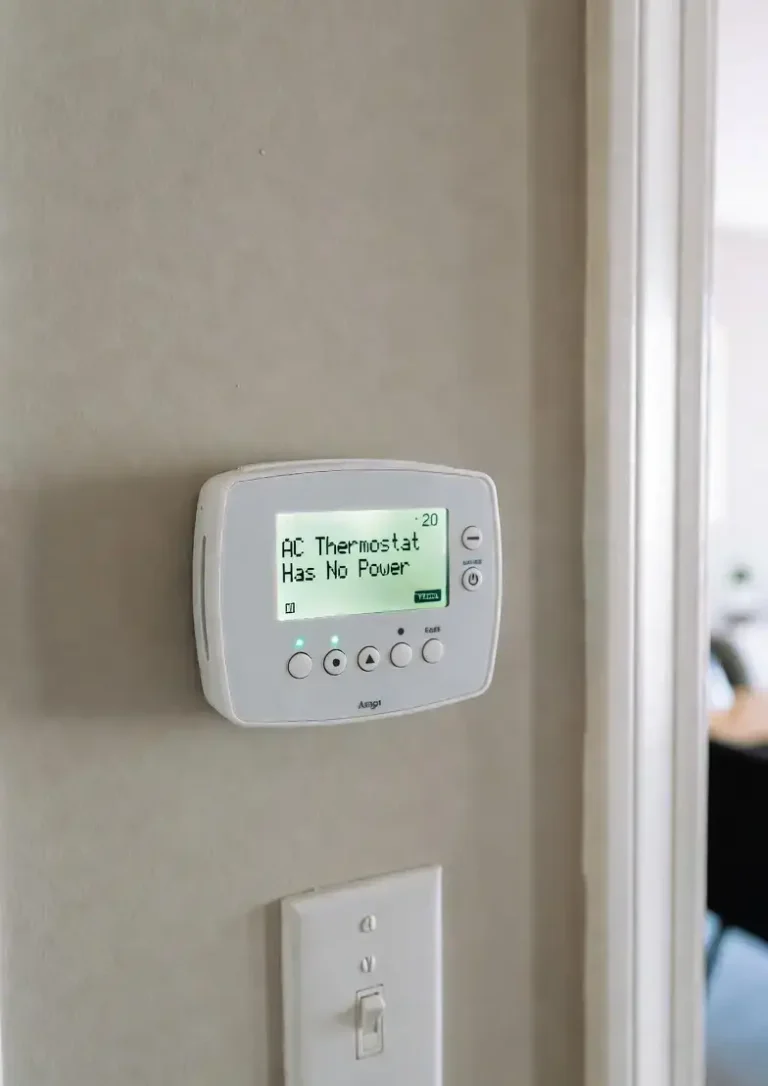
When there’s no power to the thermostat, the whole house feels stuck. The screen is blank. The AC won’t turn on. Pressing buttons does nothing. It feels like the system just gave up overnight.
Most homeowners jump straight to one conclusion: the thermostat must be bad.
That’s rarely the case.
In most situations, the thermostat is doing exactly what it’s supposed to do—show you that power isn’t reaching it. The real problem is almost always somewhere else in the system.
The Symptom: Nothing Works at All
“No power to the thermostat” usually means:
- The thermostat screen is completely blank
- The AC will not respond at all
- Battery replacement doesn’t help (or it doesn’t use batteries)
- The system doesn’t make any noise when adjusted
This is different from cooling issues or airflow problems. This is a total shutdown of communication between your AC system and the thermostat.
That distinction matters because it changes how the problem should be diagnosed.
How Thermostat Power Actually Works (Without the Tech Talk)
The thermostat doesn’t pull power from your wall outlets.
Instead:
- Power comes from the furnace or air handler
- That power is converted to low voltage
- The low voltage is sent through control wiring to the thermostat
If anything interrupts that chain, the thermostat goes dark—even if the rest of the house still has electricity.
This is usually why replacing the thermostat first is usually the wrong move.
Common Reasons There’s No Power to the Thermostat
Here are the most common causes, explained in plain English.
1. AC Safety Switch Shut the System Down
Many AC systems are designed to protect themselves.
If water backs up in the drain line, a safety or float switch cuts power to the system. When that happens, the thermostat loses power intentionally.
This is extremely common in homes with basements or older drain setups.
2. Blown Low-Voltage Fuse
Inside the furnace or air handler is a small fuse that protects the control wiring.
This fuse often blows when:
- Thermostat wires touch
- Someone installs a thermostat incorrectly
- Wiring insulation wears down
Once it blows, power to the thermostat is gone.
3. Furnace or Air Handler Lost Power
Even if the outdoor AC unit has power, the indoor equipment might not.
This can happen because of:
- A tripped breaker
- A shut-off service switch
- Maintenance work that never got turned back on
No indoor power = no thermostat power.
4. Loose or Damaged Control Wiring
Wires don’t last forever.
Over time:
- Connections loosen
- Wires corrode
- Rodents chew insulation
One loose wire is enough to shut the thermostat down completely.
5. Failed Transformer
The transformer reduces voltage so the thermostat can operate safely.
When it fails:
- The system may still have power
- The thermostat receives nothing
This one isn’t visible without testing, which is why it’s often missed.
6. Faulty Thermostat (Last on the List for a Reason)
Thermostats do fail—but far less often than people think.
Replacing it before confirming power is reaching it usually wastes time and money.
Why This Happens So Often After Long Periods of No Use
A lot of people notice this issue right when summer starts.
That’s because when the AC hasn’t been running:
- Drain lines dry out
- Electrical connections sit unused
- Weak components don’t get stressed
The first heat wave forces the system to work hard, and that’s when borderline components finally fail.
So even if it “worked last year,” that doesn’t mean the system was healthy.
What NOT to Do When the Thermostat Has No Power
This is where small problems turn into expensive ones.
Avoid:
- Jumping wires together “just to test”
- Bypassing safety switches
- Replacing fuses repeatedly
- Guessing wire connections
- Resetting breakers over and over
Low-voltage systems still connect to sensitive components. One wrong move can fry a control board or transformer fast.
Why Replacing the Thermostat First Is a Common Mistake
It feels logical. The thermostat isn’t working, so replace it.
But if the thermostat isn’t receiving power:
- A new thermostat won’t turn on
- Or it’ll fail again once the real issue shows up
Now you’ve spent money and still don’t have AC.
The smarter move is always to confirm whether power is reaching the thermostat in the first place.
When It Makes Sense to Call a Handyman
If:
- The thermostat has no power
- Batteries didn’t help
- There’s no obvious switch or breaker issue
- You’re not comfortable testing electrical components
That’s the right time to call someone who knows how to trace the problem properly.
A qualified handyman can:
- Follow the power path
- Test fuses and transformers
- Inspect wiring safely
- Identify whether the issue is HVAC-related or electrical
That approach fixes the cause—not just the symptom.
Why a Handyman Is Often the Right Choice
This issue lives between HVAC and electrical work.
A good handyman understands:
- Thermostat wiring
- Low-voltage systems
- Power interruptions
- Safe troubleshooting
That means fewer guesses and fewer unnecessary part replacements.
Why This Problem Can Be Intermittent (And Why That Matters)
One thing that confuses people is when the thermostat has power one day, and the next day it’s dead again. That’s usually the system warning you before a complete failure.
Intermittent power loss is often caused by:
- A loose connection that wiggles out
- A failing transformer that works sometimes
- A partially clogged drain line that triggers the safety switch
- A fuse that’s close to blowing
This is important because intermittent problems tend to get worse over time. If it’s happening now, it’s only a matter of time before it stops working completely—usually at the worst possible moment.
The Real Reason You Don’t Want to “Just Reset the Breaker”
A lot of homeowners treat this like a normal electrical problem and start flipping breakers. Sometimes that works. Sometimes it doesn’t.
Here’s the thing:
If the thermostat has no power because of a blown fuse, a bad transformer, or a safety switch, resetting the breaker doesn’t fix the real issue. It just gives you a temporary restart until the system detects the same problem again.
Resetting the breaker repeatedly is not always a solid solution. It’s just delaying the inevitable.
Why You Shouldn’t Ignore It
It might seem like a small inconvenience at first, especially if the weather is mild. But the longer it goes on, the more likely you are to end up with a full system shutdown when you need cooling the most.
The thermostat going dead is usually the first sign that the system is struggling. Fix it now, and you’ll likely avoid a bigger repair later.
The Truth of No Power To The Thermostat
When there’s no power to the thermostat, the system isn’t broken—it’s interrupted.
There is always a reason power stopped reaching the thermostat. The goal is finding that reason without creating new problems in the process.
Handled correctly, this is usually a straightforward repair. Handled wrong, it turns into a much bigger job than it ever needed to be.
Need Help With a No-Power Thermostat?
If your thermostat is completely dead and you want the issue diagnosed correctly without guesswork, a local handyman can help.
Call 313-254-6072 to schedule service.