Gutter and Fascia Cleaning Near Me: What Homeowners Need to Know Before Damage Starts
When homeowners search “gutter and fascia cleaning near me,” they’re usually already dealing with a problem.
It might be streaks running down the siding. It might be gutters overflowing during rain. Or it might be something more subtle—like wood starting to look soft, discolored, or worn out near the roofline.
The frustrating part is that most people assume it’s just a cleaning issue. But when gutters and fascia are involved together, it’s usually a warning sign that water has already been sitting where it shouldn’t be.
This isn’t just about leaves in a gutter. It’s about how water interacts with your roof edge and the wood behind it.
And if it’s ignored long enough, it turns into repairs—not cleaning.
Let’s break down what’s really happening, what homeowners miss, and how to deal with it before it becomes expensive.
Why Gutter and Fascia Problems Usually Show Up Together
Your gutters and fascia boards work as one system.
The fascia is the vertical board behind your gutters. It supports the gutter system and acts as a barrier between your roof edge and the outside environment.
When gutters clog, water stops flowing through the system and starts spilling over.
That overflow doesn’t just fall harmlessly to the ground.
It runs directly onto the fascia board.
And that’s where the damage starts.
Over time, repeated exposure leads to:
- Wood rot
- Paint peeling
- Soft or weakened boards
- Mold growth
- Gutter detachment
So, when someone searches for gutter and fascia cleaning, they’re often already dealing with both water blockage and early structural wear.
The Real Problem Homeowners Don’t See Coming
Most homeowners think gutters just need to be “cleaned out.”
But fascia damage usually happens before people even realize there’s a gutter problem.
Here’s how it typically develops:
- Leaves and debris start collecting in gutters
- Water flow slows down
- Overflow begins during rain
- Water runs behind or over gutters
- Fascia boards absorb repeated moisture
- Wood begins to weaken and deteriorate
The key issue is timing.
By the time fascia damage is visible, the gutter problem has already been there for a while.
Signs You Need Gutter and Fascia Cleaning Immediately
Most homeowners miss early warning signs because they develop slowly.
Here’s what to look for:
Water Overflowing From Gutters
This is the most obvious sign. If water is spilling over during rain, the system is already blocked.
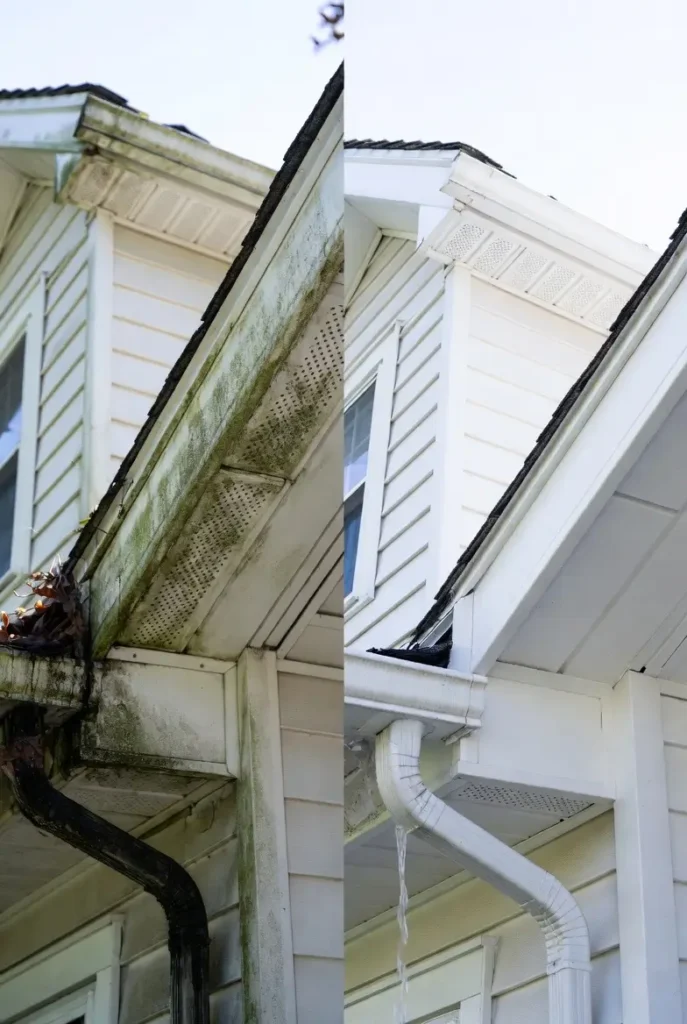
Dark Staining on Fascia Boards
Streaks or discoloration near the roofline usually indicate repeated water exposure.
Peeling Paint or Soft Wood
If fascia boards feel soft or look warped, moisture has already been sitting there too long.
Sagging Gutters
When fascia weakens, gutters often start pulling away or sagging.
Mold or Mildew Near Roofline
Moisture buildup encourages organic growth over time.
If you see more than one of these, the issue is no longer just maintenance—it’s active damage prevention.
Why This Problem Is So Common in Michigan Homes
In Michigan, gutter and fascia issues happen more frequently than many homeowners expect.
There are a few reasons for this:
- Heavy fall leaf seasons
- Constant freeze-thaw cycles
- Snow buildup and melting
- High moisture levels
- Mature tree coverage in neighborhoods
When you combine debris buildup with repeated freezing and thawing, water tends to sit longer in gutters.
That means fascia boards get exposed to moisture more often—and for longer periods.
Even a small clog can turn into ongoing water exposure.
The Fascia Damage Most People Don’t Realize Is Happening
Fascia damage doesn’t usually start as something obvious.
It often begins internally.
Behind paint and trim, wood slowly absorbs moisture.
At first, nothing looks wrong.
Then it progresses:
- Paint starts bubbling
- Corners soften
- Boards begin to warp
- Nails loosen
- Gutters shift or pull
By the time visible damage shows up, repairs are usually required—not just cleaning.
Why Cleaning Gutters Alone Isn’t Always Enough
A lot of homeowners think gutter cleaning will solve everything.
Sometimes it does.
But not always.
If fascia damage has already started, cleaning gutters won’t fix the underlying issue—it only stops new water from making it worse.
That’s why proper service often includes:
- Full gutter debris removal
- Downspout clearing
- Inspection of fascia boards
- Checking for water damage or soft wood
If fascia damage is ignored, gutters can continue failing even after cleaning.
The Hidden Cost of Waiting Too Long
The biggest mistake homeowners make is delaying service.
Gutter and fascia issues rarely improve on their own.
Instead, they escalate into:
- Wood replacement
- Gutter reinstallation
- Roof edge repairs
- Mold remediation
- Structural fascia rebuilds
What starts as a basic cleaning can turn into a repair project that costs several times more.
And in many cases, the damage spreads beyond just the roofline.
How Often Should Gutter and Fascia Areas Be Checked?
For most homes, a twice-yearly gutter cleaning schedule is the minimum:
- Spring
- Fall
But fascia should also be visually inspected during those cleanings.
Homes surrounded by trees may need more frequent checks because debris buildup happens faster.
The goal isn’t just cleaning—it’s prevention.
Once fascia damage starts, it progresses quickly if ignored.
Why “Near Me” Searches Usually Mean Urgency
When homeowners search “gutter and fascia cleaning near me,” it usually means one of three things:
- They just noticed overflow
- They saw visible wood damage
- They’re worried about water getting into the home
At that point, waiting usually makes the issue worse.
Because fascia damage doesn’t pause—it keeps absorbing moisture every time it rains.
DIY vs Professional Cleaning for Fascia Issues
Gutter cleaning alone can sometimes be DIY-friendly.
But fascia inspection and damage evaluation is harder to do safely and correctly without experience.
Homeowners often miss:
- Early wood rot
- Hidden water damage behind gutters
- Loose gutter fasteners
- Subtle structural shifts
Professionals don’t just remove debris—they identify whether the system is still protecting the home or already failing.
That difference matters.
What a Proper Gutter and Fascia Service Should Include
A complete service should involve:
- Full gutter cleaning
- Downspout flushing
- Fascia inspection
- Identification of soft or rotting wood
- Water flow testing
- Minor gutter realignment if needed
Because cleaning alone isn’t enough if structural damage is starting.
Don’t Let Gutter Problems Repeat
Gutter and fascia problems don’t happen overnight.
They build slowly through repeated exposure to water, debris, and weather cycles.
The warning signs are usually there:
- Overflow during rain
- Staining near rooflines
- Soft or peeling wood
- Sagging gutters
The problem is most homeowners don’t act until multiple signs appear.
By then, it’s no longer just maintenance—it’s damage control.
Catching the issue early is the difference between a simple cleaning and a costly repair.
Need Gutter and Fascia Cleaning Near You?
Don’t wait for wood rot, gutter failure, or water damage to get worse. Get your system cleaned and inspected properly.
Call 313-367-1116 Today