Drywall Repair: How to Fix Holes, Cracks, and Water-Damaged Walls
Need Drywall Repair?
Whether you have holes, cracks, dents, or water-damaged drywall, professional repairs can restore your walls and make your home look like new again.
Call 313-513-1185 TodayDrywall damage is one of the most common problems homeowners face. Whether it is a small hole from a picture frame, cracks caused by settling, or water-damaged drywall from a plumbing leak, damaged walls can make an otherwise beautiful home look neglected.
The good news is that most drywall problems can be repaired without replacing an entire wall. The key is identifying what caused the damage and choosing the right repair method.
So, how do you repair damaged drywall? Small holes and dents can often be patched with drywall compound, while larger holes, deep cracks, or water-damaged sections may require cutting out and replacing part of the drywall.
Understanding the cause of the damage helps ensure the repair lasts instead of becoming a recurring problem.
What Causes Drywall Damage?
Drywall can become damaged for many different reasons. Some issues are cosmetic, while others may point to a larger problem inside your home.
Common causes of drywall damage include:
- Furniture impacts and accidental holes
- Moving damage
- Door handles hitting walls
- Water leaks from plumbing or roofs
- Foundation settling
- Temperature and humidity changes
- Poor installation
- Nail pops and fastener issues
A small crack may simply need patching, but larger cracks or stains should be inspected because they may indicate moisture problems or structural movement.
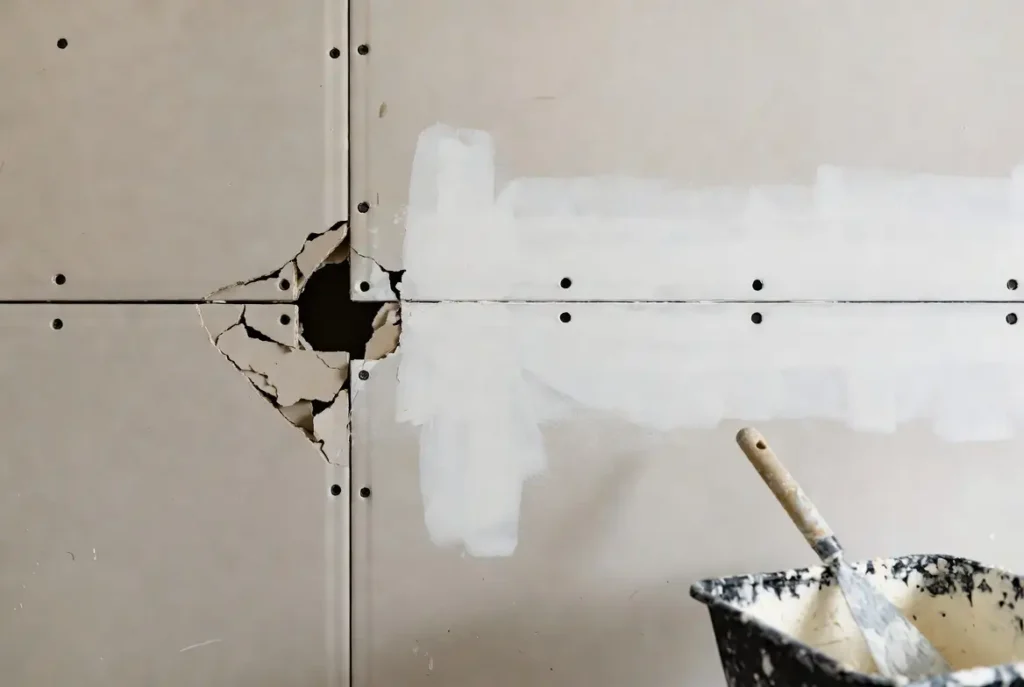
How Do You Repair a Hole in Drywall?
The repair process depends on the size of the hole.
Small Drywall Holes
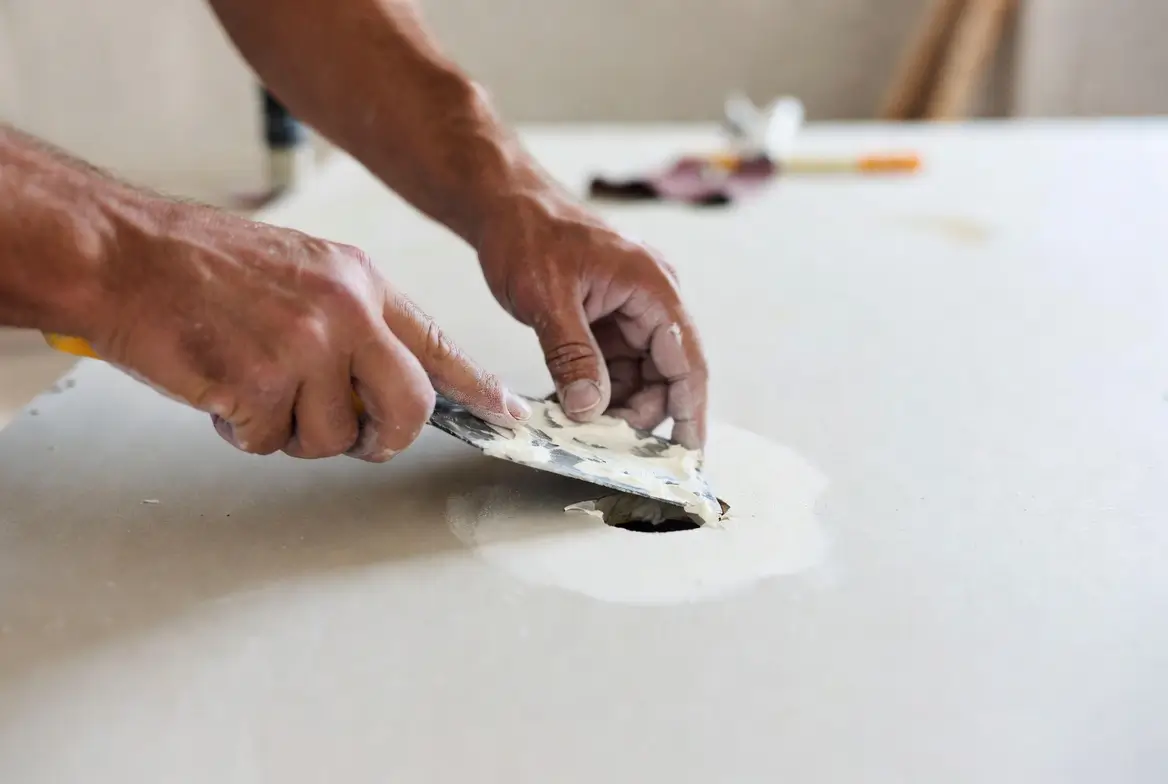
Small holes, such as those left behind from nails, screws, or wall anchors, are usually easy to repair.
The basic process includes:
- Cleaning the damaged area
- Applying spackle or joint compound
- Allowing it to dry
- Sanding the surface smooth
- Priming and painting the repair
Small repairs are often completed quickly, but matching the existing wall texture and paint color can be the most challenging part.
How Do You Fix a Large Hole in Drywall?
Larger holes require more than just filling the opening.
For holes several inches wide, a professional repair typically involves:
- Cutting away damaged drywall
- Installing a backing support
- Fitting a new piece of drywall
- Securing the patch
- Applying joint compound
- Sanding and blending the repair
- Matching the wall texture and paint
A properly repaired drywall patch should blend into the wall so that you cannot tell where the damage occurred.
Why Does My Drywall Have Cracks?
Drywall cracks are common, but the reason behind them matters.
Some cracks happen naturally as homes settle. Others may indicate moisture issues or movement.
Common drywall crack causes include:
Normal Home Settling
New and older homes can experience minor movement over time. Small, thin cracks near corners or seams are often caused by normal settling.
Temperature and Humidity Changes
Drywall expands and contracts as moisture levels change. Seasonal changes can cause small cracks to appear, especially in Michigan homes where temperatures fluctuate throughout the year.
Poor Drywall Installation
If drywall seams were not properly taped or the wrong materials were used, cracks may appear repeatedly in the same areas.
Foundation or Structural Movement
Large cracks, especially diagonal cracks around doors and windows, may require additional investigation.
Can You Repair Cracked Drywall Without Replacing It?
Yes, many drywall cracks can be repaired without replacing the entire section.
A common repair method includes:
- Removing loose drywall material
- Filling the crack with joint compound
- Applying drywall tape if needed
- Sanding the surface smooth
- Repainting the area
However, if the crack continues returning after repairs, the underlying cause needs to be addressed.
A repair that only covers the crack may temporarily hide the problem without fixing what caused it.
How Do You Repair Water-Damaged Drywall?
Water-damaged drywall requires a different approach because moisture can weaken the material and create additional problems.
Signs of water-damaged drywall include:
- Brown or yellow stains
- Soft or swollen drywall
- Peeling paint
- Bubbling surfaces
- Musty odors
- Mold growth
The first step is always finding and fixing the source of the water.
Common causes include:
- Leaking pipes
- Roof leaks
- Plumbing backups
- Poor bathroom ventilation
- Basement moisture problems
Once the moisture source is repaired, damaged drywall may need to be removed and replaced.
Should Water-Damaged Drywall Be Replaced?
In many cases, yes.
Drywall is made from gypsum, which absorbs water easily. Once it becomes saturated, it can lose its strength and may not return to its original condition.
Replacement is usually recommended when drywall is:
- Soft or crumbling
- Severely stained
- Swollen or warped
- Showing mold growth
- Wet for an extended period
Simply painting over water stains often hides the problem temporarily but does not repair the damage.
How Much Does Drywall Repair Cost?
The cost of drywall repair depends on several factors:
- Size of the damaged area
- Type of repair needed
- Wall texture
- Paint matching requirements
- Whether water damage is involved
Small holes may be inexpensive repairs, while larger patches, ceiling repairs, or water-damaged drywall can cost more because they require additional labor and finishing.
A professional can usually provide a better estimate after seeing the damage in person.
Can I Repair Drywall Myself?
Many homeowners can handle small drywall repairs with basic tools.
DIY drywall repair may work well for:
- Nail holes
- Small dents
- Minor cracks
- Small patches
However, hiring a professional may be the better option for:
- Large holes
- Ceiling drywall damage
- Water damage
- Multiple damaged areas
- Matching textured walls
- Repairs requiring painting and finishing
The hardest part of drywall repair is often not filling the hole — it is making the repair disappear.
How Long Does Drywall Repair Take?
The repair time depends on the size and complexity of the damage.
Typical timelines include:
- Small holes: A few hours including drying time
- Medium repairs: One day
- Large patches: Several days due to multiple layers of compound and finishing
- Water damage repairs: Longer if drying, removal, and replacement are required
Drywall compound often needs time to dry between applications, which is why rushing the process can lead to visible imperfections.
How Can You Prevent Drywall Damage?
While some drywall problems are unavoidable, homeowners can reduce damage by:
- Repairing plumbing leaks quickly
- Maintaining proper indoor humidity
- Using door stops
- Installing picture hangers correctly
- Addressing roof leaks immediately
- Monitoring basement moisture
- Repairing small cracks before they worsen
Regular home maintenance can prevent small drywall issues from turning into expensive repairs.
When Should You Call a Professional for Drywall Repair?
You should consider professional drywall repair when the damage affects appearance, safety, or requires specialized skills.
Call a drywall repair professional if you have:
- Large holes in walls
- Cracked ceilings
- Water-damaged drywall
- Mold concerns
- Repeated cracking
- Difficult texture matching
- Multiple repairs throughout your home
A properly finished drywall repair should look like the damage never happened.
Its Common To Have Drywall Damage
Drywall damage is common, but it does not have to become a major home improvement project. Small holes, cracks, and dents can often be repaired quickly, while larger repairs require the right materials and experience to achieve a seamless finish.
If you are dealing with damaged drywall, identifying the cause is the first step. Whether the issue is cosmetic damage or a sign of moisture problems, a proper repair can restore the appearance and value of your home.