Why Your AC Won’t Start When the Thermostat Is Off: Checking the Red Wire Power
Need AC Repair?
If your thermostat is blank, your AC won’t start, or you’re dealing with a power or wiring problem, professional HVAC troubleshooting can help identify the cause and get your system running properly again.
Call 313-254-6072 TodayWhen your air conditioner won’t start, it’s easy to blame the thermostat. Sometimes the thermostat is the problem, but a loss of low-voltage power can shut down the entire HVAC control system.
One of the first things to understand is the thermostat’s red wire, commonly labeled R. This wire supplies approximately 24 volts AC from the HVAC system’s control transformer to the thermostat. Without that power, the thermostat may appear completely dead or fail to send the signal needed to turn on the heating or cooling system.
So, how do you know whether your thermostat is actually bad or simply isn’t receiving power?
A basic diagnostic process can help narrow down the problem. You can check the HVAC breaker, inspect the system’s low-voltage fuse, look for obvious wiring problems, and—if you are comfortable using a multimeter—test for approximately 24 volts AC between the R and C terminals.
Because HVAC systems contain both low-voltage controls and potentially dangerous high-voltage electrical components, homeowners should only perform tests they can safely perform. Never work inside an electrical panel or handle exposed high-voltage wiring unless you are qualified to do so.
What Does the Red Wire on a Thermostat Do?
The red thermostat wire, usually connected to the R terminal, carries approximately 24 volts AC from the HVAC control system to the thermostat.
Think of it as the thermostat’s power supply.
Depending on the system, the thermostat may use other wires to control different functions:
- R – 24-volt power
- C – Common
- Y – Air conditioning compressor signal
- G – Indoor blower signal
- W – Heating signal
The exact wiring can vary by HVAC system, but the R wire is commonly the first place to investigate when a thermostat appears completely dead.
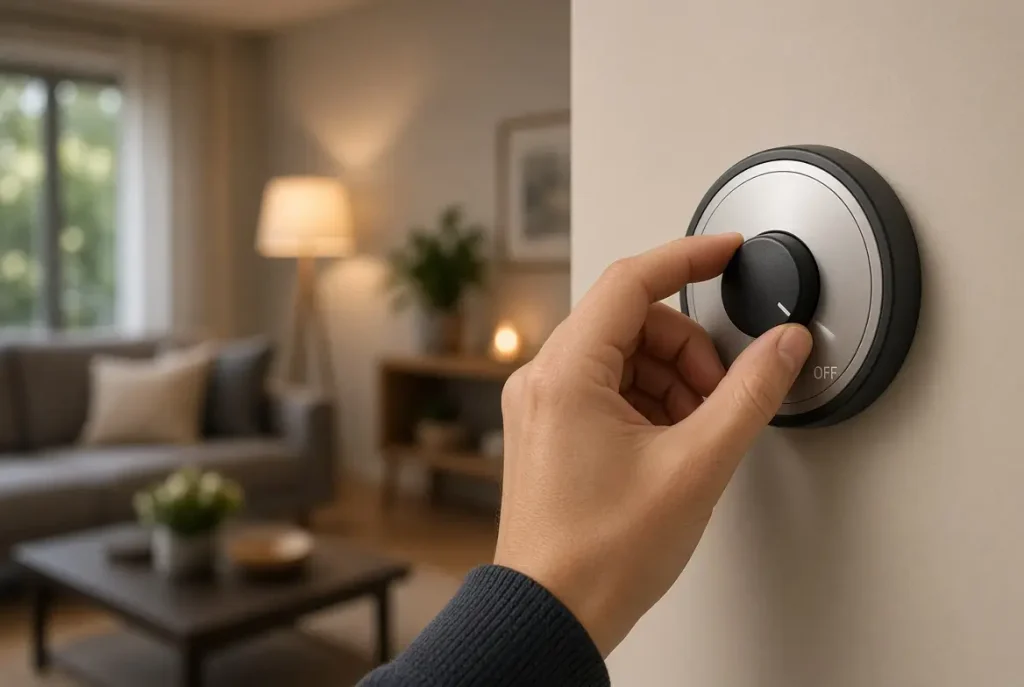
Why Won’t My AC Start If the Thermostat Is Off?
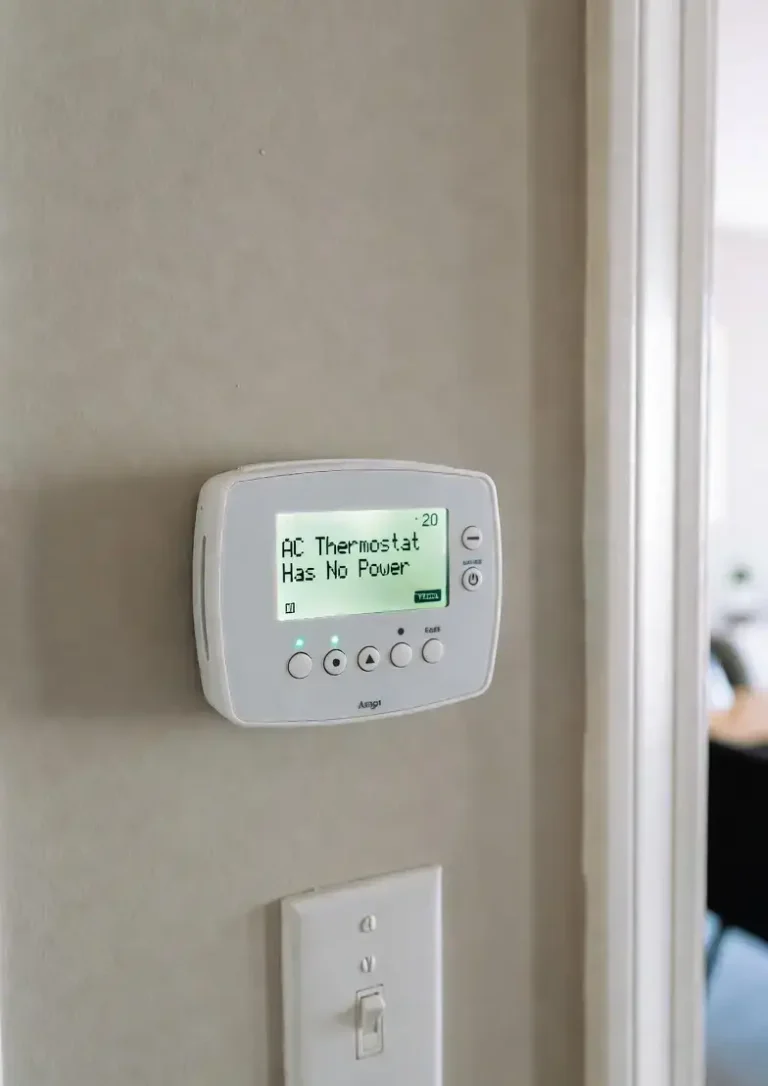
If by “off” you mean the thermostat display is completely blank, the issue may not actually be the thermostat.
A blank thermostat can be caused by:
- Loss of 24-volt power
- A blown low-voltage fuse
- A tripped HVAC breaker
- A problem with the transformer
- A disconnected thermostat wire
- Damaged wiring
- A condensate safety switch
- A failed thermostat
If the thermostat has no power, it cannot communicate with the HVAC equipment.
That means the first question should be:
Is the thermostat receiving 24-volt power?
How Do I Know If My Thermostat Has Lost Power?
The easiest clue is a completely blank display.
Depending on the thermostat, you may also notice:
- No display
- No backlight
- No response to buttons
- No heating or cooling call
- System not responding to temperature changes
- Thermostat resetting unexpectedly
If your thermostat normally displays the room temperature but is suddenly completely blank, check the HVAC power supply before assuming the thermostat itself has failed.
Where Does Thermostat Power Come From?
Thermostat power typically originates at the HVAC system’s control transformer.
The transformer reduces household electrical voltage to the approximately 24-volt AC control voltage used by the thermostat and other HVAC controls.
The low-voltage circuit generally passes through protective components such as a fuse.
If that circuit loses power, the thermostat can go completely dead.
How Do I Check the HVAC Breaker?
Start with the home’s electrical service panel.
Look for the breaker labeled:
- Furnace
- HVAC
- Air conditioner
- AC
- Heating
- Air handler
If a breaker appears to have tripped, it may not look dramatically different from the other breakers.
A tripped breaker can sit somewhere between the ON and OFF positions.
If you’re comfortable doing so, move the breaker fully to OFF and then back to ON once.
If it immediately trips again, don’t repeatedly reset it.
A breaker that repeatedly trips may indicate an electrical problem that needs professional diagnosis.
Can a Blown Fuse Cause a Dead Thermostat?
Yes.
Many HVAC systems have a small low-voltage fuse on the control board. A blown fuse can interrupt power to the thermostat.
These fuses often resemble small automotive-style blade fuses.
A blown fuse may occur because of:
- A shorted thermostat wire
- Damaged wiring
- Incorrect wiring
- A component failure
- Work performed on the HVAC system
- A low-voltage electrical short
Replacing the fuse without identifying why it blew isn’t always a complete repair.
If the replacement fuse blows again, stop replacing fuses and have the system diagnosed.
Where Is the HVAC Low-Voltage Fuse?
The low-voltage fuse is commonly located on the HVAC control board.
Depending on your equipment, the control board may be inside:
- The furnace
- Air handler
- Indoor HVAC cabinet
The fuse is usually clearly visible on the circuit board.
However, accessing the control board can expose you to electrical hazards.
Before opening an HVAC cabinet, turn off the appropriate electrical power and follow the manufacturer’s safety instructions.
If you aren’t comfortable identifying the correct components, have an HVAC professional perform the inspection.
How Do I Test the Red Wire for 24 Volts?
A multimeter can be used to test the thermostat’s low-voltage power.
The typical test is between the R and C terminals.
With the HVAC system powered and the meter set appropriately for AC voltage, a functioning low-voltage control circuit will commonly measure around 24 volts AC.
The exact reading can vary depending on the system and operating conditions.
The Basic Test You Can Run
If you’re qualified and comfortable performing a low-voltage HVAC measurement:
- Set your multimeter to AC voltage.
- Access the thermostat wiring carefully.
- Identify the R and C terminals.
- Place one meter probe on R.
- Place the other probe on C.
- Read the voltage.
A reading around 24 volts AC generally indicates that low-voltage power is reaching the thermostat.
A reading of zero or substantially below the expected voltage suggests a problem somewhere in the low-voltage circuit.
Do not allow the meter probes to touch each other or bridge adjacent terminals.
What If I Have 24 Volts at the Red Wire?
If you measure appropriate voltage between R and C but the thermostat remains completely dead, the thermostat itself may be defective.
Other possibilities include:
- Poor terminal connection
- Damaged thermostat
- Loose wire
- Internal thermostat failure
- Incorrect wiring
If the thermostat has power but the AC still doesn’t respond, the problem may be farther down the control circuit.
For example, the thermostat may not be sending the cooling signal through the Y terminal.
What If There Is No Voltage Between R and C?
If you have no voltage between R and C, the problem is likely upstream of the thermostat.
Possible causes include:
- Blown low-voltage fuse
- Failed transformer
- Tripped breaker
- Open safety switch
- Broken thermostat wire
- Control board problem
- Wiring short
This is where systematic troubleshooting becomes important.
Don’t immediately replace the thermostat when the thermostat isn’t receiving power.
Can a Condensate Switch Shut Off My Thermostat?
Yes, depending on how the HVAC system is wired.
Air conditioning systems produce condensation as they remove moisture from indoor air.
That water normally drains away through a condensate drain system.
If the drain becomes clogged, water can accumulate in the drain pan. Many HVAC systems use a float switch or condensate safety switch to shut down equipment when water reaches a certain level.
This protects the home from potential water damage.
A condensate safety switch can interrupt the cooling system’s operation and, on some installations, can interrupt thermostat power.
If your AC stopped working after a period of humid weather, a clogged condensate drain is worth considering.
Why Does My AC Stop Working After Heavy Humidity?
High humidity can increase the amount of condensation produced by an air conditioner.
That can expose problems such as:
- Clogged condensate drains
- Full drain pans
- Failed condensate pumps
- Activated float switches
If the thermostat suddenly becomes blank during humid weather, don’t automatically assume the thermostat failed.
Check for signs of water around the indoor HVAC equipment and look for an activated condensate safety switch if your system has one.
What Should I Check Before Calling an HVAC Professional?
If your thermostat is blank, work through this homeowner checklist.
Thermostat Power Checklist
1. Check the thermostat display.
Is it completely blank?
2. Check the HVAC breaker.
Look for a tripped furnace, HVAC, or air conditioning breaker.
3. Check for obvious water around the indoor unit.
Water may indicate a condensate problem.
4. Look for a low-voltage fuse if safely accessible.
A blown fuse can interrupt thermostat power.
5. Inspect visible thermostat wiring.
Look for loose or disconnected wires.
6. Test R to C voltage if you are comfortable using a multimeter.
Approximately 24 volts AC is typical for many systems.
7. Don’t repeatedly reset breakers or replace blown fuses.
A recurring failure indicates an underlying problem.
8. Call a professional if the cause isn’t obvious.
HVAC electrical problems can become dangerous when improperly diagnosed.
Should I Replace My Thermostat If It Is Blank?
Not necessarily.
A blank thermostat does not automatically mean the thermostat has failed.
Before buying a replacement, determine whether the thermostat is actually receiving power.
If the R-to-C voltage is missing, replacing the thermostat won’t solve the problem.
You need to find out why the 24-volt circuit has lost power.
Can a Loose Red Wire Cause My AC Not to Work?
Yes.
If the R wire is loose at the thermostat, control board, or another connection point, the thermostat may lose its power supply.
A loose wire can also create intermittent problems where the thermostat works sometimes and goes blank at other times.
If you find a loose thermostat wire, don’t assume reconnecting it is always safe. Turn off the appropriate HVAC power before handling wiring and follow the equipment manufacturer’s instructions.
Why Does My Thermostat Work But My AC Won’t Turn On?
This is a different diagnostic situation.
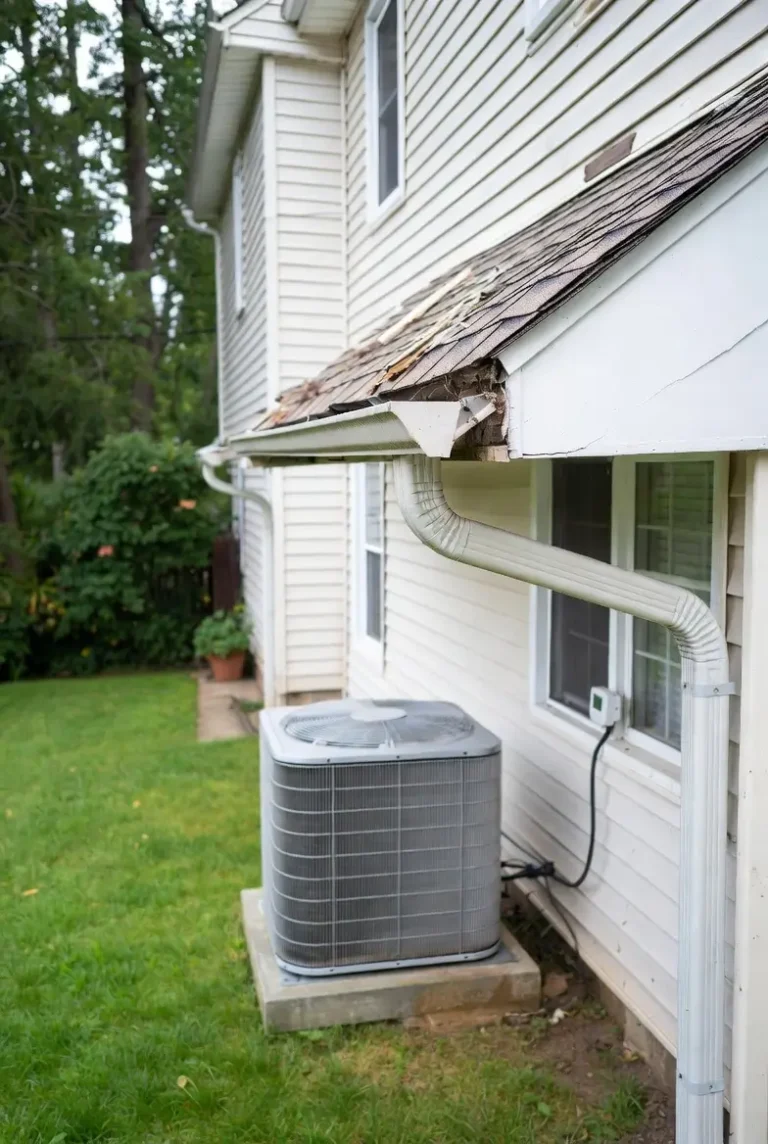
If the thermostat has a display and responds normally but the outdoor AC unit doesn’t start, the R wire may not be the primary problem.
Possible causes include:
- Failed capacitor
- Contactor problem
- Outdoor disconnect issue
- Compressor problem
- Condenser fan failure
- Control wiring problem
- Thermostat cooling signal issue
- Safety switch
- Refrigerant-related system problem
At that point, the diagnosis needs to move beyond thermostat power.
What Does the Y Wire Have to Do With My AC?
The Y wire commonly carries the cooling call from the thermostat to the HVAC equipment.
The R wire supplies power to the thermostat, while the Y circuit is commonly involved in requesting cooling.
This distinction matters.
If the thermostat is completely dead, investigate the power supply first.
If the thermostat works normally but doesn’t turn on cooling, the Y circuit and other components may need to be checked.
Can I Replace an HVAC Fuse Myself?
A homeowner may be able to replace an accessible low-voltage fuse, but simply replacing a fuse isn’t necessarily the correct repair.
If a fuse has blown, something caused it to blow.
If the replacement immediately fails, there is likely an underlying short or component problem.
Never substitute a larger fuse for the specified rating.
Using the wrong fuse can damage the HVAC system and create a safety hazard.
When Should I Call an HVAC Professional?
Call a professional if:
- The breaker repeatedly trips
- A replacement fuse blows again
- The transformer appears damaged
- You smell burning
- Wiring is damaged
- You see melted components
- The thermostat has no power and you can’t locate the cause
- The AC still doesn’t work after basic checks
- You aren’t comfortable testing electrical components
HVAC systems combine electricity, mechanical components, refrigerant, and water drainage. A problem that looks simple from the thermostat can originate somewhere else in the system.
Frequently Asked Questions About Thermostat Red Wire Power
What is the red wire on a thermostat?
The red wire, commonly connected to the R terminal, typically provides approximately 24-volt AC power from the HVAC control system to the thermostat.
What voltage should I get between R and C?
Many residential HVAC systems will show approximately 24 volts AC between R and C. Exact readings can vary, so consult the equipment and thermostat documentation for your specific system.
What does 0 volts between R and C mean?
It generally indicates that 24-volt power isn’t reaching the thermostat. Possible causes include a blown fuse, transformer problem, wiring issue, safety switch, or loss of HVAC power.
Can a blown fuse make my thermostat go blank?
Yes. A blown low-voltage fuse can interrupt the circuit supplying power to the thermostat.
Why does my thermostat have power but my AC won’t start?
If the thermostat is operating normally, the problem may involve the cooling signal, outdoor equipment, contactor, capacitor, disconnect, wiring, or another HVAC component.
Can a clogged AC drain turn off my system?
Yes. Many systems have a condensate safety switch that can shut down HVAC operation when water accumulates because of a clogged drain or drainage problem.
Should I keep resetting my HVAC breaker?
No. If the breaker repeatedly trips, stop resetting it and have the system inspected. Repeated trips can indicate an electrical or equipment problem.
Can I test thermostat voltage with a multimeter?
A properly used multimeter can measure low-voltage AC at the thermostat, but electrical testing should only be performed by someone who understands how to use the meter safely.
Is a blank thermostat always broken?
No. A blank thermostat may simply be missing its 24-volt power supply.
How do I know whether the thermostat or HVAC system is the problem?
Check whether the thermostat is receiving power. If R-to-C voltage is present but the thermostat remains dead, the thermostat may be faulty. If voltage is missing, the problem is likely elsewhere in the HVAC control circuit.
You Don’t Always Have To Buy A New Thermostat
When an AC system won’t start and the thermostat appears dead, don’t automatically buy a new thermostat.
The R wire and 24-volt control circuit are logical places to start your diagnosis. Check the HVAC breaker, look for obvious condensate problems, inspect the low-voltage fuse if safely accessible, and use a multimeter to check for voltage between R and C if you know how to perform the test safely.
The key is to diagnose the power problem instead of guessing at parts. When the a/c turned off at thermostat no power to red wire.
A blown fuse, failed transformer, loose wire, safety switch, or damaged control circuit can all make a thermostat appear to be the culprit when it isn’t.
And remember: low-voltage thermostat wiring is safer to work around than household line voltage, but the HVAC equipment still contains components connected to dangerous electrical power. When you’re unsure, shut the system down and call a qualified professional.
A systematic diagnosis can save time, prevent unnecessary thermostat replacements, and get your air conditioning system back to keeping your home comfortable.