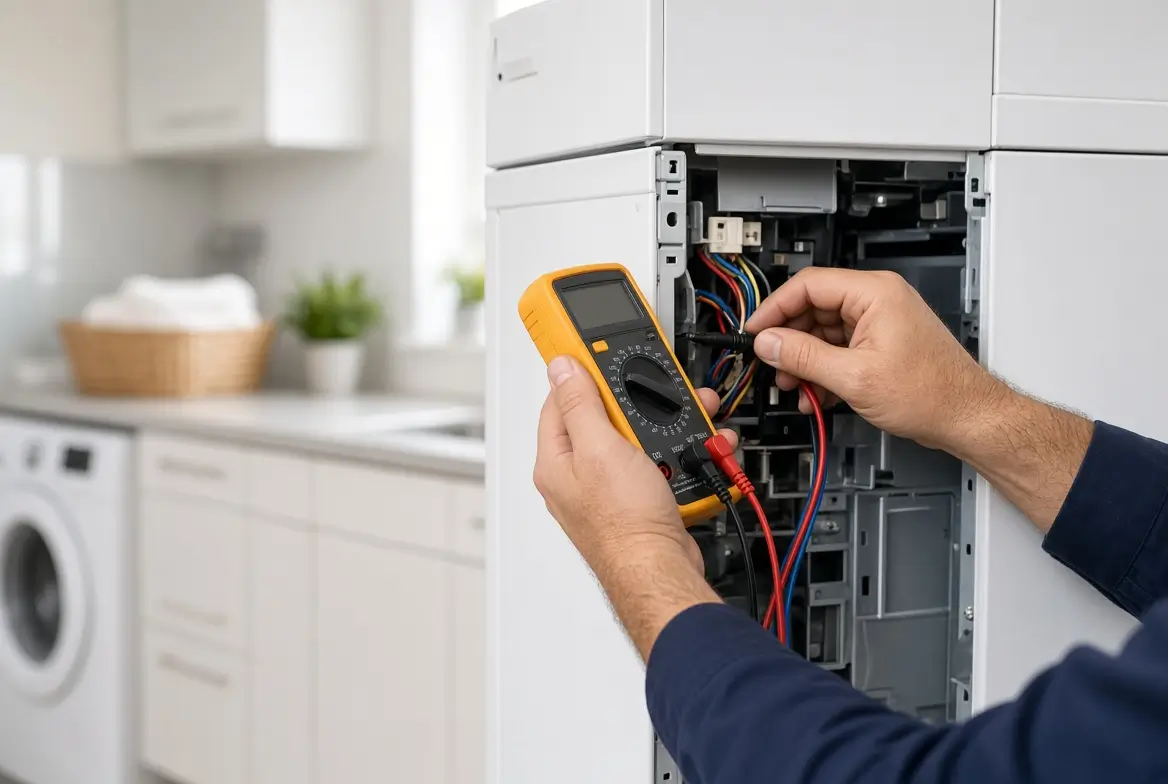
How to Diagnose Common Washing-Machine Issues Before Calling a Handyman
Need Help With a Washing Machine Problem?
Whether your washer is leaking, refusing to spin, or making unusual noises, get help diagnosing the issue before it turns into a bigger headache.
Call a Washer Handyman: 313-362-6383A washing machine rarely stops working without giving you some kind of warning. Maybe you notice a puddle spreading across the laundry room floor, hear a loud banging sound during the spin cycle, or open the door to find clothes sitting in a drum full of water.
Before assuming the appliance needs an expensive repair, take a few minutes to investigate what is happening. Some washer problems are caused by simple issues like an overloaded drum, a kinked hose, or a blocked drain. Others point to worn mechanical parts or electrical failures that require professional attention.
The trick is knowing what to look for without accidentally turning a minor problem into a major repair.
This guide walks you through five common washing-machine problems, explains how to narrow down the cause, and identifies which troubleshooting steps are reasonable for homeowners to handle themselves.
What Should You Check Before Troubleshooting a Washing Machine?
Before taking anything apart, pay attention to how the washer behaves. The timing of the problem can provide useful clues.
For example, a washer that fills normally but stops before spinning has a different set of possible causes than one that never receives water in the first place.
Start by observing three things:
- When does the problem occur? During filling, washing, draining, or spinning?
- What changed recently? Did you move the washer, wash a bulky item, or notice a new noise?
- Is there an obvious warning sign? Look for standing water, leaking connections, unusual smells, or an error code.
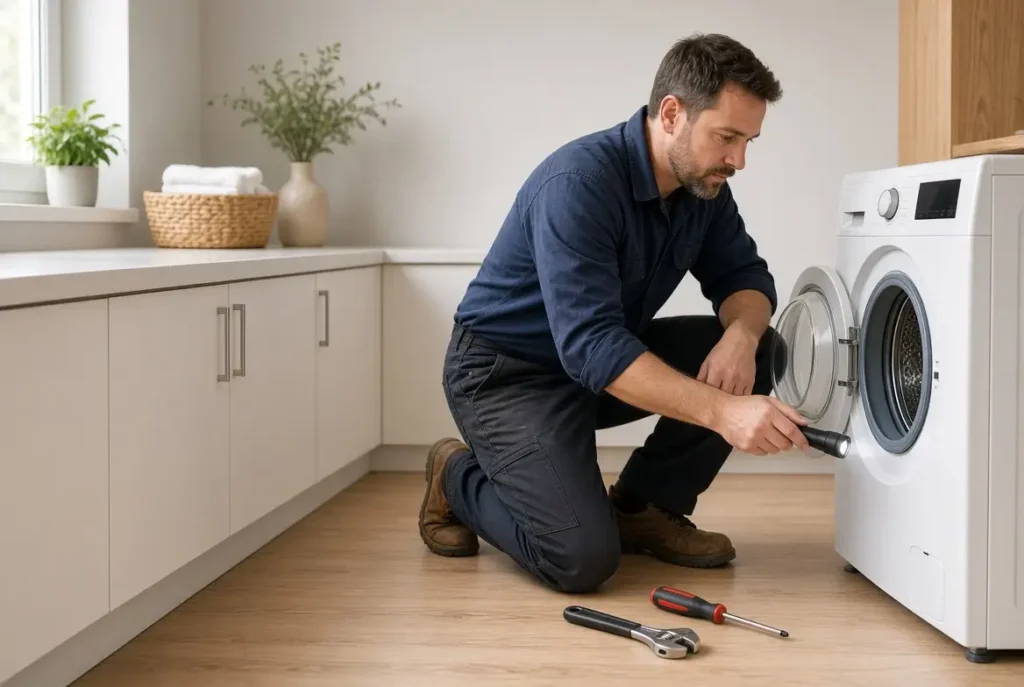
You may need a flashlight, adjustable wrench, screwdriver, towels, and a shallow container for basic inspections. Keep the appliance manual nearby because filter locations, error codes, and approved maintenance procedures vary by model.
Safety first: Unplug the washer before inspecting accessible components, and shut off the water supply before disconnecting hoses. Never reach into a moving drum, bypass a lid switch, or open electrical components while troubleshooting. If water is near an outlet, do not touch the appliance; disconnect power from a safe location.
1. Washing Machine Leaking? Find Out Where the Water Is Coming From
A washer leak can be frustrating because the visible puddle doesn’t necessarily reveal where the water started. Water can travel along the floor or underneath the appliance before collecting in an obvious spot.
Instead of immediately pulling the machine apart, determine whether the leak appears during filling, washing, draining, or spinning.
Where should you look for a washer leak?
Water behind the washer: Inspect the hot and cold supply hoses and their connections. Look for moisture around the threaded fittings, cracked hose coverings, or signs of corrosion.
Water around the front door: On front-loading machines, examine the rubber door gasket. Small clothing items, hair, and detergent residue can interfere with the seal. Check for visible tears or trapped fabric.
Water near the detergent drawer: Excess detergent, incorrect detergent, or a clogged dispenser can cause water to overflow or escape during filling.
Water underneath the machine: This is more concerning. A damaged internal hose, drain pump, or tub seal may be allowing water to escape from inside the appliance.
What can you safely fix yourself?
If you find a visibly damaged external supply hose, replacing it may be a manageable DIY repair. Cleaning detergent residue from the dispenser or removing debris from the door gasket may also resolve minor leaks.
However, water coming from underneath the washer without an obvious external source deserves professional attention.
Don’t continue running a leaking machine just to see whether the problem goes away. Even a slow leak can damage flooring, drywall, and nearby cabinetry.
2. Washer Won’t Spin? Determine Whether It’s a Drainage or Load Problem
One of the most common complaints homeowners have is opening the washer after a cycle and finding clothes that are still soaking wet.
Before assuming the motor has failed, determine whether the washer actually drained the water.
Why does a washing machine stop spinning?
A washer may refuse to spin because it cannot drain properly, detects an unbalanced load, or cannot confirm that the door or lid is securely locked.
Start with these checks:
- Look for standing water. If water remains in the drum, investigate drainage before focusing on the spin mechanism.
- Redistribute the laundry. Heavy blankets, bath mats, and tangled clothing can throw the drum off balance.
- Check the drain hose. Look for kinks, crushing, or an improperly positioned hose.
- Inspect the door or lid. Make sure clothing isn’t caught between the door and seal and that the latch closes correctly.
Some front-load washers have a small drain-pump filter behind a lower access panel. If your model includes one, consult the manual before opening it. Water can spill out, particularly if the drum hasn’t drained.
When is a no-spin problem beyond DIY troubleshooting?
If the washer drains but still refuses to spin, possible causes include a faulty lid switch, door-lock assembly, drive belt, motor, or control component.
Those repairs can require disassembly and electrical testing. If the basic checks don’t identify the problem, a handyman or appliance technician can determine whether a component needs adjustment or replacement. A handyman washing machines would do the trick for repairs.
3. Washing Machine Making Strange Noises? Identify the Sound Before Replacing Parts
A washer doesn’t have to be completely silent, but a sudden change in sound is worth investigating. A rhythmic thumping, metallic rattling, or grinding noise can help narrow down what’s happening inside the machine.
The important distinction is whether the noise occurs only with certain loads or continues even when the drum is empty.
What do different washing-machine noises mean?
| Noise | What might be causing it |
|---|---|
| Loud banging during spinning | Unbalanced laundry or an unstable washer |
| Metallic rattling | Coins, buttons, or loose objects |
| Grinding or scraping | Possible bearing or mechanical damage |
| Squealing during operation | Possible belt or motor issue |
| Humming without draining | Possible pump obstruction |
How to investigate a noisy washer
First, stop the cycle and remove the laundry. Check the drum for coins, buttons, or other objects that may have been left in pockets.
Next, gently press down on the washer’s corners. If the machine rocks noticeably, its leveling feet may need adjustment. An uneven floor can also contribute to excessive vibration.
If the noise only occurs with bulky loads, redistribute the laundry and try a smaller load.
However, persistent grinding, scraping, or squealing should not be dismissed as normal operating noise. These sounds may indicate worn bearings, a damaged drive component, or another internal mechanical problem.
A useful diagnostic clue: If the washer makes the same grinding noise while empty, the problem is less likely to be caused by laundry imbalance.
4. Washing Machine Not Filling With Water? Check the Supply Before the Appliance
When a washer starts its cycle but doesn’t bring in water, homeowners sometimes assume the inlet valve has failed.
That is one possibility, but the problem could also be outside the appliance entirely.
What should you inspect when the washer won’t fill?
Check the water valves. Look behind the washer to confirm the hot and cold supply valves are open. Some machines require both connections to function properly, even when using a cold-water cycle.
Inspect the supply hoses. A hose trapped between the washer and wall can restrict water flow. Look for sharp bends, crushing, or visible damage.
Check household water pressure. If nearby faucets also have weak flow, the issue may involve your home’s water supply rather than the washer.
Look for clogged inlet screens. Small mesh screens at the water connections can collect sediment and mineral deposits over time.
Can you clean the washer’s inlet screens yourself?
Some manufacturers permit homeowners to clean accessible inlet screens. The process generally involves shutting off the water, unplugging the machine, disconnecting the supply hoses, and carefully removing accumulated debris according to the manual.
Do not puncture or permanently remove the screens. They help prevent sediment from entering the washer’s internal water valves.
If the supply is functioning normally and the washer still won’t fill, a defective inlet valve, pressure sensor, or control component may be responsible.
Those issues generally require additional testing rather than guesswork.
5. Washing Machine Displaying an Error Code? Use It to Narrow Down the Problem
An error code can make an appliance problem feel more complicated than it really is. However, the code is often a useful starting point because it identifies a condition the washer has detected.
The exact meaning depends on the manufacturer and model. A code displayed by one brand may have a completely different meaning on another.
What do common washer error codes indicate?
| Error category | What to investigate |
|---|---|
| Water inlet or supply | Valves, hoses, inlet screens |
| Drainage | Drain hose or accessible pump filter |
| Door or lid lock | Obstruction, latch, door closure |
| Load imbalance | Laundry distribution |
| Sensor or control fault | Manufacturer-specific diagnostics |
What should you do when an error code appears?
Start by writing down the exact code before resetting the machine. If possible, note what the washer was doing when the error appeared.
Was it filling? Draining? Attempting to spin?
That information can help distinguish a water-supply problem from a drainage or door-lock issue.
Consult the owner’s manual or manufacturer’s troubleshooting guide for the specific code. If the recommended steps involve checking a hose or redistributing laundry, those may be reasonable homeowner tasks.
If the same code returns after troubleshooting, avoid repeatedly resetting the washer and hoping it completes the cycle. The underlying issue may involve a faulty component that needs professional diagnosis.
When Should You Stop Troubleshooting and Call a Handyman?
Basic troubleshooting is useful when the problem is visible, accessible, and safe to address. It becomes a different situation when the washer needs internal repairs or shows signs of electrical or mechanical failure.
Before scheduling service, run through this quick checklist.
Washing Machine Repair Checklist
What have you checked?
0 of 7 checks completedConfirmed the washer is receiving power.Checked that water supply valves are open.Inspected accessible hoses for leaks or kinks.Redistributed laundry and checked for overloading.Looked for visible obstructions in the drum.Recorded any error codes and checked the owner’s manual.Stopped operation if unusual noises or leaking continued.
Call a professional if:
- The washer continues leaking after external connections have been checked.
- The drum won’t spin despite proper drainage and a balanced load.
- Grinding, scraping, or burning smells persist.
- The machine repeatedly trips the circuit breaker.
- Error codes return after following the manufacturer’s instructions.
- The repair requires accessing internal wiring, motors, pumps, or control boards.
A professional can identify the failed component before you spend money replacing parts that may not solve the problem.
Frequently Asked Questions About Washing-Machine Troubleshooting
1. Why does my washing machine stop in the middle of a cycle?
A washer may stop because of a drainage obstruction, unbalanced load, interrupted water supply, door-lock problem, or detected mechanical fault. Check whether water remains in the drum and look for an error code before attempting another cycle.
2. Is it safe to troubleshoot a washing machine myself?
Basic visual inspections are generally reasonable when the machine is unplugged and the water supply is shut off as needed. Avoid working on energized components, bypassing safety switches, or opening sealed electrical assemblies.
3. Why is my washing machine leaking only during the spin cycle?
A leak that appears during spinning may be related to an overloaded drum, damaged door gasket, loose hose connection, or internal drainage component. The timing helps narrow down the cause, but water underneath the appliance may require professional inspection.
4. Should I replace my washing machine if it won’t spin?
Not necessarily. A no-spin problem can result from a relatively straightforward issue, such as an unbalanced load or drainage obstruction. Have the problem diagnosed before deciding whether repair or replacement makes more financial sense.
Need Help With a Washing Machine That Won’t Cooperate?
If you’ve checked the hoses, balanced the load, and followed the manufacturer’s troubleshooting instructions without success, it’s time to get another set of eyes on the problem.
A handyman can help investigate common appliance issues, identify repair needs, and determine whether the problem requires a specialized appliance technician.