
5 Signs You Have an Unsafe Deck: What Homeowners Should Check Before Someone Gets Hurt
Worried Your Deck May Be Unsafe?
Loose railings, rotten boards, unstable stairs, damaged posts, or deteriorated framing can turn a deck into a serious safety concern. Don’t wait until a small repair becomes a much larger structural problem.
If your deck needs repair or you’re concerned about its condition, call today to discuss the problem and find out what repairs may be needed.
Call 313-513-1185A deck can look perfectly normal while developing problems that make it unsafe.
Loose railings, rotting boards, unstable stairs, and corroded fasteners can develop slowly over time. Because many deck problems aren’t obvious from across the yard, homeowners often don’t realize there’s a safety issue until a board breaks or someone gets hurt.
So, how do you know if your deck is unsafe?
The five biggest warning signs are loose or wobbly railings, rotting or soft deck boards, unstable stairs, loose or corroded connections, and posts or support structures that are shifting or deteriorating.
If you notice any of these problems, don’t assume they’re simply cosmetic. A deck is a structural part of your home, and certain failures can happen suddenly.
Here’s what homeowners should look for and when a deck needs professional repair.
1. Your Deck Railing Is Loose or Wobbly
A railing should feel solid when you put normal pressure against it.
If the railing moves noticeably when someone leans on it, that’s a warning sign.
Check:
- Top rails
- Balusters
- Posts
- Stair railings
- Connections between posts and framing
A loose railing may be caused by worn fasteners, deteriorated wood, loose connections, or structural movement.
Is a wobbly deck railing dangerous?
It can be.
A railing is there to help prevent someone from falling off the deck or down stairs. If someone instinctively grabs it during a slip or trip and the railing gives way, the consequences can be serious.
Don’t treat a loose railing as a minor cosmetic problem.
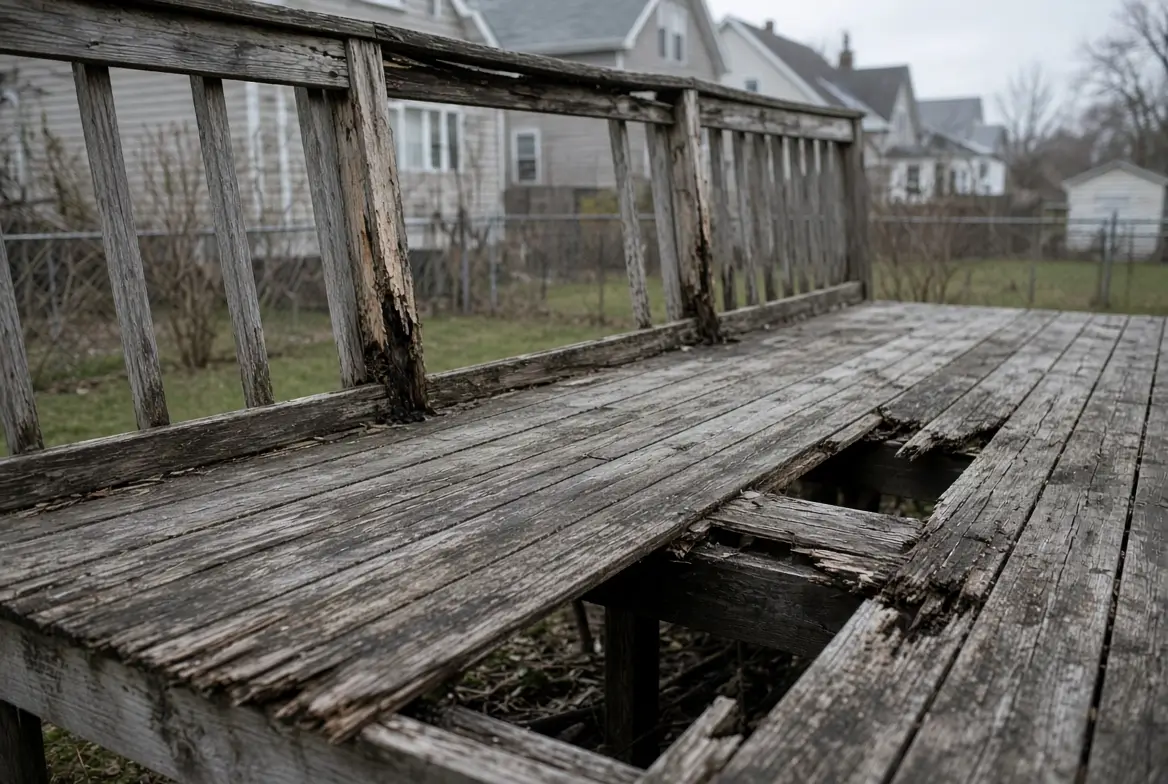
2. The Deck Boards Are Soft, Cracked, or Rotting
Wood naturally deteriorates when exposed to years of moisture, sunlight, temperature changes, and weather.
Pay particular attention to boards that feel:
- Soft
- Spongy
- Weak
- Cracked
- Split
- Discolored
- Deteriorated
Walk carefully across the deck and look for areas that appear different from surrounding boards.
Can I just replace one rotten deck board?
Sometimes.
If the problem is isolated to a single board and the supporting framing underneath is sound, replacing the board may be a relatively straightforward repair.
But don’t assume the visible board is the only problem.
Rot often extends beyond what you can see.
The joist underneath may also have moisture damage or decay.
3. Your Deck Stairs Move, Sag, or Feel Unstable
Deck stairs receive a lot of repeated use, which makes them an important part of a safety inspection.
Watch for:
- Loose steps
- Cracked stair treads
- Sagging stairs
- Wobbly railings
- Uneven steps
- Loose stringers
- Movement when walking
- Gaps between components
If a stair tread moves when you step on it, don’t ignore it.
A person carrying groceries, a child running outside, or someone walking down the stairs in wet weather may not have time to react if a step suddenly shifts.
Why are my deck stairs wobbly?
Wobbly stairs can result from loose connections, deteriorated wood, damaged stringers, shifting supports, or improper attachment.
The cause matters.
Simply adding a screw to the stair tread won’t solve a structural problem underneath it.
4. You See Rusted, Missing, or Loose Fasteners
Decks depend on connections to hold everything together.
Those connections include:
- Screws
- Bolts
- Joist hangers
- Brackets
- Post connections
- Ledger connections
Over time, moisture can cause metal components to corrode.
Look for:
- Heavy rust
- Missing screws
- Loose bolts
- Pulled-out fasteners
- Damaged brackets
- Corroded hardware
Are rusty deck screws a safety problem?
They can be.
Light surface rust isn’t automatically a structural emergency.
But heavily corroded or missing hardware can weaken important connections.
This is especially concerning around posts, beams, joists, stairs, and the area where the deck connects to the house.
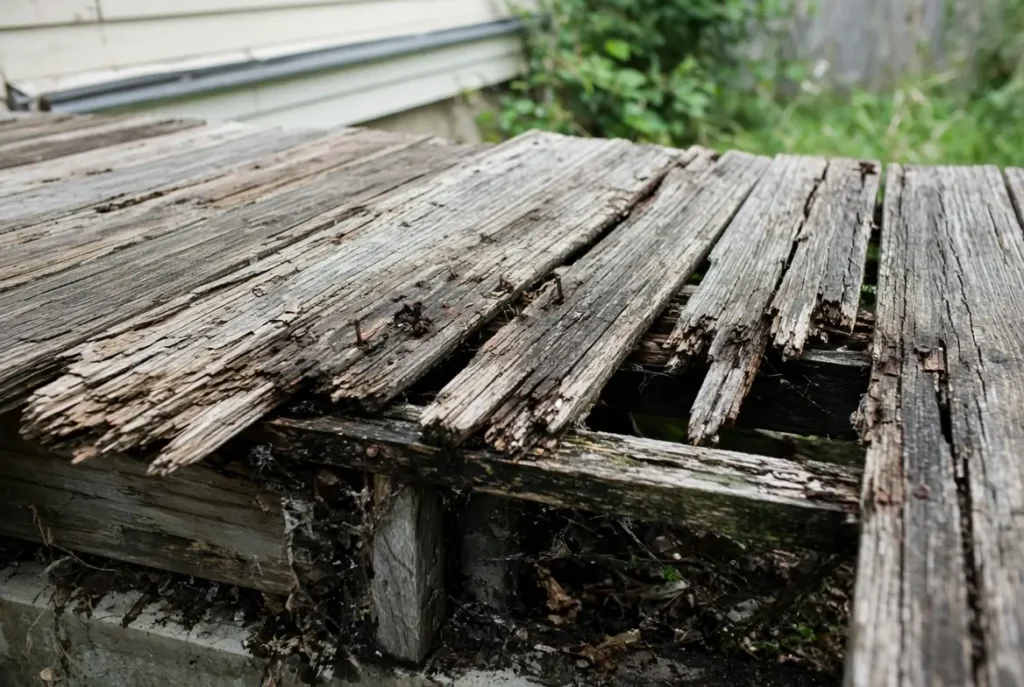
5. The Deck Posts or Support Structure Are Deteriorating
The most serious deck problems aren’t always on the surface.
Look underneath the deck.
Check the:
- Support posts
- Beams
- Joists
- Bracing
- Footings
- Connections
- Ledger area
Look for wood that’s cracked, split, soft, leaning, or visibly deteriorated.
A post that has significant rot at its base can be especially concerning because that post may be supporting a substantial portion of the deck.
Why should I inspect underneath my deck?
Because some of the most important structural components are hidden below the walking surface.
A deck can have beautiful boards on top while the framing underneath is deteriorating.
If you only inspect what you can see from above, you can miss serious problems.
What Is the Most Dangerous Part of an Old Deck?
There isn’t one universal weak point.
However, homeowners should pay close attention to the connections between the deck and the house, support posts, beams, joists, stairs, and railings.
A deck doesn’t have to look old or badly damaged to have a structural problem.
Water tends to create problems where wood and hardware are repeatedly exposed to moisture.
How Can I Tell If My Deck Is Rotting?
Rot isn’t always obvious.
Look for:
- Soft wood
- Spongy areas
- Dark discoloration
- Crumbling fibers
- Cracks
- Fungal growth
- Wood that breaks apart easily
- Areas that remain damp
You can carefully probe questionable wood with an appropriate tool, but don’t aggressively poke structural components or damage sound material.
If you suspect extensive rot, professional evaluation is safer.
Why Is My Deck Wood Turning Black?
Dark or black discoloration can have several causes.
It may be related to:
- Moisture
- Mold
- Mildew
- Fungal growth
- Weathering
- Dirt
- Chemical staining
Black discoloration doesn’t automatically mean the wood is structurally rotten.
The more important question is:
Has the wood lost its strength?
If the area is soft, crumbling, or stays wet, it deserves closer attention.
Can a Deck Collapse Without Warning?
Unfortunately, serious deck failures can occur with little warning when structural components or connections have deteriorated significantly.
That’s why homeowners shouldn’t wait for dramatic movement before inspecting an aging deck.
Warning signs such as:
- Sagging
- Loose railings
- Soft framing
- Rotten posts
- Damaged stairs
- Loose connections
should be investigated before the problem progresses.
How Do I Know If My Deck Is Structurally Sound?
A basic visual inspection can identify obvious warning signs, but it can’t guarantee that every concealed connection is sound.
Look at:
The Surface
Check boards for cracks, rot, and excessive movement.
The Railings
Make sure posts and rails don’t wobble excessively.
The Stairs
Check treads, stringers, railings, and connections.
The Framing
Look underneath for damaged joists and beams.
The Posts
Look for leaning, splitting, and decay near the ground.
The Connections
Check for missing, loose, or heavily corroded hardware.
The House Connection
Pay special attention to where the deck attaches to the home.
If you’re unsure what you’re looking at, a professional deck inspection can provide a more reliable assessment.
Why Is My Deck Sagging?
A sagging deck can have several possible causes.
It may involve:
- Deteriorated support posts
- Damaged beams
- Weak or damaged joists
- Foundation movement
- Failed connections
- Excessive loads
- Long-term moisture damage
Don’t try to correct a sagging deck simply by adding supports without understanding why it’s sagging.
A temporary-looking fix can sometimes hide the underlying structural problem.
Is a Deck That Bounces Unsafe?
Some movement isn’t necessarily unusual in a wood structure.
But excessive bouncing, noticeable deflection, or a new change in how the deck feels underfoot deserves attention.
If your deck has recently become noticeably more flexible, investigate why.
A change in movement can indicate deterioration or a problem with the framing or supports.
Should I Worry About a Deck That Squeaks?
A squeaky deck isn’t automatically unsafe.
Squeaking can occur when wood components rub against each other or when fasteners loosen.
However, a new squeak accompanied by:
- Movement
- Sagging
- Loose boards
- Cracked framing
- Loose connections
is more concerning.
Think of the squeak as a clue rather than a diagnosis.
Is a Deck Ledger Board Important?
Very.
The ledger is a structural component that helps connect an attached deck to the house.
Problems around the ledger can be serious because this connection transfers loads between the deck and the home.
Look for:
- Rot
- Separation
- Water damage
- Loose fasteners
- Corroded hardware
- Gaps between the deck and house
If you suspect the ledger connection is failing, don’t attempt a quick cosmetic repair.
What Is Ledger Rot?
Ledger rot occurs when the wood at or around the deck’s connection to the house deteriorates.
Water can become trapped in this area, particularly when flashing or drainage details aren’t working properly.
Because the ledger is an important structural connection, deterioration here deserves prompt attention.
Can Water Damage Make a Deck Unsafe?
Yes.
Repeated moisture exposure can contribute to:
- Wood rot
- Fastener corrosion
- Mold and fungal growth
- Deterioration of structural components
- Damage around the ledger
- Weakening of connections
This is why drainage and water management are important parts of deck maintenance.
Keep gutters and downspouts functioning properly and make sure water isn’t continually directed onto or beneath the deck.
How Often Should I Inspect My Deck?
It’s smart to give your deck a thorough visual inspection at least once a year, with additional checks after severe weather or whenever something feels different.
Spring is a particularly useful time to inspect a deck because winter moisture, freezing temperatures, and snow can expose problems that weren’t obvious the previous year.
Also inspect after:
- Heavy storms
- High winds
- Major snow loads
- Flooding
- Vehicle impacts
- Any noticeable structural movement
Can I Repair an Unsafe Deck Myself?
Some deck maintenance is appropriate for experienced homeowners.
Examples may include:
- Cleaning
- Staining
- Replacing certain surface boards
- Tightening appropriate hardware
But structural repairs are different.
Be cautious about DIY work involving:
- Support posts
- Beams
- Joists
- Ledger connections
- Stairs
- Structural fasteners
- Footings
- Significant rot
A deck supports people, furniture, grills, and sometimes large gatherings.
If the structural system is compromised, it’s worth having someone who understands deck construction evaluate it.
Should I Replace or Repair My Deck?
That depends on the condition of the structure.
Repair may make sense when:
- Damage is isolated.
- The framing is sound.
- A few boards are deteriorated.
- Individual railings need repair.
- Limited hardware needs replacement.
Replacement may make more sense when:
- Rot is widespread.
- Multiple structural components are failing.
- The deck has significant movement.
- Major connections are compromised.
- The framing has deteriorated extensively.
- Previous repairs have only temporarily addressed recurring problems.
A professional can help determine whether the existing structure is worth repairing.
What Should I Do If I Think My Deck Is Unsafe?
Keep people off the questionable area until it can be evaluated.
Don’t host a gathering on a deck you’re concerned about.
Don’t assume adding a few screws will solve a structural issue.
Instead:
- Keep children and guests away from the damaged area.
- Document visible problems with photographs.
- Look underneath the deck if it’s safe to do so.
- Identify areas of rot, movement, or damage.
- Have significant structural concerns evaluated.
- Repair or replace damaged components before regular use.
When structural safety is uncertain, erring on the side of caution is the smart choice.
Frequently Asked Questions About Unsafe Decks
What are the signs of an unsafe deck?
Common warning signs include loose railings, rotten or soft boards, unstable stairs, heavily corroded hardware, sagging, excessive movement, damaged support posts, and deterioration around structural connections.
How do I know if my deck is rotting?
Look for soft or spongy wood, crumbling areas, discoloration, cracks, fungal growth, and wood that has lost its normal firmness.
Can a wobbly deck railing be dangerous?
Yes. A railing that moves excessively may not provide reliable support if someone slips or loses their balance.
Is a deck that bounces unsafe?
Not necessarily, but excessive or newly developed movement should be investigated. It can indicate problems with framing, connections, or supports.
Why is my deck sagging?
Sagging can result from deteriorated posts, beams, joists, foundations, connections, or excessive loading. The underlying cause should be identified before making repairs.
Can rusty deck hardware cause a deck to fail?
Severely corroded or missing structural hardware can weaken important connections. Surface rust alone doesn’t necessarily mean a deck is unsafe.
Can a rotten deck board be replaced?
Yes, if the damage is isolated and the framing underneath remains structurally sound. The supporting joist should also be inspected before replacing the board.
Should I inspect underneath my deck?
Absolutely. Structural posts, beams, joists, and important connections are located underneath the walking surface and may show problems that aren’t visible from above.
Can water damage make my deck unsafe?
Yes. Persistent moisture can contribute to wood rot, structural deterioration, and corrosion of metal components.
How often should I inspect my deck?
A thorough visual inspection at least once a year is a good practice. Inspect it again after severe weather or if you notice new movement, cracking, or deterioration.
Can I repair a structurally unsafe deck myself?
Some minor maintenance can be DIY-friendly, but structural deck repairs involving posts, beams, joists, ledgers, stairs, and major connections are better evaluated by someone with appropriate construction experience.
When should I stop using my deck?
Stop using it if you notice major structural movement, severely damaged supports, a compromised railing, significant rot, a sagging structure, or another condition that makes you uncertain about its ability to safely support people.
What A Deck Shouldn’t Do
A deck shouldn’t move, sag, or deteriorate in ways that make you question whether it’s safe to use.
Small problems are worth addressing before they become large ones.
A loose railing can become a fall hazard. A soft deck board can conceal deteriorated framing. A rusty fastener may be insignificant in one location but serious when it’s part of an important structural connection.
The best approach is to inspect the deck from top to bottom—including the surface, stairs, railings, framing, posts, hardware, and connection to the house.
If something doesn’t look or feel right, don’t ignore it.
A deck repair is inconvenient. A deck failure is much worse.
