
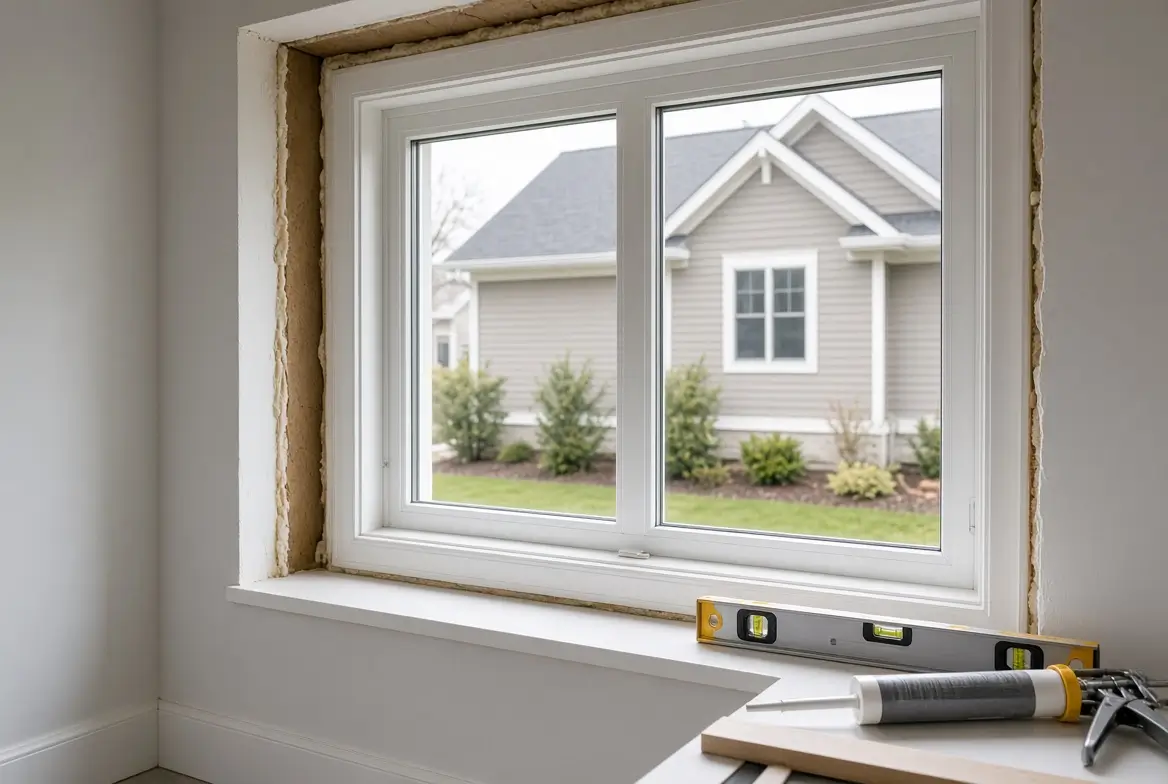
How to Keep Window Replacement Prices From Breaking the Bank
Need Help With Window Replacement?
Drafty windows, broken glass, damaged frames, and leaking windows can make your home less comfortable and may lead to bigger problems if they are ignored. A professional can inspect your windows and help determine whether repair or replacement makes the most sense.
Get help evaluating your window project, comparing your options, and finding a practical solution that fits your home and budget.
Call 313-635-3696Replacing old windows can improve comfort, reduce drafts, and make a home look better—but the price can make homeowners hesitate.
The good news is that affordable window replacement doesn’t necessarily mean choosing the cheapest window or cutting corners on installation. The better approach is to control the parts of the project that actually affect the final price while avoiding shortcuts that create expensive problems later.
For Detroit homeowners, that can be especially important. Older homes may have aging frames, damaged trim, unusual window openings, or several layers of previous repairs that aren’t obvious until the old window is removed.
So, how can you replace your windows without overspending?
Three practical strategies can make a meaningful difference:
- Choose the glass and window features based on your actual needs.
- Ask about off-season installation and contractor scheduling.
- Bundle window work with other repairs when it makes financial sense.
At the same time, there are several “cheap” approaches that can backfire.
Here’s how to plan a window replacement project in Michigan that protects your budget without sacrificing the quality of the finished installation.
What Is the Cheapest Way to Replace Windows?
The cheapest window replacement isn’t always the window with the lowest sticker price.
A better strategy is to determine where you actually need upgraded performance and where a standard option will work perfectly well.
Window prices can be affected by:
- Window size
- Window style
- Frame material
- Glass type
- Energy-efficiency features
- Number of windows
- Installation difficulty
- Existing frame condition
- Interior and exterior trim
- Labor
- Disposal
- Custom sizing
Before shopping, determine which windows actually need replacement.
If only a few windows are damaged or drafty, replacing every window in the house may not be necessary.
1. Choose the Right Glass Instead of Automatically Buying the Most Expensive Glass
Glass can have a major effect on the price of a replacement window.
Homeowners may encounter options involving:
- Double-pane glass
- Triple-pane glass
- Low-E coatings
- Argon gas
- Different glass thicknesses
- Laminated glass
- Tempered glass
- Specialty coatings
More expensive isn’t automatically better for every window.
Is double-pane glass good enough for a Detroit home?
For many homeowners, double-pane insulated glass is a practical starting point.
Detroit experiences cold winters and hot summers, so energy performance matters. However, whether triple-pane glass is worth the additional cost depends on the window location, house construction, heating and cooling costs, and your long-term plans for the property.
Ask the contractor to explain the expected performance difference rather than simply recommending the most expensive package.
What Is Low-E Glass?
Low-E glass has a special coating designed to reduce the amount of heat transferred through the window.
That can help keep heat inside during winter and reduce unwanted solar heat gain during summer.
For a Michigan home, Low-E glass can be a worthwhile feature because the windows need to perform through both heating and cooling seasons.
Is Low-E glass worth the extra money?
Often, yes—but compare the options.
The important question isn’t simply whether Low-E glass costs more.
Ask:
“How much more does this option cost, and what performance benefit am I getting?”
That makes it easier to decide whether the upgrade fits your budget.
Do You Need Triple-Pane Windows?
Triple-pane windows contain three layers of glass rather than two.
They can provide additional insulation and noise reduction, but they generally cost more and can be heavier.
For some homes, triple-pane windows may be an excellent upgrade.
For others, a quality double-pane window with good installation may provide a better balance between cost and performance.
The budget rule:
Don’t pay for a performance upgrade unless you understand what you’re getting in return.
2. Time Your Installation for Potential Off-Season Savings
One of the easiest cost-saving tips is to ask contractors about scheduling.
Window companies can experience different levels of demand throughout the year.
Spring and summer can be busy because homeowners are preparing for or actively completing exterior projects.
You may have more scheduling flexibility during slower periods.
Is winter a good time to replace windows?
It can be.
Cold weather makes installation more challenging, but professional installers can often perform window replacements in colder weather when conditions are appropriate.
Some contractors may offer incentives during slower periods.
Don’t assume that winter automatically means cheaper pricing.
Ask.
A simple question such as:
“Do you offer any off-season pricing or scheduling discounts?”
can tell you whether there’s an opportunity to save.
Can You Negotiate Window Replacement Prices?
Sometimes.
Contractors have different pricing structures, so there’s no guarantee they’ll reduce the price.
But you can ask about:
- Multiple-window discounts
- Off-season scheduling
- Available standard sizes
- Bundled work
- Current promotions
- Installation scheduling flexibility
- Less expensive window configurations
You can also request multiple estimates.
The goal isn’t to pressure a contractor into doing the job for an unrealistic price.
It’s to find out whether there are legitimate ways to reduce the project cost.
3. Bundle Window Replacement With Other Home Repairs
If you’re already paying for labor and equipment at your home, look at the surrounding work.
For example, if you’re replacing windows and also need:
- Exterior trim repair
- Caulking
- Siding repair
- Rotted wood replacement
- Interior trim repair
- Drywall repair
- Painting
- Minor framing repair
it may make sense to coordinate the work.
Can bundling repairs save money?
It can, but it isn’t guaranteed.
Bundling may reduce duplicate trips, setup time, or scheduling complications.
However, don’t add unnecessary work just because you’re already hiring a contractor.
Ask for separate pricing.
That way you can see whether bundling actually provides a financial advantage.
Don’t Replace Good Windows Just to Get a Package Discount
This is an easy trap.
Suppose you have 12 windows.
Eight are old and drafty.
Four are newer and performing well.
A contractor may offer a lower per-window price if you replace all 12.
That doesn’t automatically make replacing the four good windows financially smart.
Calculate the actual total cost.
A discount on something you don’t need is still money spent.
What Are the Biggest Window Replacement Mistakes That Cost Homeowners Money?
Trying to save money in the wrong places can turn an affordable window replacement into an expensive repair.
Here are some of the biggest mistakes to avoid.
Mistake #1: Choosing the Cheapest Window Without Comparing Installation
A low-cost window can look attractive on paper.
But the window itself is only part of the project.
Poor installation can result in:
- Air leakage
- Water intrusion
- Drafts
- Condensation problems
- Damaged surrounding materials
- Premature failure
What’s more important: the window or the installation?
Both matter.
A high-quality window installed incorrectly can perform poorly.
A reasonably priced window installed properly can provide excellent performance.
When comparing estimates, ask about both the product and installation process.
Mistake #2: Installing Windows Without Checking the Existing Frame
The existing opening may contain hidden problems.
Possible issues include:
- Rot
- Water damage
- Mold or mildew
- Deteriorated wood
- Poor previous repairs
- Structural problems
What happens if there’s rot around a window?
The damaged material may need to be repaired or replaced before the new window is installed.
Ignoring it doesn’t make the problem disappear.
In fact, covering damaged material with a new window can make future repairs more difficult.
Mistake #3: DIY Installation Without Understanding Water Management
A Detroit DIY homeowner may be perfectly comfortable with measuring, removing trim, or performing minor repairs.
But window installation involves more than putting a new window into an opening.
The installation has to manage:
- Air sealing
- Water drainage
- Flashing
- Shimming
- Fastening
- Insulation
- Exterior sealing
A mistake in water management can allow moisture behind the window and into the wall assembly.
That’s where a seemingly cheap installation can become very expensive.
Can a Homeowner Install Replacement Windows?
Yes, experienced DIYers can install certain replacement windows.
But difficulty depends heavily on the window type, opening, home construction, and installation requirements.
DIY installation may make sense for someone with the appropriate skills and tools.
It may not be a good project for a homeowner who has never installed a window before.
If you’re unsure, get an installation estimate before deciding to do it yourself.
Then compare the potential labor savings with the risk of making an expensive mistake.
Mistake #4: Using Too Much Caulk
Caulk is useful.
It’s not a substitute for proper flashing and water management.
A homeowner trying to stop drafts or leaks may be tempted to apply a huge bead of caulk around everything.
That may temporarily hide a problem without fixing its source.
Can caulk stop a window leak?
Sometimes it can address a failed exterior seal.
But if water is entering because of damaged flashing, deteriorated materials, or improper installation, caulk alone isn’t a permanent solution.
Find the source of the water first.
Mistake #5: Forgetting About Disposal and Cleanup Costs
Ask whether the estimate includes removal and disposal of the old windows.
This is easy to overlook.
Your project may involve:
- Removing old windows
- Removing trim
- Hauling old materials
- Cleaning the work area
- Repairing surrounding materials
If these aren’t included in the estimate, they may become additional charges.
Ask before signing.
How Can I Get an Affordable Window Replacement Quote?
Give contractors the same information whenever possible.
Tell them:
- How many windows you’re replacing
- Approximate window sizes
- Window styles
- Whether frames appear damaged
- Whether you have visible drafts
- Whether water has entered around the windows
- Whether interior or exterior trim needs repair
Then ask each contractor for a detailed estimate.
What Should a Window Replacement Estimate Include?
A good estimate should make it clear what you’re actually paying for.
Look for:
- Window brand or product line
- Window style
- Glass specifications
- Number of windows
- Installation labor
- Removal of existing windows
- Disposal
- Trim work
- Frame repairs
- Exterior sealing
- Interior finishing
- Permits, if applicable
- Warranty information
- Total project price
The more details included, the easier it is to compare contractors.
Should I Get Three Quotes for Window Replacement?
Getting multiple quotes is a smart move for a major window project.
Three estimates can reveal:
- Normal price ranges
- Differences in materials
- Different installation methods
- Warranty differences
- Services included or excluded
But don’t automatically hire the lowest bidder.
Instead, ask:
“Why is this estimate cheaper?”
Sometimes the answer is perfectly reasonable.
Other times, you’re discovering that important work wasn’t included.
How Can I Tell If a Window Replacement Quote Is Too Low?
An unusually low estimate deserves questions.
Ask whether the price includes:
- Installation
- Removal
- Disposal
- Flashing
- Insulation
- Trim
- Repairs
- Warranty
- Permits
A low quote isn’t automatically bad.
But an unexplained low quote is worth investigating.
Should I Replace All My Windows at Once?
Not necessarily.
Replacing all the windows at once can simplify the project and may provide better overall pricing.
But phased replacement can make sense when the budget is limited.
Which windows should I replace first?
Prioritize windows that have:
- Broken glass
- Severe drafts
- Water intrusion
- Rot
- Damaged frames
- Failed insulated glass
- Significant operational problems
You can then replace less problematic windows later.
This can make window replacement more manageable financially.
What Is the Best Window Replacement Strategy on a Tight Budget?
If your budget is limited, prioritize condition and performance over appearance.
A practical approach is:
First: Fix safety problems
Broken glass or seriously damaged windows should take priority.
Second: Address water intrusion
A leaking window can lead to much larger problems.
Third: Address severe drafts
Reducing major air leakage can improve comfort.
Fourth: Replace failing windows
Prioritize windows that no longer operate properly or have failed seals.
Fifth: Upgrade cosmetic issues
Windows that simply look dated may be lower priority.
This approach allows homeowners to spread the project over time instead of taking on a large expense all at once.
Are Replacement Windows Worth the Money?
They can be, particularly when existing windows are damaged, drafty, difficult to operate, or nearing the end of their useful life.
Potential benefits include:
- Improved comfort
- Reduced drafts
- Better operation
- Improved appearance
- Reduced outside noise
- Potential energy savings
- Reduced maintenance
But don’t assume replacement windows will automatically pay for themselves through energy savings.
Energy savings depend on the existing windows, climate, installation quality, home construction, and how the house is heated and cooled.
How Can Detroit Homeowners Save the Most on Window Replacement?
For homeowners in Detroit, a practical strategy is to combine several smaller cost-saving tips instead of chasing one huge discount.
Consider:
- Replace the worst windows first.
- Compare multiple estimates.
- Ask about standard window sizes.
- Compare double-pane and triple-pane options.
- Ask about Low-E glass.
- Check for off-season pricing.
- Bundle legitimate repairs.
- Get disposal costs in writing.
- Ask about installation warranties.
- Avoid DIY work beyond your actual skill level.
The biggest savings often come from making smart decisions before the project begins.
Frequently Asked Questions About Affordable Window Replacement
What is the most affordable type of replacement window?
Vinyl windows are often among the more budget-friendly replacement options, but the actual cost depends on size, style, glass, installation, and the existing opening.
How can I lower the cost of replacing windows?
Compare multiple estimates, replace only the windows that need it, consider standard sizes, ask about off-season pricing, and compare glass options based on actual performance needs.
Is it cheaper to replace windows in the winter?
It can be, because some contractors may offer off-season incentives. However, pricing varies, so ask local contractors rather than assuming winter automatically means cheaper installation.
Is double-pane glass enough for Michigan?
For many homes, quality double-pane insulated glass can be a practical choice. Triple-pane glass may provide additional insulation but costs more. Compare the performance and price difference before deciding.
Are triple-pane windows worth the extra cost?
They can be, but not for every homeowner. Consider your climate, budget, comfort goals, noise concerns, and expected time in the home.
Can I replace my windows one at a time?
Yes. Phased replacement can be a sensible strategy when replacing every window at once doesn’t fit the budget.
Should I replace windows that aren’t damaged?
Not necessarily. If existing windows perform well, there may be little financial reason to replace them simply to complete a whole-house package.
Can I install replacement windows myself?
Experienced DIYers can install some replacement windows, but improper installation can lead to air and water leakage. Know the installation requirements before deciding whether the labor savings are worth the risk.
Does window replacement increase home value?
New windows can improve appearance, comfort, and functionality, and may be attractive to buyers. The return on investment varies by property and project.
What should I ask a window contractor?
Ask about the window specifications, installation process, glass type, warranty, removal and disposal, frame repairs, potential additional costs, and what happens if hidden damage is discovered.
How do I avoid hidden window replacement fees?
Get a detailed written estimate and ask what isn’t included. Specifically ask about disposal, trim, frame repairs, permits, interior finishing, and unexpected damage.
Should I repair or replace an old window?
Repair may make sense when the frame and window are fundamentally sound. Replacement may make more sense when the window has significant damage, failed components, severe drafts, or recurring problems.
Affordable window replacement isn’t about buying the cheapest window you can find.
It’s about spending money where it matters and avoiding expenses that don’t provide meaningful value.
Choose glass based on your home’s needs. Ask contractors about off-season scheduling. Bundle repairs only when the numbers make sense. Compare multiple estimates, and make sure you’re comparing the same scope of work.
And if you’re considering a Detroit DIY installation, be honest about your skill level.
Removing an old window is one thing.
Installing the new one so that it properly manages air, water, insulation, and drainage is another.
The smartest way to save money is to avoid paying twice for the same job.
Buy the right window, install it correctly, and make sure the quote tells you exactly what you’re paying for.
That approach can help you get the benefits of an affordable window replacement without turning a budget project into an expensive repair later.


