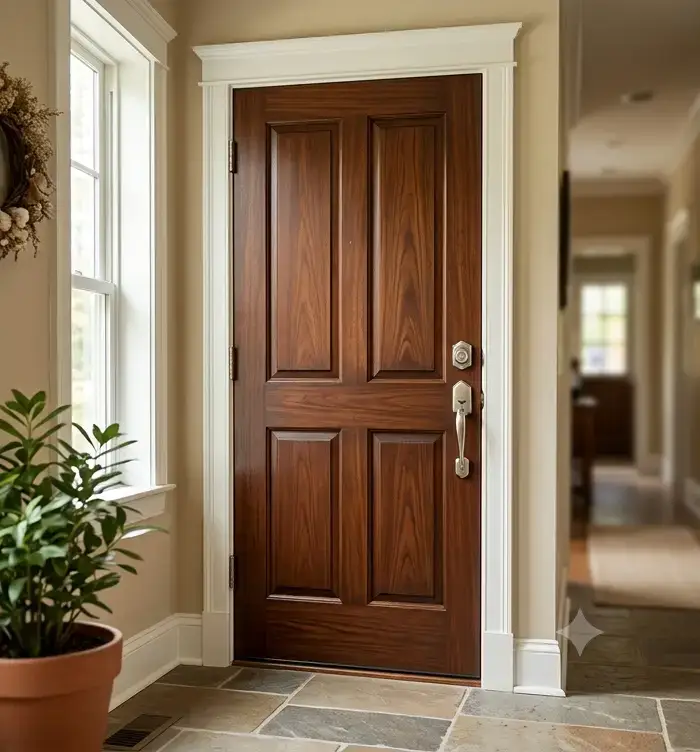
Door Repair & Installation: The Complete Homeowner’s Guide to Fixing Sticking, Sagging, Damaged, and Broken Doors
Need Door Repair or Installation?
Whether your door is sticking, sagging, damaged, drafty, or needs to be replaced, we can help. We repair and install interior and exterior doors to improve your home’s security, comfort, and appearance.
Call 313-513-1185 TodayDoor Repairs • Door Installation • Entry Doors • Interior Doors • Storm Doors • Patio Doors
A door is something most homeowners use dozens of times every day without thinking about it. That changes quickly when the door starts sticking, won’t latch, scrapes the floor, lets in drafts, or becomes difficult to open.
Many door problems start small. A loose hinge, worn-out weatherstripping, or minor alignment issue can eventually turn into a bigger repair if ignored.
The good news is that many damaged doors can be repaired without a full replacement. However, some issues—such as severe rot, structural damage, or a badly warped door—may require installing a new door system.
So, how do you know whether your door needs repair or replacement?
The answer depends on what is causing the problem.
This guide explains the most common door issues homeowners experience, why they happen, how they are fixed, and what you should know before repairing or replacing a door in your home.
Why Is My Door Hard to Open or Close?
A door that suddenly becomes difficult to open or close is usually caused by alignment issues, hardware problems, or changes in the home.
Common causes include:
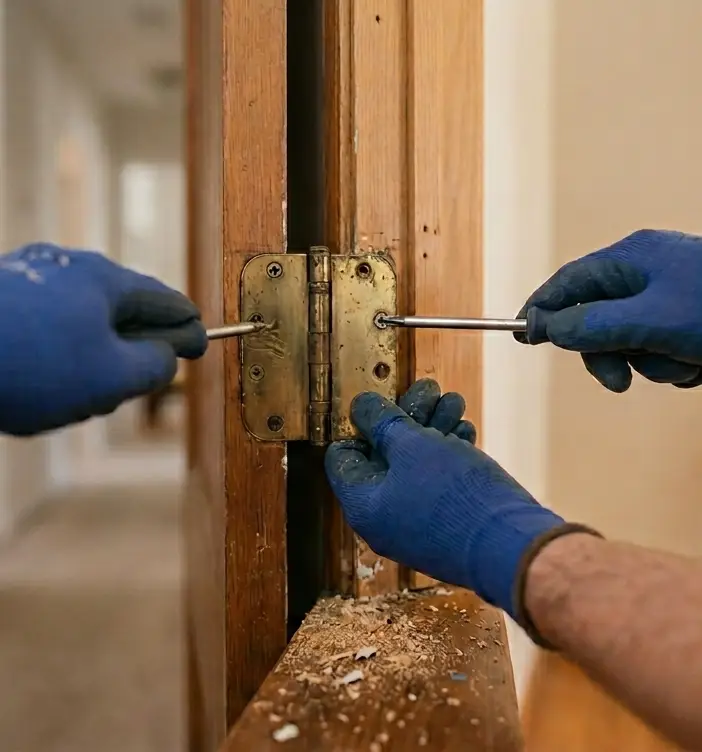
- Loose hinges
- A sagging door
- A warped door slab
- A shifted door frame
- Seasonal humidity changes
- Foundation settling
- Damaged hardware
- Poor installation
Many homeowners assume a difficult door means the door itself is failing. In reality, the problem is often with the hinges, frame, or alignment.
A professional door repair technician will usually inspect the entire door system instead of only adjusting the door itself.
Why Is My Door Sticking?
A sticking door is one of the most common problems homeowners deal with.
A door may stick because the wood has expanded, the hinges have shifted, or the frame is no longer perfectly aligned.
Common reasons a door sticks include:
Humidity and Weather Changes
Wood doors absorb moisture from the air. During humid months, the door can expand slightly and begin rubbing against the frame.
This is especially common in areas with changing seasons where homes experience hot summers and cold winters.
Loose Hinges
Over time, screws holding the hinges can loosen. This causes the door to drop slightly, creating rubbing along the frame.
Door Frame Movement
Homes naturally shift over time. Even small changes in the frame can prevent a door from operating correctly.
Paint Buildup
Multiple layers of paint can create tight spots around the edges of a door, causing it to stick.
Can a Sticking Door Be Fixed?
Yes, most sticking doors can be repaired.
Common repairs include:
- Tightening hinge screws
- Adjusting hinges
- Repositioning the strike plate
- Sanding small rubbing areas
- Repairing damaged hardware
- Adjusting the door frame
Replacing the entire door is usually unnecessary unless the door is severely damaged or warped.
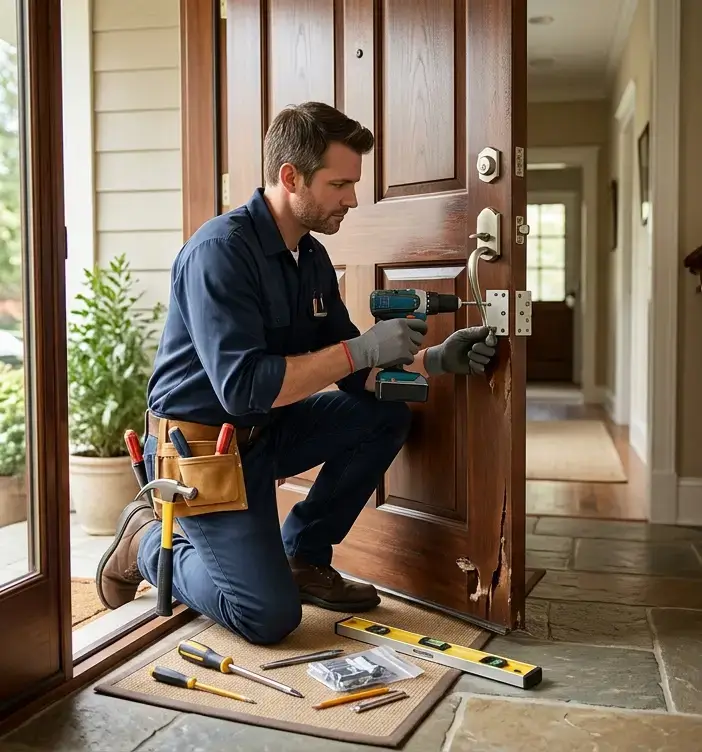
Why Won’t My Door Latch?
A door that closes but will not latch properly is frustrating and can create security concerns.
The latch may fail to line up with the strike plate because the door has moved out of position.
Common causes include:
- Loose hinges
- Sagging doors
- Misaligned strike plates
- Worn latch hardware
- Door frame movement
A door does not need to be dramatically crooked for the latch to stop working. A small alignment problem can prevent the locking mechanism from engaging.
How Do You Fix a Door That Won’t Latch?
Depending on the cause, repairs may include:
- Tightening or replacing hinges
- Adjusting the strike plate
- Realigning the door
- Replacing the latch mechanism
- Repairing the frame
Many latch problems are simple repairs when addressed early.
Why Is My Door Sagging?
A sagging door usually happens when the weight of the door pulls against the hinges over time.
This problem is especially common with:
- Heavy exterior doors
- Older homes
- Solid wood doors
- Frequently used entry doors
Signs of a sagging door include:
- The top corner rubbing against the frame
- The bottom scraping the floor
- Uneven gaps around the door
- Difficulty locking the deadbolt
- A door that appears crooked
Can a Sagging Door Be Repaired?
In most cases, yes.
Common repairs include:
- Tightening hinge screws
- Installing longer screws into the wall framing
- Replacing worn hinges
- Adjusting the door position
- Repairing damaged framing
Many homeowners think they need a replacement door when the actual problem is a loose hinge or alignment issue.
Why Does My Door Rub the Floor?
A door rubbing the floor is usually caused by movement in the door or frame.
Common causes include:
- Sagging hinges
- Door swelling from moisture
- Flooring changes
- Settling of the home
- Incorrect installation
Ignoring this problem can damage both the door and the flooring underneath.
A door that continuously drags creates additional stress on the hinges and may eventually cause more expensive repairs.
Why Is There a Gap Around My Door?
A visible gap around a door can affect comfort, energy efficiency, and security.
Common causes include:
- Worn weatherstripping
- Improper installation
- Door frame movement
- Warped doors
- Damaged seals
A small gap may seem harmless, but it allows:
- Cold air into your home
- Warm air to escape
- Moisture intrusion
- Increased energy costs
- Dust and insects inside
Replacing weatherstripping is often a simple improvement, but larger gaps may require door adjustment or replacement.
Why Is My Front Door Drafty?
A drafty front door is one of the biggest signs that the door system is not sealing properly.
Common causes include:
- Old weather-stripping
- Damaged door sweeps
- Poor installation
- Warped door panels
- Gaps around the frame
A properly installed exterior door should create a tight seal around the entire opening.
If your home feels colder near the entryway during winter or hotter near the door during summer, your door may be contributing to energy loss.
Can Weatherstripping Fix a Drafty Door?
Sometimes.
Replacing weatherstripping can solve minor air leaks around a door.
However, weather-stripping will not fix problems caused by:
- A warped door
- A damaged frame
- Poor installation
- Large gaps
In those cases, the door may need adjustment or replacement.
Why Won’t My Door Lock?
A door that will not lock properly is more than an annoyance. It can become a security concern, especially when it involves an exterior entry door.
Many homeowners assume the lock itself is broken, but the actual problem is often the door alignment.
Common reasons a door won’t lock include:
- The deadbolt is not lining up with the strike plate
- The door has shifted in the frame
- Loose hinges are causing movement
- The door frame is out of square
- The lock mechanism is worn
- The door has swollen due to moisture
Before replacing a lock, the door should be inspected. A small adjustment to the hinges or strike plate may solve the problem.
Why Won’t My Deadbolt Line Up?
Deadbolts require precise alignment. Even a small shift can prevent the bolt from entering the strike plate.
This commonly happens because:
- Hinges have loosened over time
- The door has sagged
- The frame has moved
- The strike plate was installed incorrectly
A door that requires force to lock is usually a sign that something is misaligned.
Forcing the lock repeatedly can damage the hardware and make the problem worse.
Can a Door Frame Be Repaired?
Yes, many damaged door frames can be repaired depending on the severity of the damage.
Door frames can become damaged from:
- Water exposure
- Rot
- Forced entry
- Termites
- Normal wear
- Foundation movement
Minor issues such as small cracks or loose trim can often be repaired.
However, if the frame has severe rot, major structural damage, or has shifted significantly, replacing parts of the frame may be necessary.
A damaged frame can prevent even a brand-new door from operating correctly, which is why the frame should always be inspected during a door replacement.
Can Water-Damaged Doors Be Repaired?
Sometimes.
Water damage is one of the biggest threats to exterior doors because moisture can weaken the material over time.
Signs of water-damaged doors include:
- Swollen wood
- Peeling paint
- Soft spots
- Cracks
- Rot near the bottom of the door
- Difficulty opening and closing
- Mold or mildew smells
Minor damage may be repaired by replacing damaged sections, sealing the door, or repairing the finish.
Severe rot or structural damage usually requires replacement.
Can a Cracked Wood Door Be Repaired?
Yes, depending on the size and location of the crack.
Small cracks may be repaired using wood fillers, epoxy products, or refinishing techniques.
However, replacement may be a better option if:
- The crack extends through the entire door
- The door has warped
- The structure of the door is weakened
- Moisture damage is present
Exterior wood doors require regular maintenance to prevent cracking and moisture problems.
Can Pet Damage to a Door Be Repaired?
Yes, many types of pet damage can be repaired.
Common pet-related door damage includes:
- Scratches
- Chewing damage
- Damaged trim
- Scratched finishes
- Damaged screen doors
Minor cosmetic damage can often be repaired without replacing the entire door.
If a pet has damaged the actual structure of the door, a professional can determine whether repair or replacement makes more sense.
Why Is My Door Squeaking?
A squeaky door is usually caused by friction in the hinges.
Common causes include:
- Dry hinge pins
- Dirt buildup
- Worn hinges
- Loose hardware
The first solution is usually lubrication.
If the noise continues after lubrication, the hinges may be worn and need replacement.
A squeaky door is rarely an emergency, but it can be an early sign that the hardware needs attention.
Door Installation Guide for Homeowners
Replacing a door can improve your home’s appearance, security, comfort, and energy efficiency.
However, choosing the right door and installing it correctly are equally important.
What Types of Doors Can Be Installed?
Homeowners have many options depending on the location and purpose of the door.
Exterior Entry Doors
Entry doors provide security while improving curb appeal.
Popular materials include:
Fiberglass Doors
Fiberglass doors are popular because they:
- Resist warping
- Require less maintenance
- Provide good insulation
- Can mimic the look of wood
Steel Doors
Steel doors are known for:
- Strength
- Security
- Durability
- Low maintenance
Wood Doors
Wood doors offer a traditional appearance and can add character to a home.
However, they require more maintenance because they are affected by moisture and weather conditions.
Interior Doors
Interior doors help divide rooms, improve privacy, and update the appearance of your home.
Popular options include:
- Bedroom doors
- Bathroom doors
- Closet doors
- French doors
- Barn doors
- Pocket doors
- Bifold doors
Replacing outdated interior doors is one of the easiest ways to refresh the look of a home.
Storm Doors
Storm doors provide an extra layer of protection against weather.
Benefits include:
- Additional insulation
- Ventilation options
- Protection for your entry door
- Improved energy efficiency
Sliding Patio Doors
Sliding doors provide easy access to outdoor spaces while bringing natural light into your home.
Common problems with older sliding doors include:
- Difficult operation
- Broken rollers
- Damaged tracks
- Poor seals
- Drafts
Many sliding door problems can be repaired without replacing the entire unit.
Should I Replace Just the Door or the Entire Frame?
This depends on the condition of the existing frame.
Replacing only the door may work if:
- The frame is square
- There is no water damage
- The opening is in good condition
Replacing the entire door system is often better when:
- The frame is damaged
- There is rot
- The door does not fit correctly
- Energy efficiency is poor
- The installation is outdated
A new door installed into a damaged frame can still create problems.
How Long Does Door Installation Take?
Most standard door installations can be completed within several hours.
The timeline depends on:
- Door type
- Frame condition
- Hardware installation
- Trim work
- Painting requirements
- Structural repairs
Exterior doors usually require more preparation because proper sealing and weatherproofing are important.
How Much Does Door Repair Cost?
Door repair costs vary depending on the problem.
The factors can include:
- Type of door
- Extent of damage
- Hardware needed
- Labor involved
- Whether the frame needs repair
Small repairs such as hinge adjustments or hardware replacement are typically much less expensive than replacing an entire door system.
A professional evaluation is the best way to determine the actual repair needs.
How Much Does Door Installation Cost?
The cost of a new door installation depends on:
- Door material
- Door style
- Size
- Hardware
- Frame condition
- Installation complexity
A basic interior door replacement is usually much less expensive than a complete exterior entry door replacement.
Higher-quality doors may cost more upfront but can provide better insulation, security, and longevity.
How Can I Maintain My Doors?
Proper maintenance can extend the life of your doors.
Homeowners should:
- Tighten loose hinges
- Lubricate moving hardware
- Replace worn weatherstripping
- Seal exterior wood doors
- Clean sliding door tracks
- Inspect for moisture damage
- Repair small problems early
A few minutes of maintenance can prevent larger repairs later.
Door Repair vs. Door Replacement: Which Is Better?
| Problem | Repair Possible | Replacement May Be Needed |
|---|---|---|
| Loose hinges | Yes | No |
| Door won’t latch | Yes | Sometimes |
| Squeaky hinges | Yes | No |
| Minor cracks | Yes | No |
| Drafty door | Sometimes | Sometimes |
| Warped door | Sometimes | Often |
| Severe rot | Rarely | Yes |
| Damaged frame | Sometimes | Often |
Frequently Asked Questions About Door Repair
How long do residential doors last?
Most quality doors can last decades with proper maintenance. Exterior doors usually experience more wear because they are exposed to weather.
Why does my door stick only in winter?
Cold temperatures and moisture changes can cause materials to expand and contract. Wood doors are especially affected by seasonal changes.
Can you replace just one door?
Yes. A single damaged or outdated door can usually be replaced without changing every door in the home.
Is it worth repairing an old door?
It depends on the condition. Minor problems are often worth repairing, but severe damage may make replacement a better investment.
Can a damaged door affect energy bills?
Yes. Poor seals, gaps, and outdated doors can allow heated and cooled air to escape.
Can you repair a door after a break-in?
In some cases. Minor damage may be repaired, but doors with severe structural damage usually need replacement for proper security.
How do I know if my door frame is bad?
Signs include uneven gaps, repeated alignment problems, visible cracks, rot, and doors that continue sticking after adjustments.
What is the most energy-efficient exterior door?
Fiberglass and insulated steel doors are commonly chosen for energy efficiency because they resist weather changes and provide good insulation.
The Role That Doors Play For The House
Doors play an important role in your home’s security, comfort, appearance, and energy efficiency. When a door begins sticking, sagging, leaking air, or refusing to lock, the problem usually will not fix itself.
Many common door problems can be repaired quickly, while severely damaged doors may benefit from replacement.
Whether you need a small adjustment, hardware repair, frame repair, or a completely new door installation, addressing the issue early can help prevent larger problems and keep your home functioning properly.