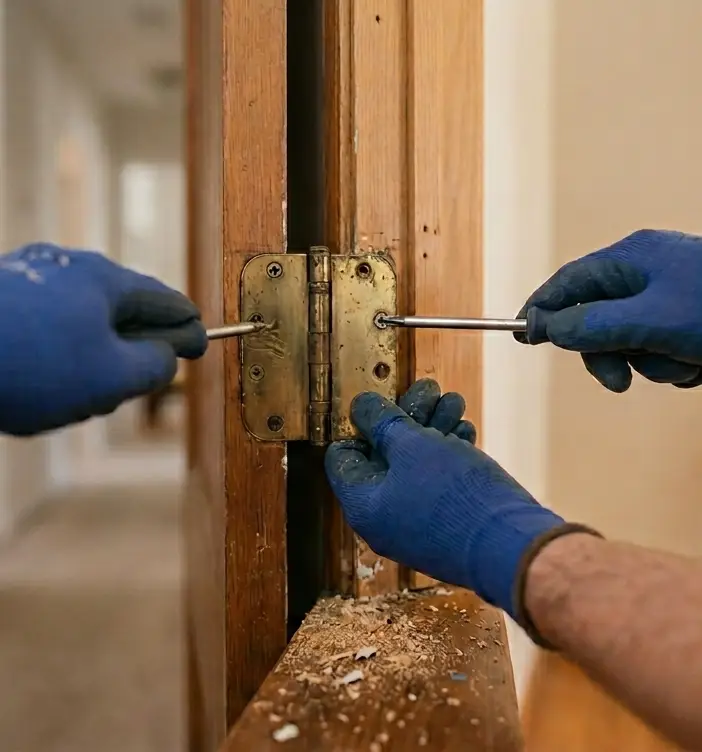
Replacing Door Hinges: Correctly Fixing Warped or Sticking Doors
Is Your Door Sticking, Sagging, or Refusing to Close Properly?
Don’t keep fighting with a warped or sticking door every day. Our experienced handyman team can repair door alignment issues, replace worn hinges, and restore smooth operation fast.
Need help fixing your door?
Call 313-513-1185 Today
A door that sticks, drags across the floor, or refuses to close properly can quickly become a daily frustration. Many homeowners assume the door itself is warped beyond repair, but in many cases, worn or improperly installed hinges are the real culprit. Replacing door hinges is one of the most effective ways to restore proper door function and eliminate sticking issues without replacing the entire door.
Understanding why doors stick and how hinge replacement can solve the problem is the first step toward a long-lasting repair.
Why Doors Become Warped or Start Sticking
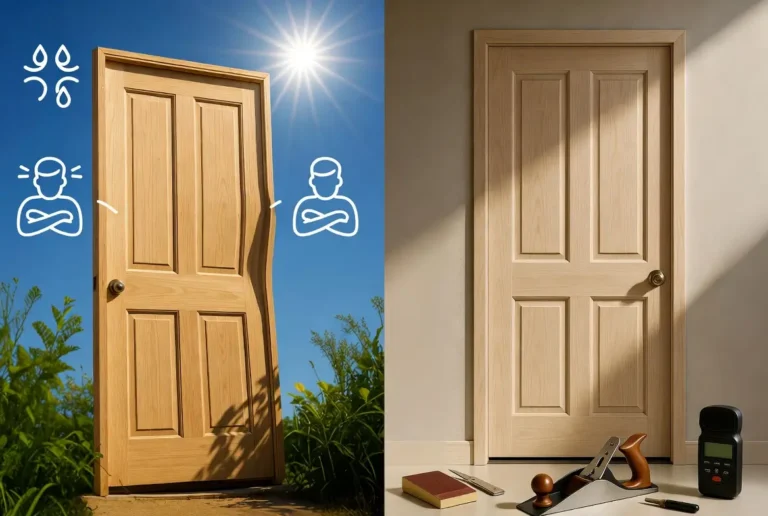
Doors are constantly exposed to movement, temperature changes, humidity, and daily use. Over time, these factors can cause subtle shifts in the door frame, hardware, and surrounding structure.
Common causes of sticking doors include:
- Loose hinge screws
- Bent or worn hinges
- Settling foundations
- Seasonal humidity changes
- Improper installation
- Damaged door frames
- Heavy door weight causing hinge sagging
When hinges begin to fail, the door can drop slightly out of alignment. Even a small shift can cause the edge of the door to rub against the frame or floor, creating noticeable sticking problems.
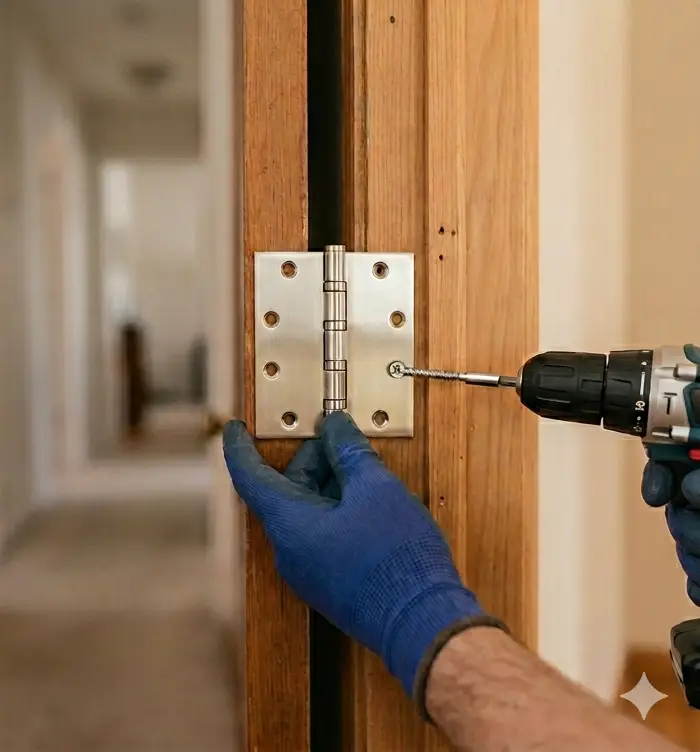
How Door Hinges Affect Door Alignment
Door hinges do much more than simply allow a door to swing open and closed. They support the entire weight of the door while keeping it properly aligned within the frame.
When hinges become loose, worn, or damaged, several problems can occur:
- The top corner of the door begins to sag
- The latch no longer aligns with the strike plate
- The door rubs against the jamb
- Gaps become uneven around the door
- The door becomes difficult to open or close
Many homeowners focus on the symptoms rather than the cause. Replacing damaged hinges often resolves the issue before more extensive repairs become necessary.
Signs That Your Door Hinges Need Replacement
Not every sticking door requires new hinges, but several warning signs indicate hinge replacement may be the best solution.
Visible Sagging
Stand back and look at the spacing around the door. If the gap at the top is uneven, the hinges may no longer be supporting the door properly.
Squeaking and Grinding
Persistent squeaking can sometimes be fixed with lubrication. However, grinding noises often indicate worn hinge components.
Loose Screws
If screws repeatedly loosen after tightening, the hinge may no longer be holding securely in the frame.
Cracked or Bent Hinges
Physical damage is a clear indication that replacement is needed.
Difficulty Latching
If the door no longer aligns with the strike plate, worn hinges may be allowing excessive movement.
Choosing the Correct Replacement Hinges
One of the biggest mistakes homeowners make is installing hinges that don’t match the existing hardware.
Before purchasing replacements, determine:
- Hinge size
- Corner style (square or rounded)
- Material type
- Weight rating
- Number of hinge knuckles
Most interior residential doors use 3.5-inch hinges, while heavier exterior doors often use 4-inch hinges.
Using the wrong size can create alignment issues that are worse than the original problem.
Step-by-Step Hinge Replacement Process
Replacing door hinges properly requires attention to detail. A rushed installation can create new alignment problems.
Step 1: Support the Door
Before removing any hinges, place a wedge or support under the door to prevent shifting.
Step 2: Remove One Hinge at a Time
Removing all hinges at once can make realignment difficult. Replace each hinge individually whenever possible.
Step 3: Inspect the Screw Holes
Stripped screw holes are common in older doors. If screws no longer grip properly, the holes should be repaired before installing new hinges.
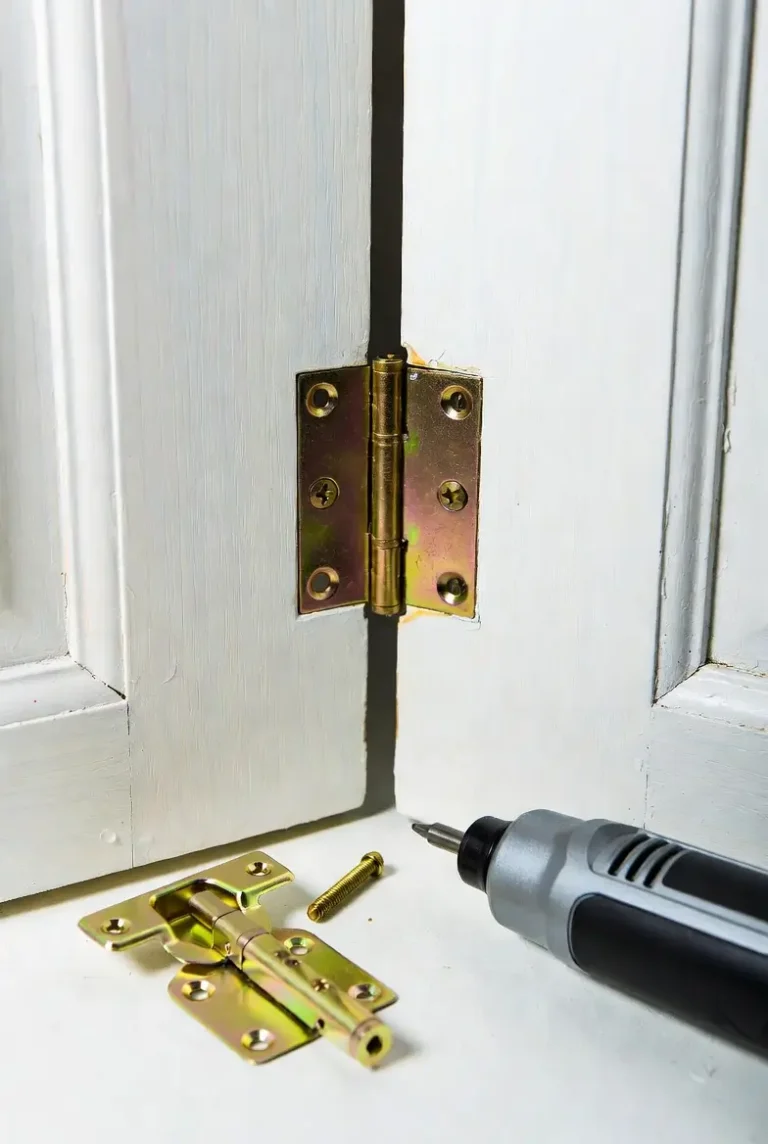
Step 4: Install the New Hinge
Position the new hinge carefully within the existing mortise. The hinge should sit flush with the door and frame surfaces.
Step 5: Tighten Screws Securely
Use quality screws that are long enough to anchor into the framing behind the jamb whenever possible.
Step 6: Test Door Operation
Open and close the door several times to verify smooth operation and proper latch alignment.
Fixing Stripped Hinge Screw Holes
Many sticking door issues are caused by screws pulling out of the frame rather than hinge failure itself.
Common repair methods include:
- Wood dowels and glue
- Wooden toothpicks and wood glue
- Larger diameter screws
- Hinge repair plates
Repairing the underlying damage ensures the new hinges can properly support the door.
Heavy Doors Require Stronger Hinges
Not all doors place the same demands on their hardware.
Solid wood entry doors, steel doors, and oversized doors can place significant stress on standard hinges.
Upgrading to heavy-duty hinges may provide:
- Better long-term support
- Reduced sagging
- Improved security
- Smoother operation
Using stronger hardware can prevent future alignment issues from developing.
How Humidity Affects Door Performance
In areas with significant seasonal humidity changes, wood doors naturally expand and contract throughout the year.
During humid months:
- Doors absorb moisture
- Wood expands
- Clearance gaps become smaller
- Sticking becomes more noticeable
Many homeowners assume the door itself is permanently warped when the issue is actually seasonal expansion combined with minor hinge misalignment.
Proper hinge adjustment often restores normal operation without requiring door replacement.
Common Hinge Replacement Mistakes
Several installation mistakes can cause sticking problems to continue even after new hinges are installed.
These include:
- Using incorrect hinge sizes
- Reusing damaged screws
- Failing to repair stripped holes
- Overtightening screws
- Installing hinges out of alignment
- Mixing hinge types
Professional installation helps ensure all hardware functions as a complete system rather than individual components.
When the Door Frame Is the Problem
Sometimes hinge replacement alone won’t solve the issue.
If the home has experienced settling or structural movement, the door frame itself may have shifted.
Signs of frame-related problems include:
- Multiple doors sticking throughout the house
- Visible cracks near door openings
- Uneven gaps around the entire frame
- Doors that suddenly stop working properly
In these situations, frame adjustments may be necessary in addition to hinge replacement.
Benefits of Properly Replacing Door Hinges
Correctly replacing worn hinges offers several advantages:
- Smoother operation
- Better door alignment
- Reduced wear on the door and frame
- Improved security
- Easier opening and closing
- Longer hardware lifespan
A properly aligned door should move freely, latch securely, and maintain even spacing around all edges.
Want to fix a sticking door easily?
Replacing door hinges is often the simplest and most cost-effective solution for warped or sticking doors. While the symptoms may appear to be caused by a damaged door, worn hinges, loose screws, or alignment issues are frequently responsible.
By identifying the root cause and installing quality replacement hinges correctly, homeowners can restore smooth operation and avoid more expensive repairs down the road. Whether the issue is sagging, rubbing, sticking, or poor latch alignment, properly replacing the hinges is often the first and best step toward a permanent fix.