How to Get Rid of Stink Bugs in Your House
If you’ve ever crushed a stink bug by accident, you know exactly how they got their name.
The smell can be awful.
The good news is that stink bugs usually do not bite people or damage your home.
The bad news is that they can become a major nuisance.
Many homeowners suddenly notice dozens of stink bugs appearing around windows, light fixtures, curtains, and ceilings.
It can feel like they came out of nowhere.
If you’re wondering how to get rid of stink bugs in your house, you’re not alone.
This guide explains what attracts them, how they get inside, and the best ways to keep them out of your home.
What Are Stink Bugs?
Stink bugs are shield-shaped insects.
Most homeowners deal with the brown marmorated stink bug.
They are usually brown, gray, or mottled in color.
Adult stink bugs are about half an inch long.
When they feel threatened or are crushed, they release a strong odor from glands on their bodies.
That odor is their defense mechanism.
The smell may linger for a while inside your home.
Why Are Stink Bugs Coming Into My House?
Stink bugs usually enter homes looking for shelter.
They often invade during the fall.
As temperatures begin to cool, they search for warm places to spend the winter.
Your home provides exactly what they need.
Once inside, they hide in walls, attics, crawl spaces, and other protected areas.
Many remain hidden for months.
Then winter heat or warmer spring temperatures may cause them to become active.
That is why homeowners sometimes find stink bugs indoors even when it is cold outside.
How Do Stink Bugs Get Inside?
Stink bugs only need tiny openings to enter.
Common entry points include:
- Gaps around windows
- Cracks in siding
- Openings near doors
- Utility penetrations
- Roof vents
- Chimneys
- Damaged screens
- Foundation cracks
- Spaces around pipes
- Attic openings
A few small gaps can allow dozens of stink bugs inside.
That is why exclusion is one of the best long-term solutions.
Are Stink Bugs Dangerous?
For most homeowners, stink bugs are more annoying than dangerous.
They do not sting.
They do not spread diseases to people.
They do not chew through wood.
They do not reproduce inside your home.
However, they can create problems.
Large numbers of stink bugs can become stressful.
Their odor is unpleasant.
Their presence around windows and living spaces can be frustrating.
Some people may also experience mild allergic reactions after handling them.
The Best Way to Get Rid of Stink Bugs
There is no single magic solution.
The best approach combines removal and prevention.
Here are some of the most effective methods.
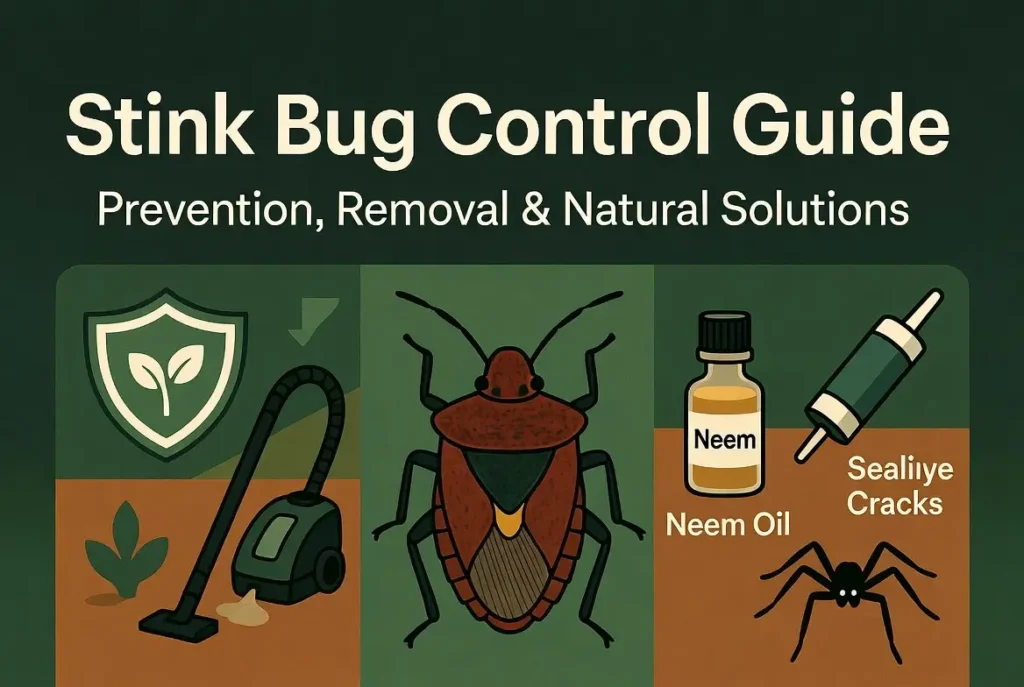
1. Vacuum Them Up
A vacuum cleaner is often the easiest way to remove stink bugs.
Use the hose attachment.
Carefully vacuum the insects from walls, ceilings, and windows.
Dispose of the vacuum bag promptly.
Keep in mind that the odor may linger inside the vacuum.
Some homeowners prefer using an older vacuum for this purpose.
Never crush stink bugs while vacuuming.
That can release their odor.
2. Avoid Squishing Them
Your first instinct may be to smash them.
Try not to.
Crushing stink bugs releases their defensive odor.
That smell can spread throughout the room.
It may also attract other pests in some situations.
Instead, gently remove them using a vacuum or container.
3. Use Soapy Water
A simple bowl of soapy water can help.
Fill a container with warm water and a few drops of dish soap.
Carefully place the stink bugs into the solution.
The soap breaks the surface tension of the water.
This prevents the insects from escaping.
Dispose of the contents afterward.
This method works well when only a few stink bugs are present.
4. Seal Cracks and Gaps
Keeping stink bugs out is often easier than removing them.
Inspect the outside of your home.
Look for openings around:
- Doors
- Windows
- Utility lines
- Siding
- Foundations
- Roof edges
Use caulk to seal cracks.
Replace worn weather stripping.
Repair damaged screens.
Install door sweeps if needed.
These small improvements can significantly reduce future invasions.
5. Check Window Screens
Windows are common entry points.
Even tiny tears in screens can allow stink bugs inside.
Inspect every screen carefully.
Replace damaged screens promptly.
Make sure screens fit tightly within their frames.
This simple step can make a noticeable difference.
6. Reduce Outdoor Attractants
Bright lights can attract insects.
While stink bugs are not always drawn directly to lights, reducing nighttime attraction may help.
Consider:
Turning off unnecessary outdoor lights.
Using blinds and curtains at night.
Switching bulbs if needed.
Trimming vegetation that touches the house.
Reducing easy access points helps limit indoor activity.
7. Inspect Attics and Crawl Spaces
Many stink bugs spend the winter hidden in quiet areas.
Attics and crawl spaces are common hiding spots.
Check these areas periodically.
Look for large numbers of insects near vents or openings.
Addressing entry points in these spaces can help prevent future problems.
Do DIY Sprays Work?
Many homeowners reach for store-bought sprays.
Results vary.
Sprays may kill stink bugs that come into direct contact with the product.
However, they usually do not solve the root problem.
If entry points remain open, more stink bugs can continue entering.
Prevention remains the most effective strategy.
When Should You Call a Professional?
Some homeowners only see one or two stink bugs.
Others discover dozens or even hundreds.
Professional assistance may be helpful when:
- Large numbers keep appearing.
- DIY methods fail.
- Entry points cannot be identified.
- You want a long-term prevention plan.
- The infestation becomes overwhelming.
Pest professionals can evaluate your property and recommend appropriate solutions.
They can also identify areas homeowners may overlook.
Can Stink Bugs Damage Your Home?
Unlike termites, stink bugs do not eat wood.
They do not destroy insulation.
They do not chew electrical wires.
Their biggest impact is inconvenience.
Seeing them regularly around your home can become stressful.
The odor they produce can also be unpleasant.
Fortunately, they are considered nuisance pests rather than destructive pests.
Can Stink Bugs Reproduce Indoors?
Generally, no.
Stink bugs seek shelter inside homes.
They do not usually establish breeding populations indoors.
That means the insects you are seeing likely entered from outside.
Eliminating entry points is one of the best ways to reduce future sightings.
Tips to Prevent Future Stink Bug Problems
Simple habits can help protect your home.
Inspect your home seasonally.
Seal cracks promptly.
Replace damaged screens.
Maintain weather stripping.
Trim vegetation away from the house.
Address gaps around utility lines.
Monitor attics and crawl spaces.
Small maintenance tasks can prevent larger problems later.
Stink Bugs Are Annoying For Homeowners
Stink bugs can be annoying.
No homeowner enjoys finding them crawling across walls and windows.
Fortunately, getting rid of stink bugs usually comes down to a few practical steps.
Remove the bugs you can see.
Avoid crushing them.
Seal the openings they use to get inside.
Stay consistent with prevention.
If the problem continues, professional guidance may help you regain control.
With the right approach, you can enjoy a cleaner, more comfortable home without sharing it with unwanted stink bug guests.
Are Stink Bugs Taking Over Your Home?
Tired of finding stink bugs around your windows, ceilings, and living spaces? Find out what options may be available to help keep these nuisance pests out for good.
Ready to stop sharing your home with stink bugs?
Call 313-422-7926 TodayAsk about solutions that can help reduce stink bug activity and protect your home year-round.