Why Do Wasps Keep Coming Back Every Summer?
Every year, as temperatures rise, homeowners notice those familiar yellow-and-black visitors buzzing around eaves, decks, and gardens. If you’ve asked yourself, “Why do wasps keep coming back every summer?” you’re not alone. These insects can quickly turn a relaxing backyard into a stressful zone. The good news is that understanding their habits makes prevention much easier.
The Wasp Life Cycle: Why They Return Year After Year
Wasps follow a predictable annual cycle. In late fall, most of the colony dies off when cold weather hits. Only mated queens survive by hibernating in protected spots like attics, wall voids, tree bark, or under loose siding.
When spring warms up (usually above 50°F), these queens emerge and search for nesting sites. A single queen can build a new colony that grows rapidly—reaching hundreds or even thousands of workers by mid-to-late summer. New queens are often drawn to areas where previous colonies were successful because lingering pheromones signal a safe location. This “institutional memory” is a big reason wasps return to the same homes season after season.
Why Wasps Nest Around Homes
Homes provide ideal real estate for wasps. Here’s what attracts them:
- Shelter: Overhanging eaves, porch ceilings, door frames, and soffits offer protection from rain and predators.
- Building Materials: Wasps chew wood fibers from fences, decks, siding, and trees, mixing them with saliva to create paper-like nest material.
- Food Sources: Flowering plants, fruit trees, fallen fruit, open trash, pet food, and garden pests (like caterpillars) provide plenty to eat.
- Water: Leaky faucets, birdbaths, and condensation supply needed moisture.
- Protection: Structures shield nests from wind and extreme weather, helping colonies thrive.
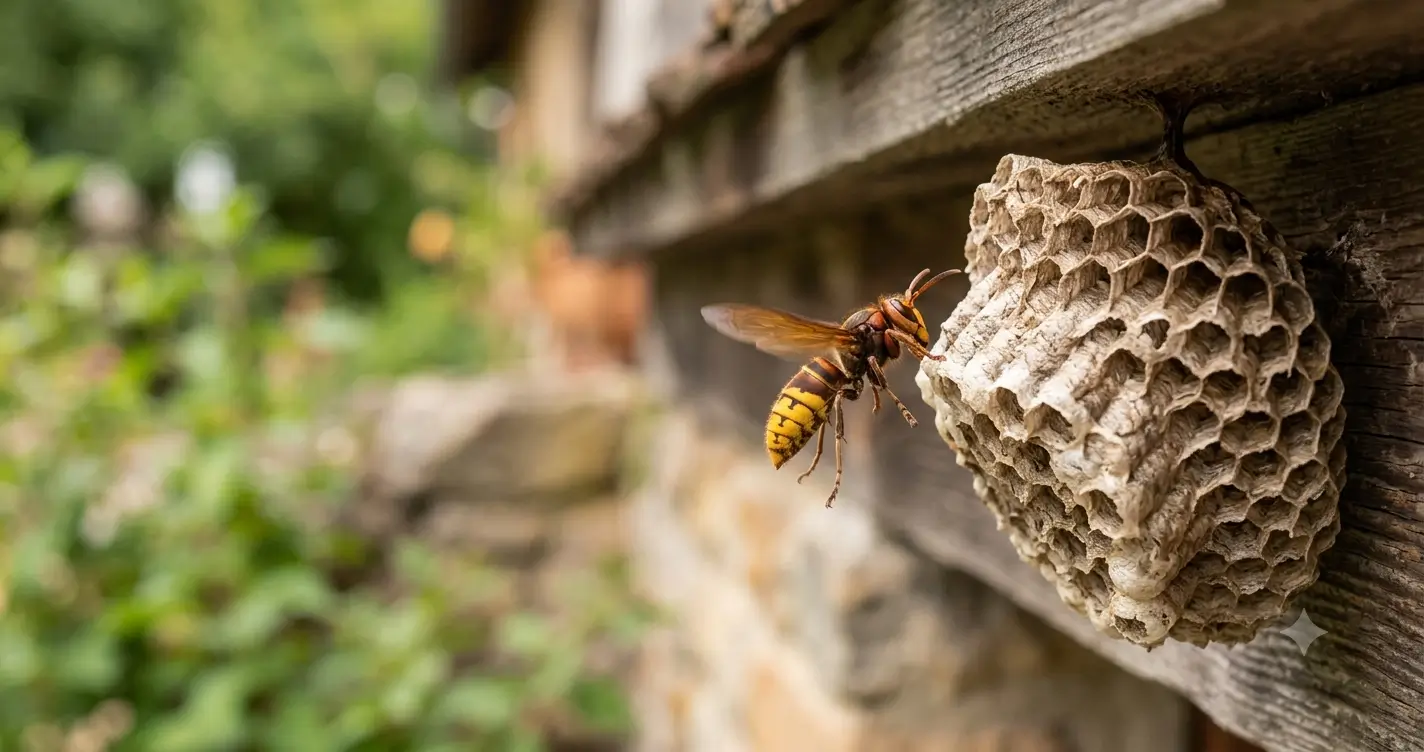
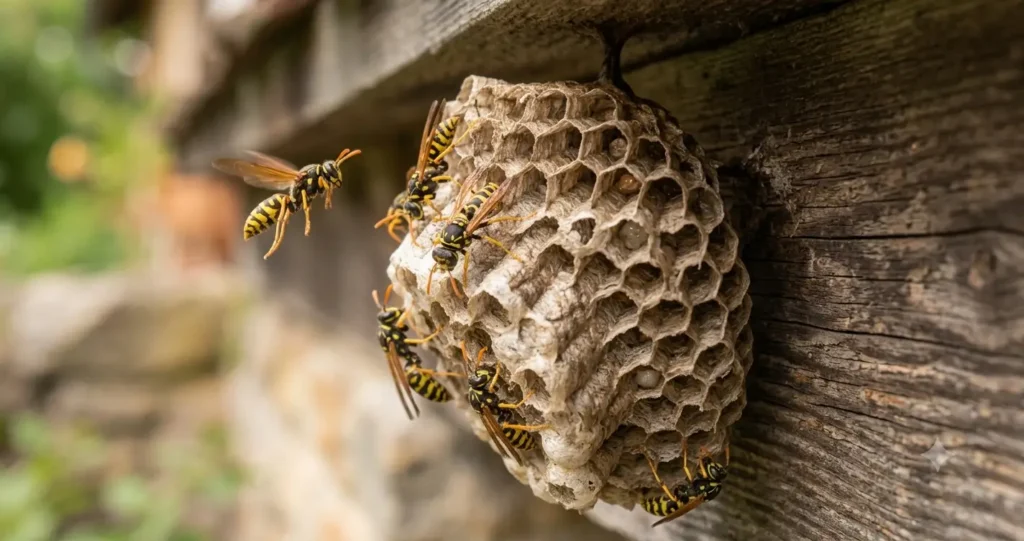
Common species around homes include paper wasps (umbrella-shaped open nests under eaves), yellowjackets (often ground or wall-cavity nesters), and bald-faced hornets (large, football-shaped aerial nests).
The Risks of Wasp Nests
Beyond annoyance, wasps create safety concerns. Stings can trigger allergic reactions, even in people with no prior history. Children, elderly family members, and pets are especially at risk. Nests near doorways, patios, or play areas create constant worry. A small spring nest can become a major problem by August if left untreated.
Practical Prevention Tips Homeowners Can Use
Prevention is far more effective than reaction. Follow this seasonal plan:
Spring (Best Time to Act)
- Inspect your home thoroughly: Check under eaves, behind shutters, vents, attic access, and light fixtures. Remove any small starter nests early (when only the queen is present).
- Seal entry points: Use caulk to close cracks around windows, doors, siding, pipes, and vents.
- Trim back vegetation: Keep bushes, vines, and tree branches away from your house.
Summer (Active Season Maintenance)
- Control food and water: Use tight-fitting lids on trash cans, rinse recyclables, bring pet food inside, and fix leaks.
- Cover outdoor food: Use mesh screens at picnics and cookouts.
- Consider natural repellents: Plant mint, eucalyptus, or citronella near high-risk areas (helpful but not a complete solution).
- Use decoy nests: Hanging fake wasp nests in early spring can discourage new queens due to territorial behavior.
Fall/Winter (Break the Cycle)
- Remove empty nests after the colony dies off.
- Pressure wash eaves and siding to eliminate residue and pheromones.
Simple DIY traps (sugar water or meat bait) can reduce foraging wasps but won’t eliminate an established nest. Always treat active nests at dusk when wasps are less aggressive.
When to Call Professionals
Many small nests can be handled with caution using over-the-counter sprays, but larger colonies, ground nests, or hard-to-reach locations are best left to experts. Improper removal can lead to defensive swarming and incomplete results, causing wasps to rebuild nearby.
For safe, effective wasp nest removal and long-term prevention in the Detroit area, visit HandymanDetroit.com. Their experienced team understands local conditions and provides reliable home maintenance solutions.
Enjoy a Wasp-Free Summer
Wasps play a helpful role in nature by pollinating plants and controlling garden pests. The goal isn’t total elimination but smart management so you and your family can enjoy your yard safely.
Start with a thorough spring inspection, maintain good sanitation, seal your home, and address problems early. Consistent effort breaks the cycle and reduces wasp activity dramatically over time.
Your backyard should be for relaxation and family time—not dodging stingers. Take these steps now so next summer feels noticeably calmer.
Serving Detroit and surrounding areas • Same-day service available