
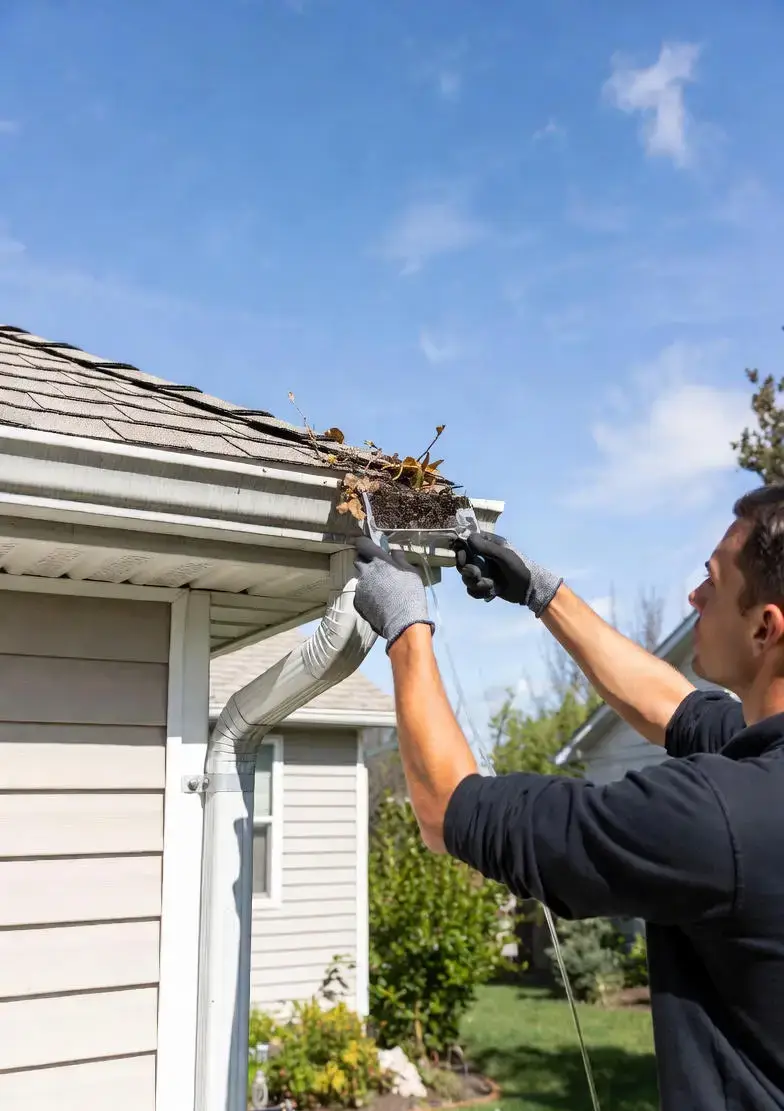
How to Fix a Clogged Gutter in Under 20 Minutes (Fast Homeowner Guide)
Clogged gutters are one of the fastest ways to cause preventable damage to your home. When leaves, sticks, pine needles, and roof debris jam up the gutter channel, water has nowhere to go. Instead, it spills over the sides, saturates the soil, and ruins landscaping, seeps into your foundation, and ultimately leads to rot or basement leaks. The good news is that most gutter clogs can be cleared quickly — often in 20 minutes or less — as long as you approach the job the right way.
This guide breaks down exactly how to clear a gutter clog fast, how to do it safely, what tools you need, and how to prevent the issue from returning. Whether you’re in a neighborhood with heavy tree cover or dealing with seasonal buildup after a storm, the steps below give you a quick and reliable fix.
Why Gutters Clog So Easily
Even the best gutter systems eventually fill with debris. Wind carries leaves and twigs onto the roof, rain washes shingle granules off the surface, and storm debris settles in the channels. Combine that with gutters that don’t have enough pitch, downspouts that are undersized, or sections that are slightly bent, and a clog forms quickly.
Here are the most common causes of gutter clogs:
- Fallen leaves and sticks
- Shingle debris / granules
- Bird nests or seed buildup
- Pine needles and roof moss
- Ice dams forming in winter
- Sludge created from wet leaves
The key is clearing blockages early before water backs up and causes expensive damage.
Step 1: Gather What You Need
You don’t need professional equipment to unclog a gutter fast. Here are the minimum tools required:
- A sturdy ladder (extension or step ladder)
- Gloves (rubber or work gloves)
- A small scoop or gutter tool
- A bucket or lawn bag
- Garden hose with a spray nozzle
- Safety glasses
- Optional: leaf blower, gutter wand, or drill-powered auger for downspouts
Getting everything ready before climbing the ladder saves time and reduces the number of trips up and down.
Step 2: Set Up the Ladder Safely
Most accidents happen during setup, not during the actual cleaning. Take a moment to place your ladder correctly.
- Set it on solid, level ground — never soft soil.
- Make sure the ladder angle is correct: for every 4 feet of height, the base should be 1 foot out.
- Lock the legs if using a step ladder.
- Use a stabilizer if you have one to prevent the ladder from pressing directly on the gutters.
If the wind is strong or the ground is uneven, don’t risk it — wait or get help. A 20-minute job isn’t worth falling for.
Step 3: Remove All Visible Debris
Once you’re safely positioned, start removing the debris by hand or with a gutter scoop.
Tips for fast removal:
- Start at the downspout side because that’s where clogs usually begin.
- Scoop in the direction of the downspout so debris doesn’t get pushed into the downspout opening.
- Don’t pack debris tightly into your bucket — dump it often to stay efficient.
- For heavy sludge buildup, scoop a little at a time. Wet leaves weigh a lot and slow you down.
If the gutter looks full of mud, that’s usually roof shingle runoff mixed with decomposed leaves. It’s messy but still quick to remove with a narrow trowel.
Step 4: Clear the Downspout Entrance
Even if the gutter channel looks clean, a clogged downspout can stop water flow completely. This is where most homeowners get stuck — everything “looks clean” but the system still overflows.
Check the downspout opening for:
- Packed leaves
- Small twigs
- Pine needles
- Nesting material
- Shingle granules
- Sludge plugs
Clear everything until you see the opening circle perfectly.
If you have a leaf guard installed, remove it and clean underneath.
Step 5: Flush the Gutters With a Hose
This step is what actually confirms the clog is gone.
How to do it:
- Turn your hose on high pressure.
- Start at the end farthest from the downspout.
- Rinse toward the downspout in slow passes.
- Watch the water flow — it should move smoothly and quickly.
If water pools, you likely still have debris stuck or your gutter pitch is off.
If the water backs up:
- Flush the downspout harder using the hose directly into the hole.
- If that doesn’t work, move to Step 6.
Step 6: Unclog the Downspout
A blocked downspout can still be cleared without taking it apart if you use the right technique.
Method 1: High-Pressure Flush
Place the hose directly into the downspout opening and seal it with your hand. Push water down forcefully.
Method 2: Bottom-Up Flush
If you can access the bottom opening:
- Spray water upward to force the clog back out the top.
Method 3: Use a Blower or Drill Auger
If you have a leaf blower with a gutter attachment or a drill-powered auger, this can break up stubborn clogs.
Method 4: Tap the Downspout
Sometimes tapping the downspout with your hand loosens compacted debris so it can be flushed.
You should see a burst of leaves, sludge, and granules shoot out — that means the clog is cleared.
Step 7: Perform a Final Water Test
Run the hose again across the entire length of the gutter and watch how the water moves.
You want:
- Strong flow toward the downspout
- No pooling or backing up
- No leaks from seams
- A consistent, smooth water path
If everything flows normally, you’re done. The entire job should be around 15–20 minutes for an average-size home.
Signs Your Gutter Is Still Not Fully Clear
Even after clearing debris, the gutter system may still have underlying issues:
- Water still overflows → Pitch or sagging problem
- Downspout still weak → Clog deeper inside
- Water leaking from seams → Old caulking or loose joints
- Gutters fill quickly after one storm → Trees dropping excess debris
- Standing water → Low point in the gutter trough
You may need adjustments, resealing, or realignment if any of these problems persist.
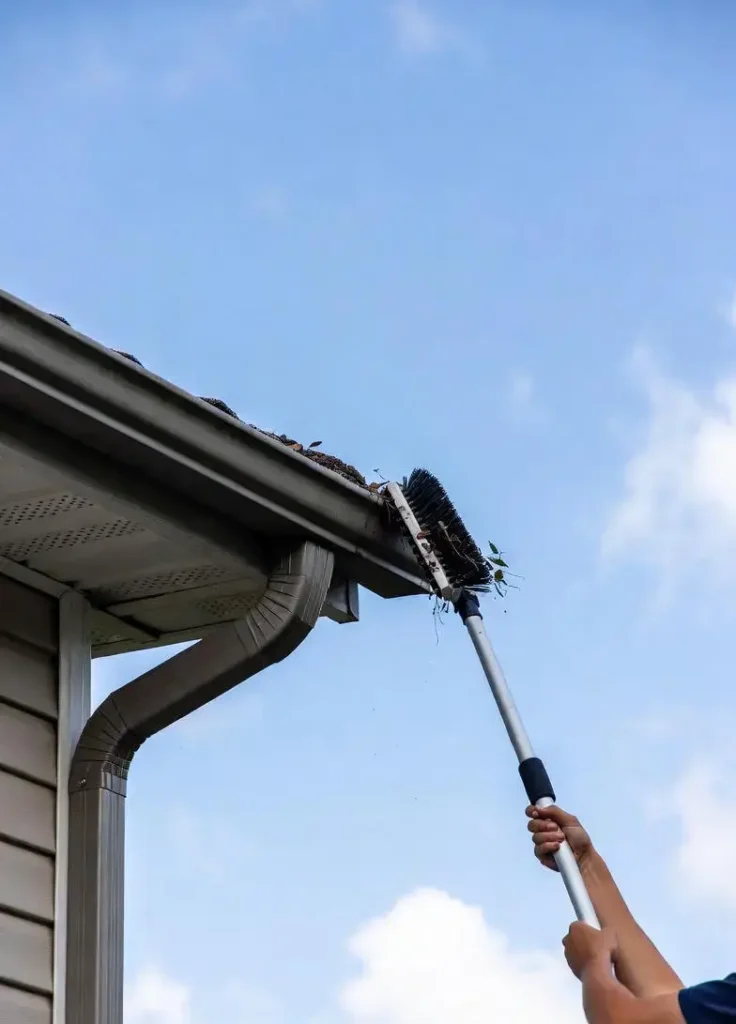
How to Keep Your Gutters from Clogging Again
A quick clean is great, but prevention saves you time long-term.
Install Gutter Guards
Mesh screens or micromesh systems drastically reduce the amount of debris entering the system.
Trim Overhanging Branches
Most gutter debris comes from direct branch coverage.
Add a Downspout Filter
This catches debris before it reaches underground drains.
Re-align Gutters
Proper pitch prevents debris from collecting in low spots.
Flush Gutters After Heavy Weather
A 2-minute hose rinse after large storms prevents buildup.
Schedule Routine Maintenance
Clean gutters spring and fall — non-negotiable.
Small habits prevent emergency repairs and roof damage.
Why You Shouldn’t Put Off Gutter Cleaning
Ignoring a clogged gutter causes problems fast:
- Foundation cracks
- Basement leaks
- Exterior wood rot
- Siding damage
- Soil erosion
- Mold growth
- Ice dams in winter
- Roof edge rot
- Destroyed landscaping
- Pest nests (birds, mice, hornets love clogged gutters)
The cost of repairing these issues can easily reach thousands, compared to a simple 20-minute gutter clean.
When to Call a Professional Instead
DIY is great — until safety or structure becomes an issue.
Call a pro if:
- Your roof is steep or slippery
- You have a two-story home and lack a safe ladder
- The gutter is bent and not draining
- Downspouts are blocked deep inside the piping
- There’s visible gutter sagging
- Your gutters overflow even after cleaning
- There are signs of rot around gutter fasteners
Professionals also spot issues homeowners miss, such as spikes pulling out, improper pitch, fascia damage, or hidden leaks.
Need Your Repair Done Today?
We handle clogged gutters, leaky faucets, drafty doors, and more. Book a same-day appointment.
Call 313-367-1116


