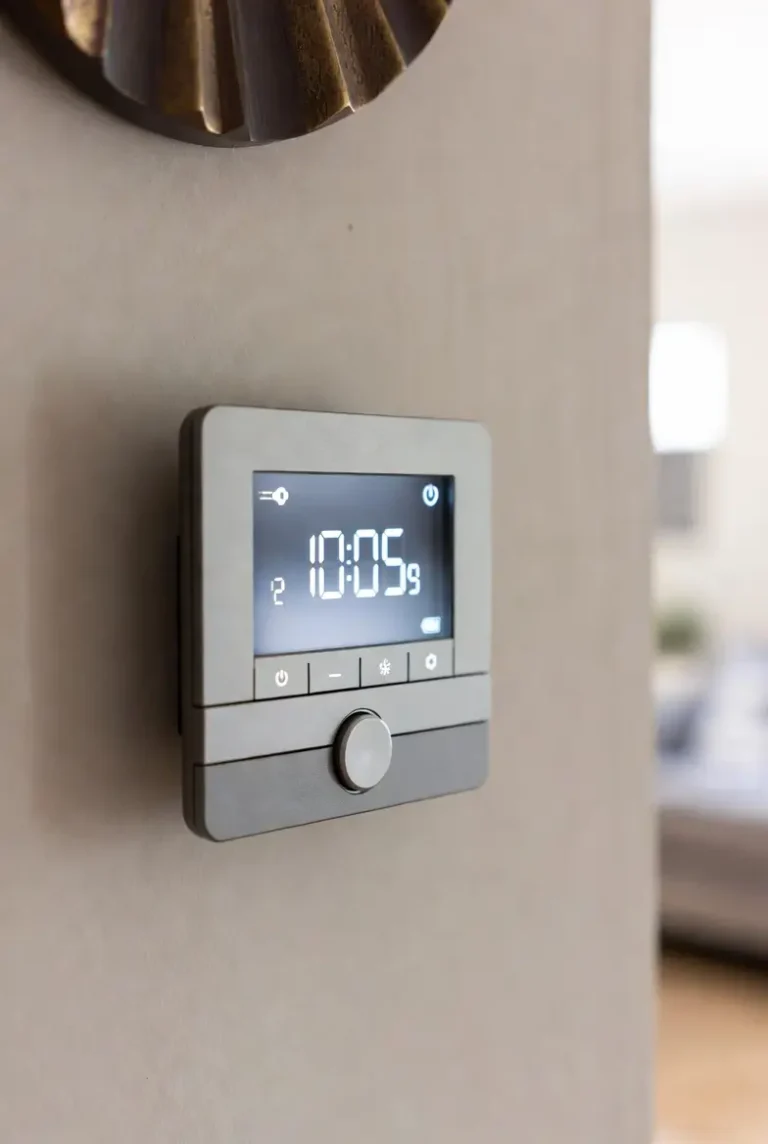
AC Thermostat Has No Power – What’s Really Going On
If your AC thermostat has no power, it usually catches you off guard. One day everything’s working, the next the screen is blank and the AC won’t kick on at all. No clicks. No fan. Nothing!
Most homeowners immediately think the thermostat itself is broken. Sometimes that’s true—but more often; the thermostat is just the messenger, not the real problem.
Let’s break this down the right way.
The Symptom: Thermostat Is Completely Dead
When we say “no power,” we’re talking about:
- Blank thermostat screen
- No lights, no display
- AC won’t turn on at all
- Changing batteries doesn’t help (or there aren’t any)
In Detroit-area homes, this is especially common during the first big heat wave of the year or right after someone tried to “mess with” the system.
The key thing to understand is this:
Your thermostat doesn’t create power—it receives it.
So when it goes dead, something upstream usually failed.

Common Causes (In Plain English)
Here are the most common reasons an AC thermostat loses power, explained without HVAC jargon.
1. Tripped Safety Switch or Float Switch
This is a big one.
If your AC drain line backs up with water, many systems automatically shut off power to the thermostat to prevent damage. This happens a lot in older Detroit homes with basements.
The AC is basically saying:
“Something’s wrong—shut it down.”
2. Blown Low-Voltage Fuse
Inside the furnace or air handler, there’s usually a small fuse that protects the thermostat wiring.
If:
- Wires touched
- A thermostat was replaced incorrectly
- There was a short
That fuse blows—and the thermostat goes dark.
3. Loose or Broken Thermostat Wiring
Homes shift. Wires get brittle. Rodents chew things they shouldn’t.
A loose connection behind the thermostat or at the control board can kill power instantly.
4. Tripped Breaker (Not the One You Think)
A lot of people check the big AC breaker outside and miss the smaller breaker or switch tied to the furnace or air handler.
No power there = no thermostat power.
5. Bad Transformer
The transformer steps down voltage so the thermostat can safely operate.
If it fails, the thermostat gets nothing—even though the rest of the system might still have power.
6. Dead Thermostat (Yes, It Happens)
It’s not the most common cause, but thermostats do fail—especially older ones or cheap replacements.
The problem is most people replace the thermostat before confirming the cause, and that’s where things go sideways.
What NOT to DIY (This Is Where People Mess Up)
Here’s the honest truth:
This is not a YouTube-friendly problem.
Things you should not do:
- Jump random wires together
- Bypass safety switches
- Replace fuses without knowing why they blew
- Swap thermostats without testing power
- Guess which breaker controls what
We see this all the time. A small issue turns into:
- Blown control boards
- Fried transformers
- Bigger repair bills
Low-voltage doesn’t mean low-risk. One wrong move can take out components that cost way more than the original problem.
Why This Happens So Often in Detroit Homes
Detroit-area homes have a few things working against them:
- Older HVAC systems
- Long drain lines through basements
- Previous homeowner “repairs”
- Mixed wiring upgrades over decades
That means when something stops working, it’s rarely a clean, obvious failure.
And that’s why the thermostat looks like the problem—when it’s really just the first thing you notice.
When It’s Time to Call a Handyman
If:
- The thermostat has no power
- Batteries didn’t fix it
- You don’t see an obvious tripped switch
- You’re not comfortable testing electrical components
That’s your line.
A qualified handyman can:
- Trace where power stops
- Check safety switches
- Inspect wiring
- Identify whether it’s HVAC-related or electrical
- Fix the actual cause—not just the symptom
You don’t need a full HVAC repair or replacement conversation. You need someone who understands how the whole system works together.
Why a Handyman Makes Sense for This Problem
This issue lives in the gray area between HVAC and electrical.
A good handyman can handle:
- Thermostat wiring
- Power supply issues
- Minor electrical fixes
- Drain switch problems
- Safe troubleshooting
That saves you from:
- Overpaying for unnecessary work
- Waiting days for an HVAC-only company
- Replacing parts that aren’t broken
Why the Problem Sometimes Comes and Goes
One thing that throws homeowners off is when the thermostat power issue is intermittent. It works one day, goes dead the next, and then magically comes back.
That’s usually a warning sign.
Intermittent power loss often points to:
- A loose low-voltage wire
- A failing transformer
- A float switch that’s right on the edge
- Corrosion on older connections
In other words, the system is telling you something is wrong before it fully shuts down. Ignoring that usually means the next failure happens on the hottest day of the year—when everyone else is calling too.
This is especially common in Detroit homes where basements get humid and wiring has been sitting there for decades.
Why Replacing the Thermostat First Is Usually a Mistake
A lot of people jump straight to replacing the thermostat because it feels like the obvious fix. Sometimes that works—but more often, it just hides the real issue temporarily.
If the power problem is coming from:
- A safety switch
- A wiring fault
- A blown fuse
- A transformer issue
…the new thermostat will either:
- Not power on at all, or
- Work briefly, then fail again
Now you’ve spent money and still don’t have AC.
That’s why testing where power stops is more important than swapping parts.
Find Where Power Drops Off
The smartest way to approach this problem isn’t guessing—it’s tracing.
You’re trying to answer one simple question:
Where does power disappear between the breaker and the thermostat?
Once you know that, the fix is usually straightforward.
This is where experience matters. Someone who understands both electrical basics and HVAC systems can pinpoint the issue quickly without turning it into a bigger repair than it needs to be.
Don’t Get Frustrated With Your Thermostat
When your AC thermostat has no power, it’s frustrating—but it’s rarely mysterious.
There’s always a reason. The key is finding it without making the problem worse.
If you’re dealing with a dead thermostat and want it handled the right way—no guessing, no up selling—getting a professional set of eyes on it is usually the smartest move.
Need Help With a Thermostat Power Issue?
If your AC thermostat has no power and you want it checked safely and correctly, a local handyman can help track down the real cause without the runaround.
Call 313-254-6072 to schedule help.