

5 Common Causes of Roof Leaks in Detroit Homes
Detroit homeowners know that their roofs take a beating. Between heavy snow, freezing temperatures, spring rainstorms, high winds, and hot summer sun, roofing materials expand, contract, and wear down throughout the year. While many roof leaks start small, they can quickly become expensive problems if they go unnoticed. Water can damage insulation, drywall, wood framing, ceilings, and even create the perfect environment for mold growth.
Understanding what causes roof leaks is one of the best ways to protect your home. By spotting warning signs early and scheduling repairs before major damage occurs, you can often avoid the cost of a complete roof replacement in Detroit Michigan.
If you own a home in Detroit or the surrounding communities, here are five of the most common reasons roofs begin leaking and what you should watch for.
Is Your Roof Showing Signs of a Leak?
Don’t wait until water starts dripping through your ceiling. Our experienced roofing professionals can inspect your roof, identify the source of the problem, and recommend the most cost-effective repair.
1. Damaged or Missing Shingles
Shingles serve as your home’s first layer of defense against rain, snow, and ice. Over time, strong winds, hail, falling branches, and normal aging can crack, curl, or completely remove shingles.
Detroit experiences plenty of weather that can shorten the lifespan of asphalt shingles. Winter freeze-thaw cycles are especially hard on roofing materials because moisture seeps underneath damaged shingles and expands as it freezes.
Signs of damaged shingles include:
- Missing shingles after a windstorm
- Curled or lifted edges
- Cracked surfaces
- Bald spots where granules have worn away
- Pieces of shingles found in your yard
Once shingles are damaged, water can work its way beneath the roofing system and begin soaking the roof decking. By the time you notice a stain on your ceiling, the leak may have existed for weeks or even months.
A professional roof inspection after major storms can help catch damaged shingles before they become larger problems.
2. Worn or Damaged Flashing
Flashing is the thin metal installed around roof penetrations and joints where water is most likely to enter. You’ll typically find flashing around:
- Chimneys
- Skylights
- Roof vents
- Plumbing stacks
- Dormers
- Valleys where two roof sections meet
Because flashing expands and contracts during temperature changes, it can eventually loosen or separate from the roof.
Old sealants may crack, nails can back out, and metal flashing may rust after years of exposure.
When flashing fails, water often follows the framing into your attic before becoming visible inside your home.
Common warning signs include:
- Water stains near fireplaces
- Leaks around skylights
- Damp attic insulation
- Rust stains around vent pipes
Replacing flashing is often far less expensive than repairing the interior water damage it can cause if ignored.
3. Ice Dams During Michigan Winters
One roofing problem that many Detroit homeowners face is ice dams.
An ice dam forms when heat escapes from the attic and melts snow on the roof. The melted water flows toward the colder roof edges, where it refreezes into thick ice.
As more snow melts, water becomes trapped behind the ice dam. Eventually, it backs up underneath shingles and enters the home.
Ice dams can lead to:
- Ceiling leaks
- Wet insulation
- Mold growth
- Damaged drywall
- Wood rot
- Gutter damage
Homes with poor attic insulation or inadequate ventilation are especially vulnerable.
Preventing ice dams usually involves improving attic insulation, increasing ventilation, sealing air leaks, and ensuring snow melts evenly across the roof.
If you’ve experienced recurring winter roof leaks, an inspection can often identify the underlying cause before another Michigan winter arrives.
4. Clogged Gutters and Poor Drainage
Your gutters play an important role in protecting your roof.
When gutters become clogged with leaves, sticks, pine needles, and debris, rainwater cannot flow away properly.
Instead, water begins pooling along the roof edge where it can seep beneath shingles.
Standing water also increases the likelihood of:
- Fascia board rot
- Soffit damage
- Ice dams
- Foundation drainage problems
- Basement moisture
Detroit neighborhoods with mature trees often experience clogged gutters several times each year.
Regular gutter cleaning during the spring and fall helps keep water moving away from your roof and home.
Signs your gutters need attention include:
- Water spilling over the sides
- Sagging gutters
- Plants growing inside gutters
- Dark streaks on siding
- Pools of water around your foundation
Proper drainage is one of the simplest ways to extend the life of your roof.
5. Aging Roofing Materials
Every roof eventually reaches the end of its useful life.
Even if no major storms have occurred, years of exposure to sunlight, rain, snow, wind, and changing temperatures slowly break roofing materials down.
Typical asphalt shingle roofs often last between 20 and 30 years depending on the quality of materials and installation.
As roofs age, homeowners may notice:
- Frequent leaks
- Curling shingles
- Missing granules
- Soft roof decking
- Moss or algae growth
- Increased roof repair needs
If you’re constantly repairing different sections of your roof, it may be more cost-effective to consider replacing the entire roofing system.
A roofing professional can inspect your roof and determine whether repairs or replacement provide the better long-term investment.
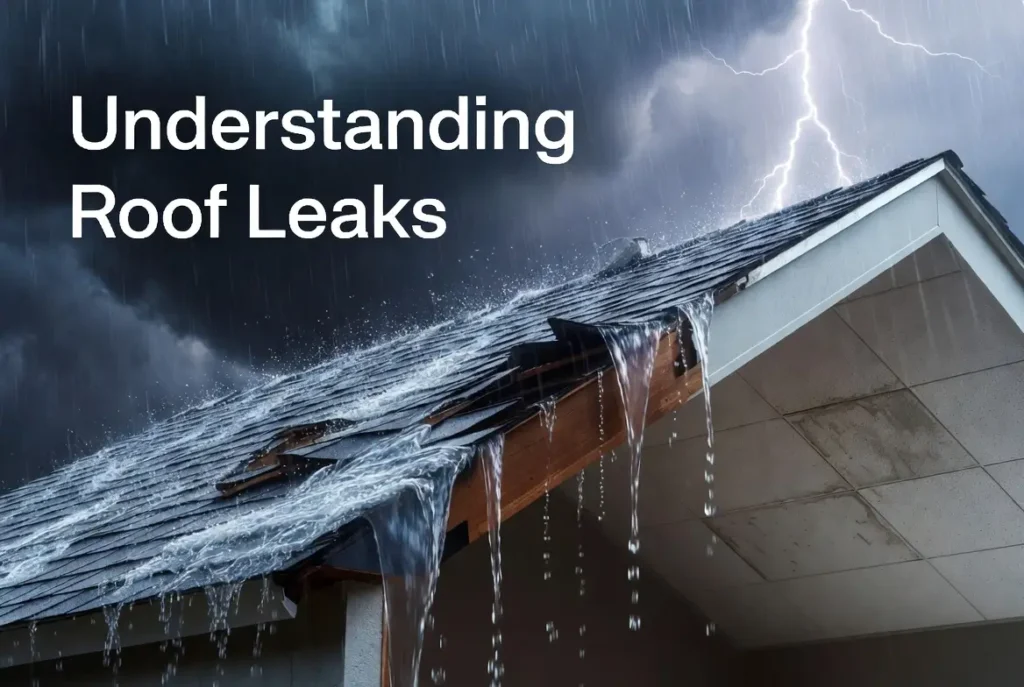
Warning Signs You May Have a Roof Leak
Not every roof leak immediately produces water dripping from the ceiling.
Some early warning signs include:
- Brown ceiling stains
- Peeling paint
- Bubbling drywall
- Musty odors
- Mold growth
- Wet attic insulation
- Sunlight visible through the attic
- Higher energy bills from damaged insulation
The sooner these warning signs are addressed, the less damage your home is likely to experience.
Why Roof Leaks Should Never Be Ignored
Even a small roofing leaks in Michigan can create surprisingly large problems over time.
Water can damage:
- Structural framing
- Ceiling drywall
- Electrical wiring
- Insulation
- Flooring
- Furniture
- Personal belongings
Moisture trapped inside walls also creates ideal conditions for mold, which may require extensive remediation.
Many homeowners underestimate how quickly a small roof leak can spread. What begins as a minor repair can eventually require thousands of dollars in structural repairs if left untreated.
Preventative Roof Maintenance Tips
The best way to avoid costly roof leaks is through regular maintenance.
Homeowners should:
- Inspect their roof after severe storms.
- Keep gutters clean throughout the year.
- Trim overhanging tree branches.
- Check attic spaces for moisture.
- Replace damaged shingles promptly.
- Schedule professional roof inspections every few years.
- Watch for ceiling stains after heavy rain.
Routine maintenance can often add years to the life of your roof while reducing emergency repair costs.
Protect Your Detroit Home Before Small Leaks Become Big Problems
Detroit weather can be unpredictable, but roof leaks don’t have to catch you by surprise.
Whether your roof has missing shingles, damaged flashing, clogged gutters, or simply shows signs of age, addressing the problem early is almost always less expensive than waiting until major water damage occurs.
If you’ve noticed water stains, missing shingles, or suspect your roof may have been damaged after a recent storm, don’t wait for the next heavy rain to confirm your concerns. A professional inspection can identify hidden issues before they become major repairs.
Need Roof Leak Repair in Detroit?
Whether you’re dealing with an active leak or want peace of mind after a storm, our roofing experts are ready to help. Schedule an inspection today and protect your home from costly water damage.