Step-by-Step Guide to Fixing Drywall Cracks
Drywall cracks are one of the most common household repairs, and if you’ve owned your home long enough, you’ve likely seen them form along ceilings, corners, or even right in the middle of a wall. While small cracks may not seem like a big deal, ignoring them can lead to bigger problems, from structural concerns to unsightly walls that drag down your home’s appearance and fixing drywall cracks is a step in the right direction.
We got good news with the right tools, materials, and process, most drywall cracks can be repaired by a homeowner in just a few hours. This guide will walk you through the process step by step, with pro tips along the way to help you get results that look like they came straight from a seasoned handyman.
Why Drywall Cracks Form
Before you repair the crack, it’s important to understand why it appeared in the first place. Otherwise, you might fix it only to have it reappear weeks later.
Here are the most common causes:
- House Settling: Homes naturally shift over time. Small cracks, especially near windows or door frames, are common.
- Moisture Issues: Excess humidity or small leaks behind the wall can weaken drywall, causing it to crack.
- Poor Installation: If drywall joints weren’t taped or mudded correctly during installation, cracks will form more easily.
- Temperature Fluctuations: Expansion and contraction of building materials cause stress on drywall.
- Structural Issues: In rare cases, cracks can be a sign of foundation or framing problems.
If cracks are wide (greater than 1/8 inch), jagged, or recurring in the same spot, you may want to rule out underlying structural problems before patching.
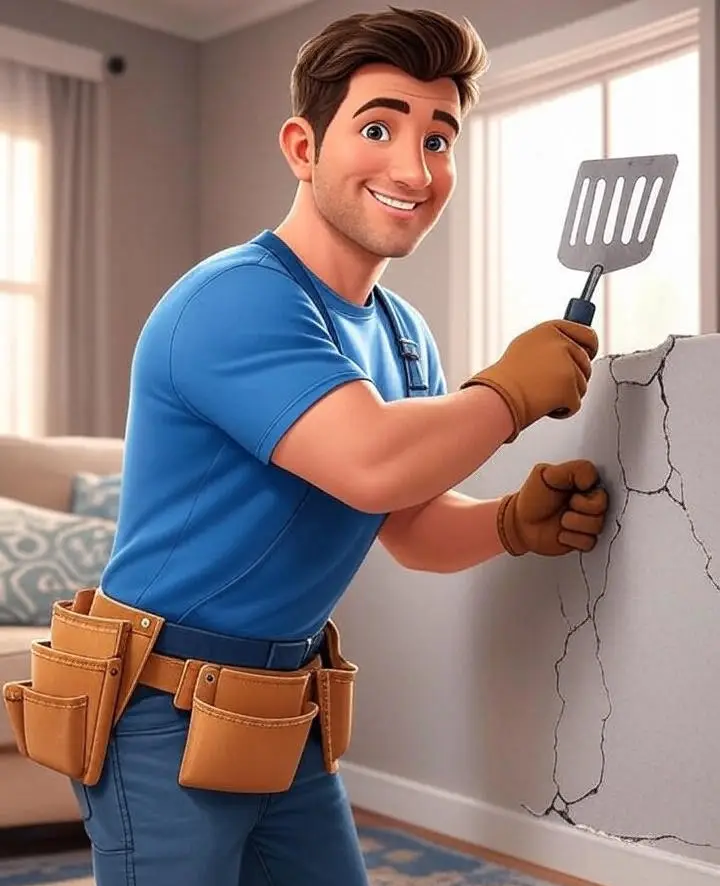
Tools and Materials You’ll Need
You don’t need an entire workshop to fix drywall cracks, but having the right tools makes the job smoother:
Tools
- Utility knife
- Drywall taping knife (6-inch and 10-inch preferred)
- Sanding sponge or fine-grit sandpaper
- Putty knife
- Drywall saw (if cutting out damaged sections)
- Bucket and mixing paddle (if using powdered joint compound)
Materials
- Joint compound (a.k.a. drywall mud)
- Drywall tape (paper or fiberglass mesh)
- Primer and matching wall paint
- Dust mask and safety glasses
- Drop cloths or painter’s tape (for protecting the area)
Step 1: Prepare the Area
Like most home repairs, preparation is half the battle.
- Clear the space around the crack — move furniture, cover the floor with a drop cloth, and remove anything hanging on the wall.
- Inspect the crack closely. Use a utility knife to widen it slightly into a “V” shape. This may sound counterintuitive, but it allows the joint compound to bond better.
- Remove loose debris or peeling paint. A clean surface ensures your repair sticks.
Step 2: Apply Drywall Tape
Drywall tape bridges the gap in the crack, preventing it from reopening after repair.
- For straight cracks, fiberglass mesh tape works well and is easy to apply.
- For inside corners or uneven cracks, paper tape gives a stronger bond but requires more skill.
Apply the tape directly over the crack, pressing firmly to eliminate air bubbles. For long cracks, overlap tape slightly at the edges.
Step 3: Apply the First Coat of Joint Compound
- Scoop a small amount of joint compound onto your 6-inch drywall knife.
- Spread a thin, even layer over the tape, extending about 2–3 inches past the edges of the crack.
- Feather the edges by applying more pressure on the outside edges of your knife. This prevents obvious ridges once the repair is painted.
Pro Tip: Don’t overload the wall with mud. Thin, controlled layers dry faster and sand more smoothly.
Step 4: Apply Additional Coats
After the first coat dries (usually 24 hours), it’s time to build up the repair.
- Lightly sand the first coat with a sanding sponge to smooth imperfections.
- Apply a second coat with a wider knife (10-inch preferred), spreading it further out to blend into the wall.
- Allow it to dry, then sand lightly again.
- Apply a third coat if needed, especially if the crack was large or if you see indentations.
Most cracks need at least two coats of mud for a seamless finish.
Step 5: Sand and Smooth the Surface
Once the final coat is fully dry:
- Sand with fine-grit sandpaper (120–150 grit) in a circular motion.
- Be careful not to sand too aggressively or you’ll expose the tape underneath.
- Run your hand over the repair — it should feel flush with the surrounding wall.
Wear a dust mask during sanding; drywall dust gets everywhere.
Step 6: Prime and Paint
Never skip primer. If you paint directly over joint compound, you’ll notice flashing (uneven paint sheen).
- Apply a quality drywall primer over the repaired area.
- Let it dry completely.
- Paint the wall with matching paint, feathering the edges so the repair blends in.
If your wall has a texture (orange peel, knockdown, etc.), use a spray texture or texture sponge before painting to match the finish.
Pro Tips for a Professional Finish
- Work in good lighting — imperfections are harder to spot in dim light.
- Use long, smooth strokes with your knife. Stop-start movements leave ridges.
- Don’t rush drying times. Patience leads to smoother sanding and fewer do-over’s.
- Match paint carefully. Even the best repair looks obvious if the color is off.
When to Call a Professional
While most cracks are DIY-friendly, certain situations may require professional help:
- Cracks wider than 1/4 inch or running across ceilings/floors.
- Cracks that return repeatedly after repair.
- Water-damaged drywall that feels soft or crumbly.
- Structural issues such as sagging ceilings or bowing walls.
In these cases, a handyman or drywall contractor can diagnose the root cause and perform long-lasting repairs.
Preventing Future Drywall Cracks
Once you’ve repaired a crack, you don’t want it to come back. Here’s how to prevent recurrence:
- Control humidity in your home with dehumidifiers or ventilation.
- Address foundation concerns if you notice cracks spreading across multiple walls.
- Install expansion joints in large drywall surfaces to reduce stress.
- Use high-quality materials — cheap joint compound or tape often fails faster.
Mastering the skill of drywall crack repair
Fixing drywall cracks may seem intimidating, but with the right approach, it’s one of the most rewarding DIY handyman projects. Not only will your walls look flawless again, but you’ll also save money compared to hiring a contractor for a small repair.
As with all handyman skills, each project builds your confidence for the next one. Mastering drywall crack repair opens the door to more advanced projects like full wall repairs, drywall hanging, or even room renovations.
Frequently Asked Questions About Drywall Crack Repairs
Why do drywall cracks recur even after repair?
Recurring cracks are typically caused by structural movement, settling of the home, or underlying moisture issues. Using high-quality drywall tape and applying multiple coats of joint compound can significantly reduce the likelihood of cracks reappearing.
Is drywall tape necessary for a lasting repair?
Yes. Drywall tape reinforces the joint compound and prevents cracks from reopening. While it’s possible to patch small cracks without tape, the repair is much less durable and may fail over time.
How long should I allow each coat of joint compound to dry?
Drying times vary based on humidity and compound type, but typically each coat should dry for 12–24 hours. Proper drying ensures smooth sanding and a strong, long-lasting finish.
What type of paint should be applied after a repair?
Always apply a primer over the repaired area before painting. Then use the same type and finish of paint that’s already on the wall (flat, satin, or semi-gloss) to achieve a seamless, professional appearance.
When should I call a professional handyman instead of repairing it myself?
Contact a professional if cracks are wide, recurring, or accompanied by soft, water-damaged drywall. Additionally, structural concerns or hard-to-reach areas should be assessed and repaired by an experienced handyman to ensure safety and a lasting result.
Need Professional Help with Drywall Repairs?
If your drywall cracks are large, recurring, or tied to bigger structural issues, don’t wait until they get worse. Call our expert handyman team today.
📞 Call Now: 313-513-1185