AC Unit No Power to Thermostat? Here’s What’s Actually Happening
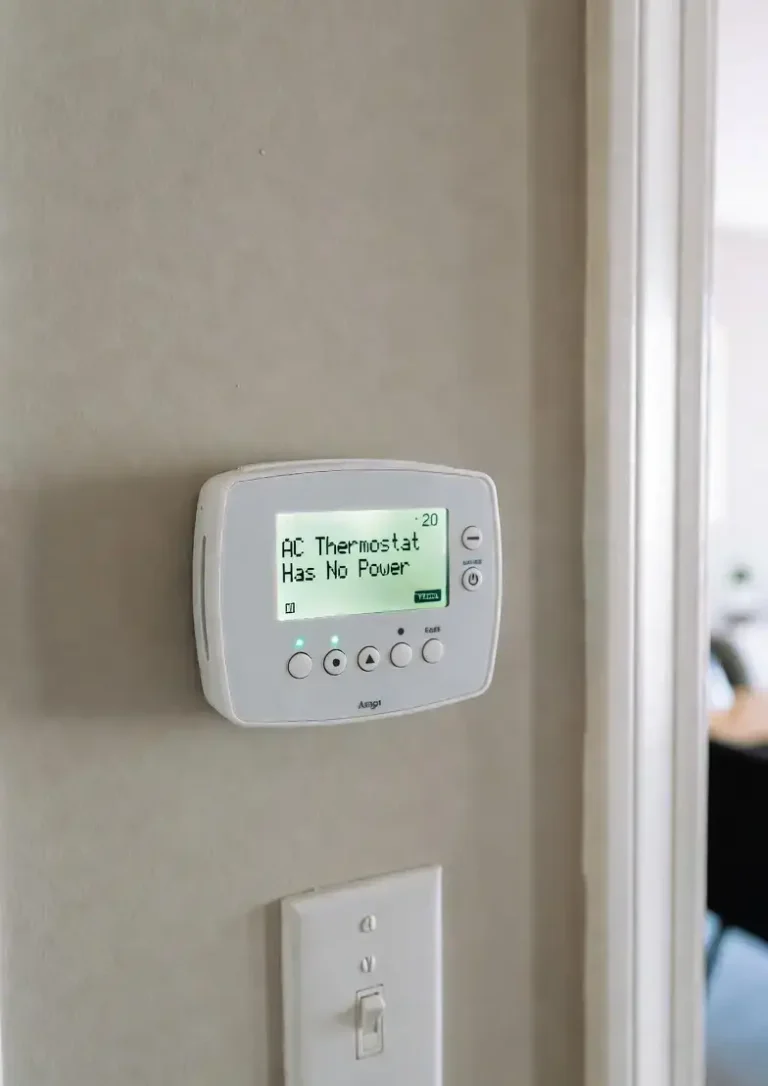
When your AC unit has no power going to the thermostat, everything feels dead at once. The screen is blank, the AC won’t turn on, and nothing responds no matter what buttons you press. We have a breakdown of what you can do if ac unit no power to thermostat.
Most homeowners immediately assume the thermostat is broken. That’s understandable—but in reality, the thermostat is usually not the real problem. It’s just the first thing you notice because it’s the control center.
The real issue is almost always somewhere between the AC system and the thermostat itself.
Let’s break this down without overcomplicating it.
The Symptom: Thermostat Completely Dead
When there’s no power to the thermostat, you’ll usually see:
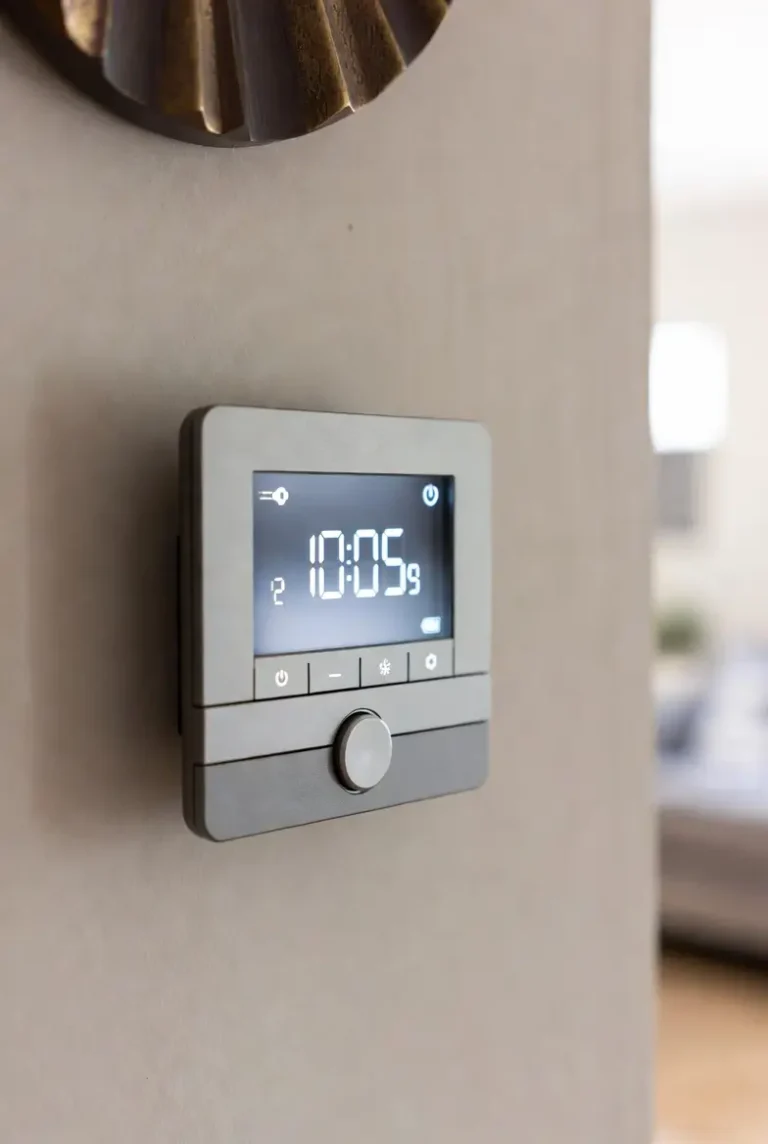
- A blank or dark thermostat screen
- No response when adjusting temperature
- AC not turning on at all
- Battery replacement doesn’t help (or it doesn’t use batteries)
This is different from an AC that turns on but doesn’t cool. This is a total communication failure between the system and the thermostat.
That’s an important distinction.
How Power Gets to the Thermostat (Simple Version)
Your thermostat doesn’t get power directly from your breaker panel.
Instead:
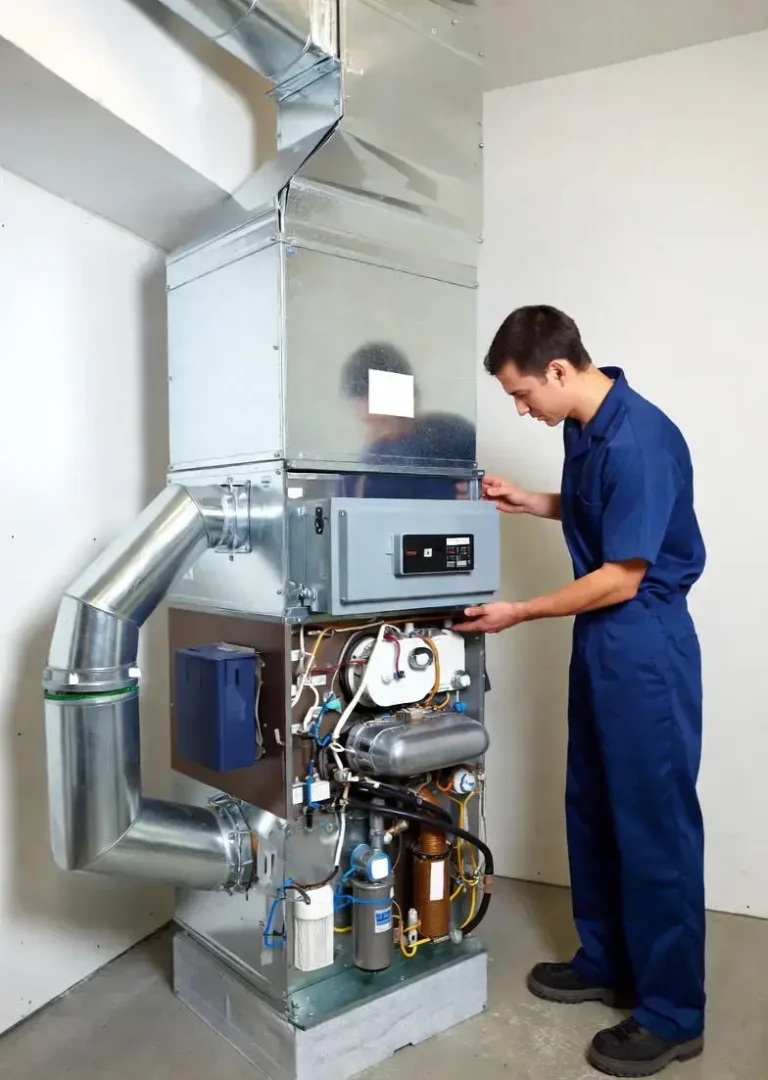
- Power starts at the furnace or air handler
- It’s stepped down to low voltage
- That low voltage is sent to the thermostat through control wiring
If anything interrupts that path, the thermostat goes dark—even if the rest of the house has power.
That’s why flipping breakers randomly or replacing the thermostat blindly usually doesn’t fix the issue.
Common Causes of No Power to the Thermostat
Here are the most common reasons this happens, explained in plain language.
1. Tripped Safety or Float Switch
This is one of the most common causes, especially in homes with basements.
If the AC drain line clogs and water backs up, a safety switch shuts down power to protect the system. When that happens, the thermostat loses power on purpose.
It’s the system saying, “Stop until this gets fixed.”
2. Blown Low-Voltage Fuse
Inside the furnace or air handler is usually a small fuse that protects the control wiring.
This fuse often blows when:
- Thermostat wires touch
- A thermostat is replaced incorrectly
- Someone tried to DIY wiring changes
When it blows, power to the thermostat is gone instantly.
3. Tripped Breaker or Service Switch
Sometimes the AC breaker is fine, but the furnace or air handler has:
- A tripped breaker
- A wall-mounted service switch that was shut off
If the unit supplying power to the thermostat is off, the thermostat goes dark too.
4. Loose or Damaged Wiring
Wiring issues are common in older homes.
Over time:
- Connections loosen
- Wires corrode
- Rodents chew insulation
One loose wire can cut power completely.
5. Failed Transformer
The transformer reduces voltage so the thermostat can operate safely.
When it fails, the system may still appear to have power—but the thermostat won’t receive any.
6. Bad Thermostat (Least Common, Still Possible)
Thermostats do fail, but it’s not the first thing to assume. Replacing it without testing power first often wastes time and money.
Why This Problem Is So Common in Older Homes
In many older homes, the HVAC system has been:
- Modified
- Repaired
- Partially upgraded
- Patched over decades
That creates mixed wiring, outdated safety switches, and components that don’t always fail cleanly.
So when the thermostat loses power, it’s often tied to a deeper system issue—not a simple part swap.
What NOT to DIY (This Is Important)
This is where people make things worse.
Things you should not do:
- Jump thermostat wires together “to test it”
- Bypass safety switches
- Replace fuses without knowing why they blew
- Guess which wires go where
- Keep resetting breakers repeatedly
Low-voltage systems are still connected to components that can be damaged easily. One wrong move can turn a small issue into a burned control board or transformer.
At that point, the repair cost jumps fast.
Why Replacing the Thermostat First Is Usually a Mistake
Replacing the thermostat feels productive—but it’s often the wrong first step.
If the thermostat has no incoming power:
- A new thermostat won’t power on either
- Or it will fail again once the real issue shows up
Now you’ve spent money and still don’t have AC.
The smarter approach is always to confirm:
Is power reaching the thermostat or not?
Everything depends on that answer.
When It’s Time to Call a Handyman
If:
- The thermostat has no power
- Batteries didn’t fix it
- You don’t see an obvious tripped switch
- You’re not comfortable opening the system
That’s the point where calling a professional makes sense.
A skilled handyman can:
- Trace where power stops
- Check safety switches
- Inspect wiring
- Test fuses and transformers
- Identify whether the issue is HVAC or electrical
That saves time, money, and frustration.
Why a Handyman Is Often the Right Fit
This issue sits right between HVAC and electrical work.
A good handyman understands:
- Thermostat wiring
- Low-voltage systems
- Power supply issues
- Safe troubleshooting
That means the problem gets diagnosed properly instead of guessed at.
Why This Issue Often Shows Up After the First Hot Day
A lot of homeowners notice this problem right when the weather gets hot for the first time. The AC worked fine last year, then suddenly the thermostat has no power.
That’s not a coincidence.
When the system sits unused for months, small issues don’t show up. The first time the AC runs hard, it exposes:
- Weak electrical connections
- Partially clogged drain lines
- Aging safety switches
- Transformers that are on their last leg
The system goes into protection mode, power gets cut, and the thermostat is the first thing to go dark.
Why “It Worked Yesterday” Doesn’t Mean Much
This is another thing people get stuck on. Just because the system worked yesterday doesn’t mean the problem is new.
Many of these issues build slowly. A wire loosens over time. A drain line slowly clogs. A fuse weakens. Eventually, the system hits a breaking point.
That’s why intermittent power loss should never be ignored. It’s the system warning you before a full shutdown.
If Your AC Unit Has No Power To The Thermostat
When your AC unit has no power to the thermostat, it’s not random—and it’s not magic.
There’s always a reason power stopped reaching the thermostat. The key is finding that reason without creating new problems in the process.
Handled correctly, this is usually a straightforward fix. Handled the wrong way, it turns into a bigger repair than it ever needed to be.
Need Help With a Thermostat Power Issue?
If your AC thermostat has no power and you want the real cause identified without guessing or unnecessary repairs, help is available.
Call 313-254-6072 to schedule service.