Replacing Door Hinges: How to Correctly Fix Warped or Sticking Doors
A sticking door is one of those problems that seems small at first but gets annoying fast. You open it, it scrapes the floor. You close it, it won’t latch. Or worse, it’s rubbing the frame so hard you can hear it every time someone uses it. In many cases, the real issue isn’t the door itself—it’s the hinges.
Replacing door hinges correctly is one of the simplest ways to fix warped or sticking doors without having to replace the entire door or frame. But it has to be done right. Sloppy hinge work leads to the same problems coming back within weeks.
This guide breaks down exactly how door hinges fail, how to diagnose the real problem, and how proper hinge replacement can bring a door back to smooth, clean operation.
Why Doors Start Sticking or Warping
Before jumping into replacement, it’s important to understand what’s actually happening.
Doors don’t usually “warp” overnight. The issue builds slowly due to:
- Loose or worn-out hinges
- Stripped screw holes in the frame
- House settling over time
- Humidity changes causing wood expansion
- Poor initial installation
- Heavy doors stressing weak hinges
What looks like a warped door is often just a door that has dropped slightly on one side because the hinges can no longer support its weight properly.
When that happens, the door shifts out of alignment and starts rubbing against the frame or floor.
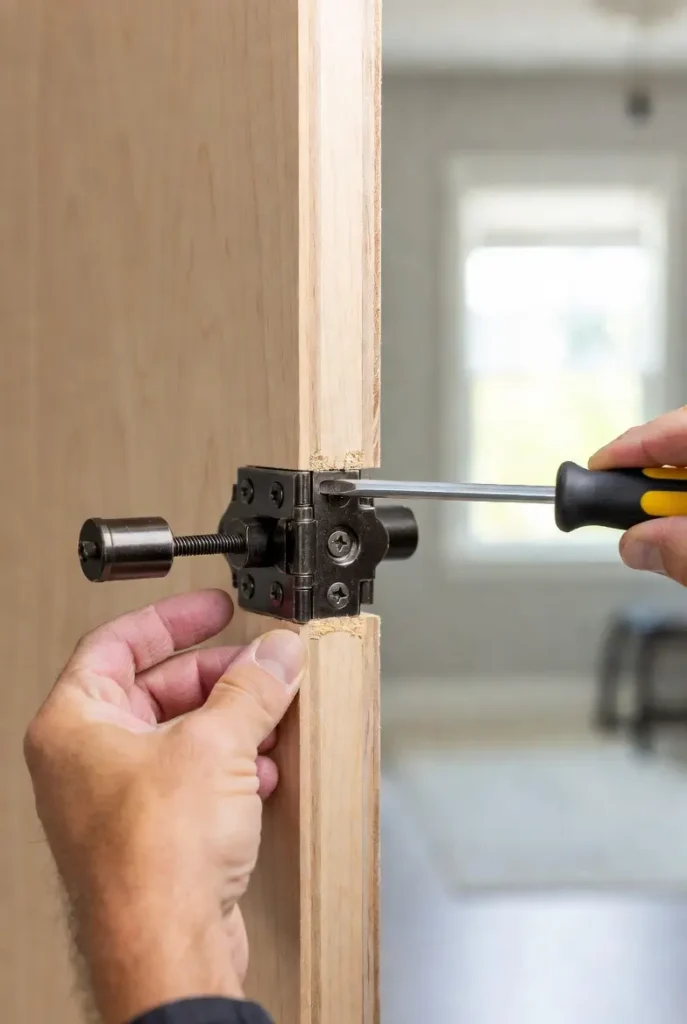
Signs Your Door Hinges Are the Real Problem
Not every sticking door needs a new door. Watch for these clear hinge-related symptoms:
1. The door sags when opened
If the top corner drops when you pull the door open, the top hinge is likely failing.
2. Visible gaps at the top or side
Uneven spacing between the door and frame is a classic hinge alignment issue.
3. Screws keep loosening
If you’re constantly tightening screws, the wood around the hinge is likely stripped.
4. Scraping on the floor or frame
This usually means the door has dropped due to hinge failure.
5. Door won’t stay closed
Misaligned hinges can prevent the latch from lining up with the strike plate.
If you’re seeing more than one of these, replacing the hinges (or properly resetting them) is usually the fix.
Choosing the Right Replacement Hinges
Not all hinges are equal. Using the wrong type can make the problem worse.
Here’s what matters:
Match the size exactly
Most residential doors use 3.5” or 4” hinges. Don’t guess—remove one and measure.
Match the thickness
Common thicknesses are 1/16” or 1/8”. A mismatch creates alignment issues.
Use heavy-duty hinges for heavy doors
Solid core or exterior doors need reinforced hinges, not lightweight interior ones.
Material matters
- Steel: strong and standard
- Stainless steel: best for moisture-prone areas
- Brass: decorative but softer
If the door has been sagging, upgrading to stronger hinges is often part of the fix—not just a replacement.
Step-by-Step: Replacing Door Hinges Correctly
This is where most DIY repairs go wrong. The key isn’t just swapping hardware—it’s maintaining alignment.
Step 1: Support the door properly
Use a wedge or have someone hold the door. If it drops during removal, you’ll lose your alignment reference.
Step 2: Remove one hinge at a time
Do NOT remove all hinges at once unless you’re taking the door off completely. Start with the worst hinge first.
Step 3: Check screw holes
If screws spin freely, the wood is stripped. This is a major cause of sagging.
Step 4: Repair stripped holes if needed
You can:
- Insert wooden toothpicks with wood glue
- Use larger screws
- Install hinge repair kits
Skipping this step is why many hinge replacements fail.
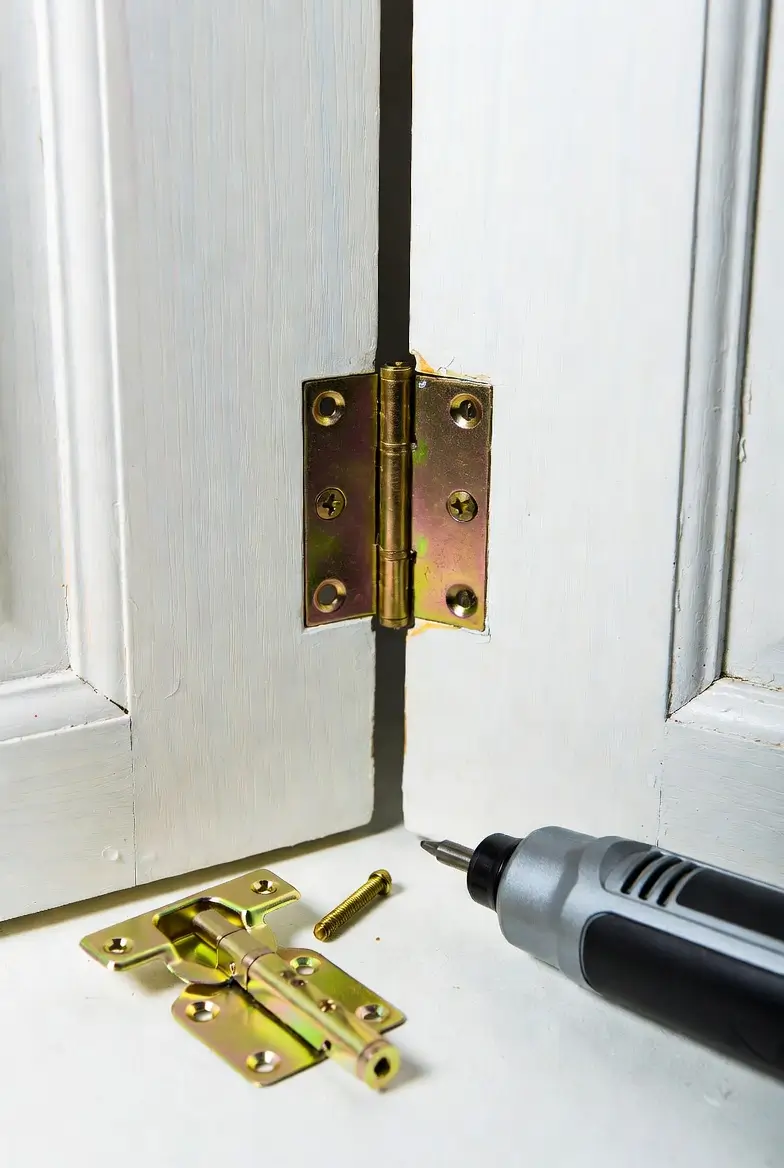
Step 5: Install the new hinge
Make sure it sits flush in the mortise (the recessed pocket). Even a slight lift will throw off alignment.
Step 6: Tighten screws evenly
Don’t over-tighten one side first. Work gradually so the hinge seats evenly.
Step 7: Test movement after each hinge
After replacing one hinge, test the door before moving to the next. This helps isolate issues early.
Fixing a Sticking Door After Hinge Replacement
Sometimes even after replacing hinges, a door still rubs slightly. That doesn’t mean the job failed—it means fine adjustment is needed.
Adjust hinge tension
Slightly loosening or tightening screws can shift the door a millimeter or two, which is often enough.
Check frame alignment
If the frame has shifted due to house settling, hinges alone won’t fully correct it.
Plane the door edge (last resort)
Only do this if alignment is correct but there is still minor rubbing.
Most sticking issues can be solved without shaving the door if the hinge work is done properly.
Common Mistakes That Make the Problem Worse
A lot of hinge replacements go wrong for simple reasons:
- Using mismatched hinge sizes
- Ignoring stripped screw holes
- Over-tightening screws and cracking wood
- Replacing only one hinge when all are worn
- Not checking frame alignment first
- Installing hinges slightly recessed or raised
Any one of these can bring the sticking problem back quickly.
When You Should Stop DIY and Call a Pro
Replacing hinges is simple in theory, but not always simple in practice. You should consider professional help when:
- The door has dropped more than half an inch
- The frame is visibly out of square
- Multiple hinge locations are damaged
- Screws won’t hold even after repairs
- The door is heavy (solid wood or exterior steel)
At that point, the issue is no longer just hardware—it’s structural alignment.
Why Proper Hinge Replacement Matters
A well-hung door isn’t just about convenience. It affects:
- Energy efficiency (air leaks)
- Security (misaligned locks don’t latch properly)
- Long-term frame damage
- Wear on flooring and trim
Ignoring hinge issues doesn’t make them go away—it usually turns a $20 fix into a full door replacement later.
Fixing Your Doors Can Be Easy
Replacing door hinges correctly is one of the most effective ways to fix warped or sticking doors without replacing the entire system. The key isn’t just swapping hardware—it’s correcting alignment, repairing underlying screw damage, and making small adjustments that restore proper movement.
Done right, a door should open smoothly, close cleanly, and latch without force. If it doesn’t, the hinges are almost always the first place to look.
For stubborn doors that won’t stay aligned or keep sticking after repeated fixes, professional adjustment is often the fastest long-term solution.
Door Sticking or Not Closing Right?
If your door keeps rubbing, sagging, or won’t latch properly, we can fix it fast. Hinges, alignment, frame issues—we handle it all.
Call now: 313-513-1185